Article By:
CleanTechnica
2026-05-24 23:19:06
XPENG Offers More Human-Like Autonomous Driving
Summary By: eMotoX
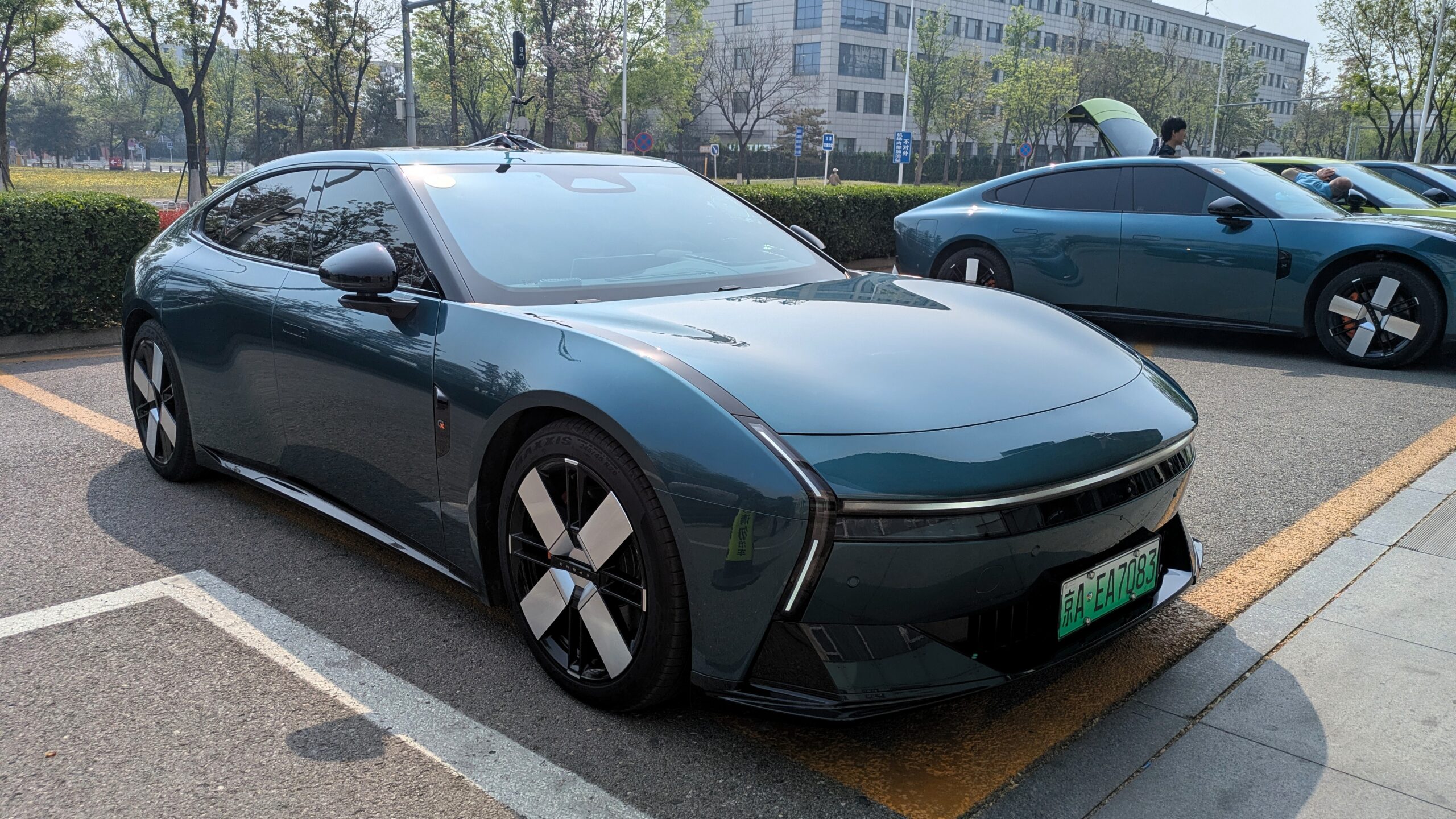
XPENG has unveiled its latest advancement in autonomous driving technology with the introduction of VLA 2.0, a system designed to deliver a more human-like driving experience. During recent test drives of the XPENG P7 equipped with VLA 2.0, the autonomous system demonstrated smooth, intuitive handling that closely resembles the judgement and anticipation of an experienced human driver. Rather than merely mimicking driver behaviour, the system integrates human-like intelligence principles, enabling it to generalise across diverse driving scenarios globally without reliance on extensive local data or HD maps.
At the core of VLA 2.0’s capabilities is XPENG’s in-house developed Turing AI chip, which offers up to 3000 TOPS of computing power—significantly surpassing competing platforms. This bespoke chip architecture, optimised through hardware-software co-design, enhances neural network performance and information throughput, allowing the vehicle to process vast amounts of data onboard in real time. Such processing power enables the system to adapt dynamically to local conditions and driver styles, delivering a driving experience that evolves from aggressive to smooth, much like a human adjusting to the road.
The technology departs from traditional autonomous driving models by eliminating the need for complex “language translation” stages that convert sensory input into action commands. Instead, VLA 2.0 employs a direct end-to-end approach from visual signals to driving actions, akin to how humans develop muscle memory through practice rather than over-analysing each movement. This streamlined processing reduces prediction errors by a third and equips the system to handle rare or complex “long-tail” scenarios with calm, anticipatory responses, reflecting a more natural and flexible driving style.
VLA 2.0 also boasts impressive adaptability across different driving environments. Drawing on extensive experience from China’s challenging roads, the system can transfer its learned capabilities internationally without the need for reprogramming or large-scale data collection, thereby circumventing potential regulatory issues. Additionally, XPENG’s “X World” simulation platform accelerates the system’s ability to assimilate local driving rules and conditions virtually, further enhancing its readiness for global deployment.
Overall, XPENG’s VLA 2.0 represents a significant step forward in autonomous driving by blending advanced AI hardware with a human-centric approach to vehicle control. Its capacity for real-time adaptation, nuanced decision-making, and cross-border learning positions it as a promising contender in the race towards fully autonomous vehicles that can operate safely and naturally in diverse environments worldwide.