Article By:
The Driven
2026-04-30 22:07:48
World-first vehicle-to-grid, electric car share service proves a hit in solar capital
Summary By: eMotoX
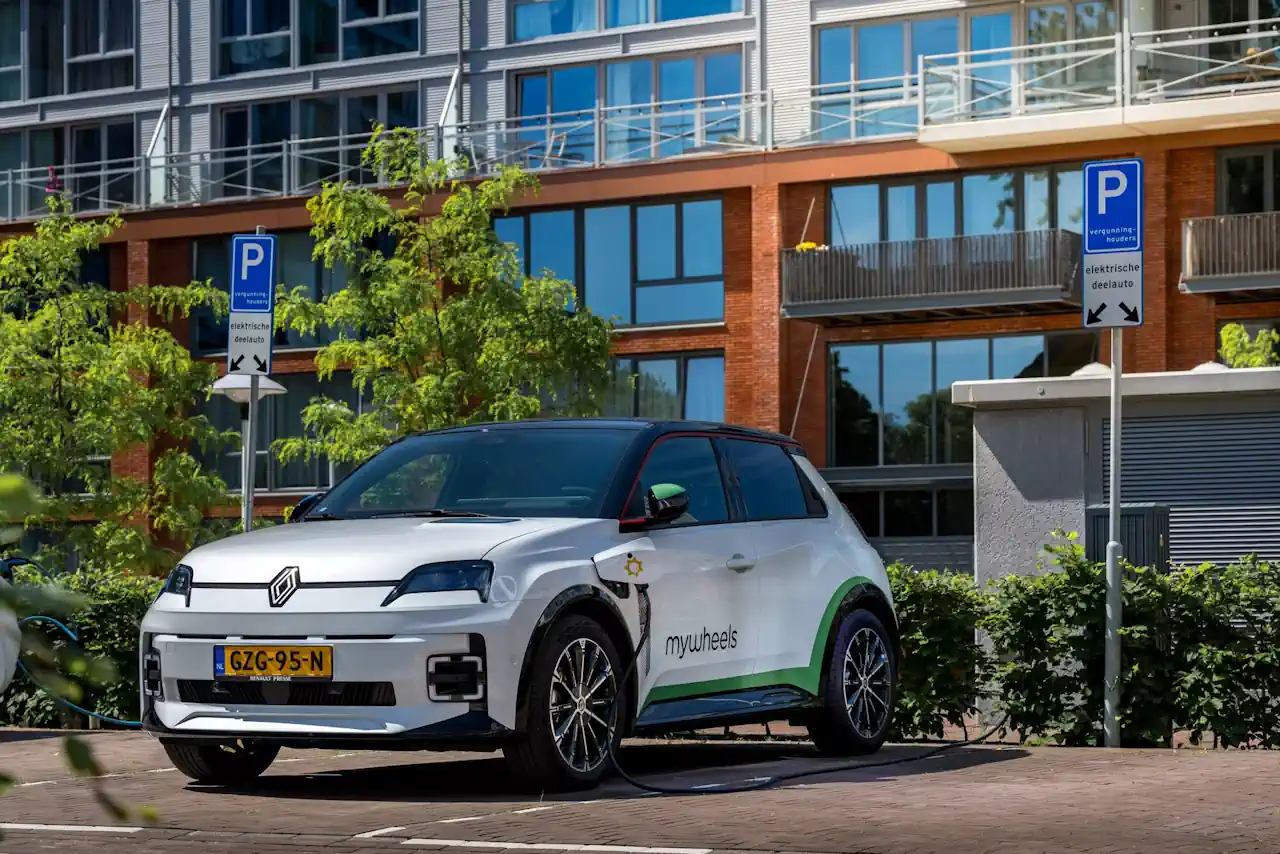
Utrecht has become the site of Europe’s first large-scale vehicle-to-grid (V2G) system integrated with an electric car-sharing service, marking a significant milestone for the technology’s commercial viability. The Utrecht Energized project launched with a fleet of 50 Renault 5 E-Tech electric vehicles, with plans to expand to additional Renault models. This initiative aims to stabilise the local electricity grid while offering residents a sustainable and affordable mobility option, positioning Utrecht as a pioneer in operational V2G ecosystems within a European city.
The project leverages Utrecht’s status as the European solar capital, where solar photovoltaic capacity per capita is among the highest globally, creating frequent instances of surplus solar energy. By using the EV fleet to store excess solar power during the day and feed it back into the grid during peak demand, the scheme demonstrates how V2G technology can enhance grid flexibility and support renewable energy integration. Over the first five months, the participating vehicles collectively discharged more than 65,000 kilowatt-hours back into the grid, providing tangible evidence of V2G’s scalability and effectiveness outside of laboratory conditions.
A report from the UK Energy Research Centre (UKERC) highlights the project’s success in addressing grid congestion, reducing private car ownership, and accelerating electric vehicle adoption through the combination of V2G, car-sharing, and smart charging software. However, the report also notes that replicating this model elsewhere may be challenging due to Utrecht’s unique conditions, such as acute local grid congestion, strong public-private-academic collaboration, and supportive regulatory frameworks. These factors are not universally present, meaning other cities may face significant obstacles in implementing similar systems.
Looking ahead, the UKERC report outlines key recommendations for governments and network operators to facilitate wider V2G adoption. These include improving transparency around grid constraints, embedding V2G requirements in public procurement, and harmonising grid codes internationally to encourage vehicle manufacturers’ commitment. For local authorities, integrating V2G into planning and infrastructure development is advised to ensure future charging networks are compatible. The Utrecht Energized project thus serves as both a proof of concept and a blueprint for scaling V2G technology in regions with growing renewable energy penetration and electrification demands.