EV news article header featuring electric vehicle news, EV charging station, electric car updates and industry insights

News Menu

bicycle news feed and industry updates for eBike and cycling news
Click for Bicycle News
latest eBike news aggregator covering electric bike updates, reviews and industry trends
Click for eBike News
electric motocross news feed with latest dirt bike updates, reviews and industry insights
Click for eMotocross News
latest eScooter news aggregator featuring electric scooter news feed, updates, reviews and industry trends
Click for eScooter news
Article By:
Charged EVs
2026-06-09 15:44:08

WACKER’s ceramifying ELASTOSIL silicone drops 1,300 °C thermal runaway flame to below 150 °C in barrier tests

Summary By: eMotoX
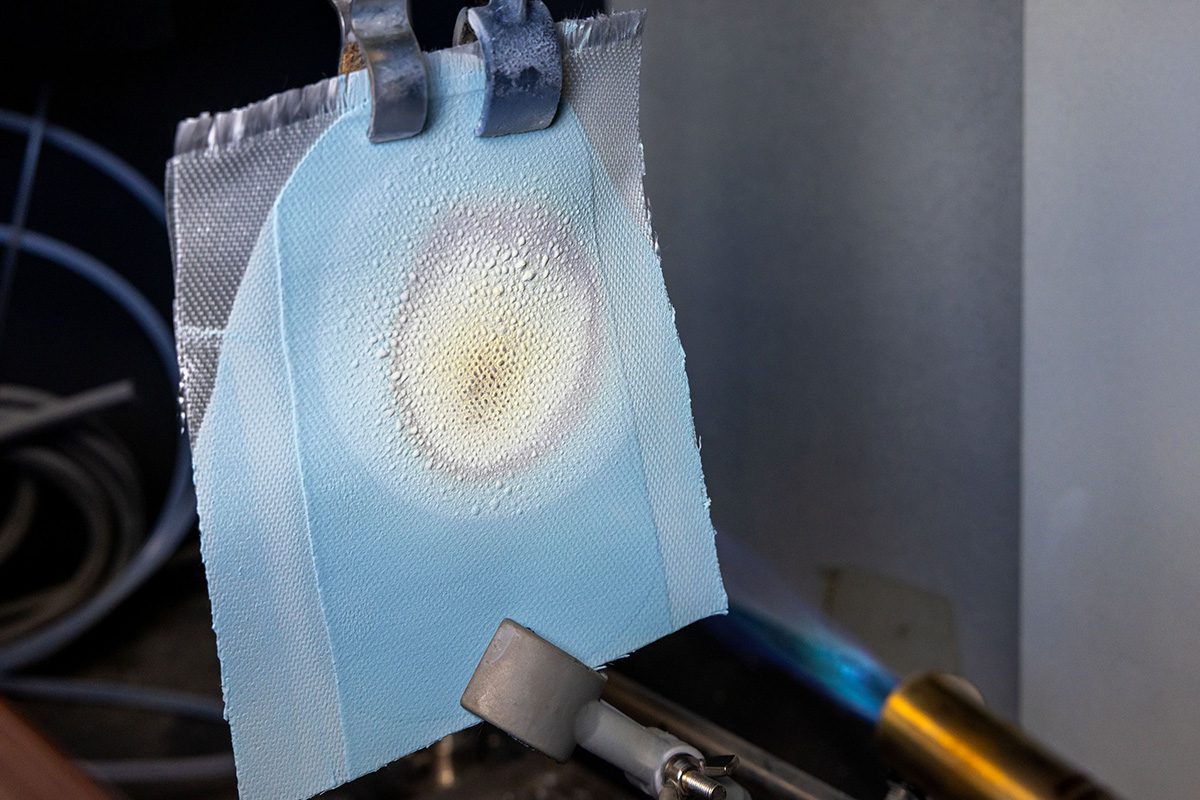
WACKER has unveiled two significant advancements aimed at enhancing the safety of electric vehicle (EV) batteries. Central to these innovations is a ceramifying silicone from the ELASTOSIL CM range, designed for thermal barrier coatings. When applied as a liquid, it cures into a flexible or rigid silicone elastomer that, upon exposure to temperatures exceeding 600 °C, transforms into a ceramic layer. This transformation effectively blocks heat and hot gases, dramatically reducing the radiant heat from a thermal runaway event from 1,300 °C to below 150 °C in barrier tests, thereby offering robust protection for adjacent components. The ceramified silicone coating also plays a crucial role in physically containing ejected particles from failing battery cells. This feature aligns with stringent European safety regulations, which require EV battery systems to provide at least five minutes of thermal containment to allow for safe passenger evacuation. By trapping these particles, the material not only mitigates the risk of fire propagation but also enhances overall battery safety during thermal runaway incidents, a critical concern as EV adoption accelerates. In addition to the ceramifying silicone, WACKER introduced two new potting compounds, ELASTOSIL RT 7616 TC and RT 7624 TC, which are addition-curing silicone elastomers that set at room temperature. These compounds boast thermal conductivities of 1.6 W/mK and 2.4 W/mK respectively, with viscosities tailored to ensure reliable, bubble-free filling of small gaps in electronic components. Their rheological properties have been optimised to prevent the sedimentation of particulate fillers during long-term storage, a common challenge that previously necessitated labour-intensive redispersion before use. These potting compounds are particularly suited for applications in battery chargers, DC/DC converters, and inverters, focusing on discrete components such as inductors and coils. WACKER emphasises that even if filler settling occurs due to adverse transport conditions, standard mixing equipment can easily restore uniformity, enhancing manufacturing efficiency. Together, these material innovations represent a significant step forward in improving the thermal management and safety of EV battery systems, supporting the broader industry push towards safer and more reliable electric mobility solutions.