EV news article header featuring electric vehicle news, EV charging station, electric car updates and industry insights

News Menu

bicycle news feed and industry updates for eBike and cycling news
Click for Bicycle News
latest eBike news aggregator covering electric bike updates, reviews and industry trends
Click for eBike News
electric motocross news feed with latest dirt bike updates, reviews and industry insights
Click for eMotocross News
latest eScooter news aggregator featuring electric scooter news feed, updates, reviews and industry trends
Click for eScooter news
Article By:
Charged EVs
2026-04-14 15:40:01

Vector adds security testing module to CANoe Test Package EV, covering V2G fuzzing and TLS for ISO 1511

Summary By: eMotoX
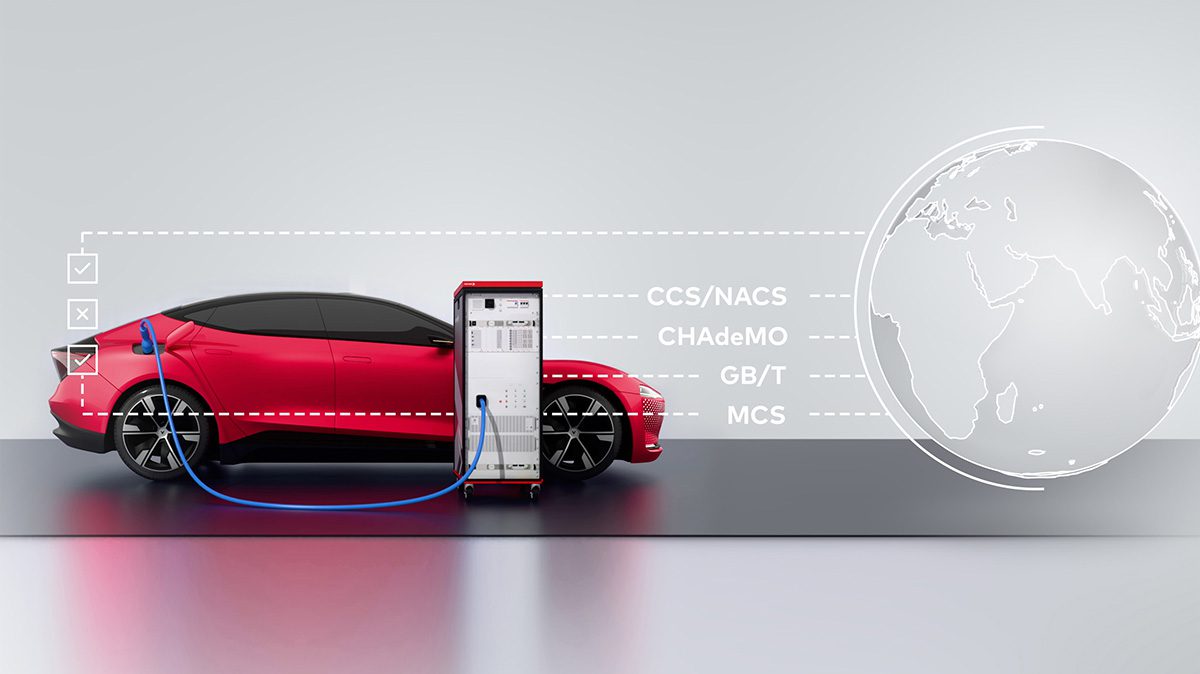
Vector Informatik has introduced a new security testing module to its CANoe Test Package EV, aimed at enhancing the robustness of electric vehicle (EV) charging communication. This extension focuses on testing the Vehicle-to-Grid (V2G) protocol through fuzzing techniques and validating Transport Layer Security (TLS) implementations in line with ISO 15118-2 and ISO 15118-20 standards. By addressing these critical areas, the tool supports both TLS 1.2 and TLS 1.3 protocols, ensuring comprehensive coverage of secure communication channels used in EV charging. The CANoe Test Package EV—Security module encompasses four key testing domains: V2G communication fuzzing with real-time system monitoring, TLS fuzzing, protocol-specific TLS tests, and custom security tests via defined interfaces. Designed for automated and reproducible execution, it integrates seamlessly with continuous integration and continuous deployment (CI/CD) pipelines, facilitating systematic documentation of test results. This automation is particularly significant given the increasing complexity and deployment of ISO 15118 standards, which underpin features like Plug & Charge that rely heavily on certificate-based authentication. Vector highlights the growing need for such specialised security testing as manual approaches prove inadequate for the evolving demands of EV charging infrastructure. Vulnerabilities in TLS and related authentication mechanisms could compromise both vehicles and charging stations, posing risks that extend beyond functional faults to include regulatory and safety compliance issues. The new module aims to fill this gap by enabling manufacturers and suppliers to conduct thorough security assessments alongside existing functional tests, thereby supporting safer and more reliable EV charging ecosystems. Looking ahead, Vector plans to expand the functionality of the security testing package further, reflecting ongoing developments in EV communication protocols and cybersecurity standards. This proactive approach aligns with the broader industry trend towards integrating security considerations early in the development lifecycle, ensuring that innovations such as Plug & Charge can be deployed with confidence. As EV adoption accelerates, tools like CANoe Test Package EV—Security will become increasingly vital for maintaining trust and safety in electric mobility networks.