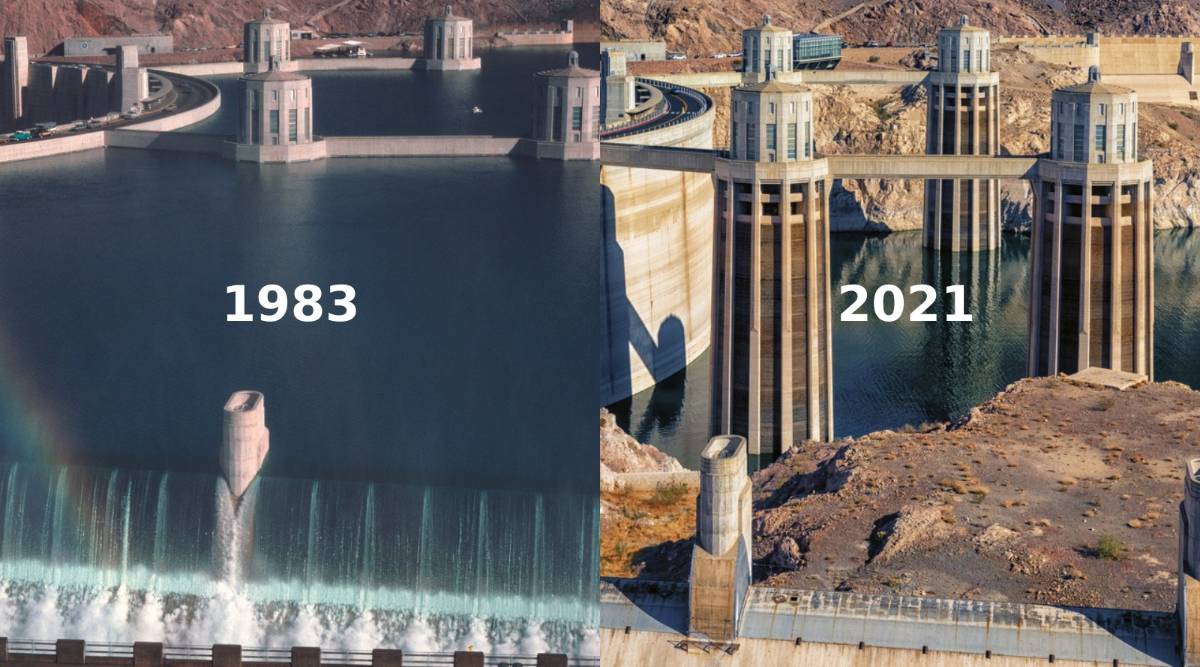
Summary By: eMotoXThe US federal government is set to impose significant cuts on water allocations from the Colorado River, a move that will profoundly affect California, Arizona, and Nevada. After years of unsuccessful negotiations among the seven states reliant on the river, the government plans to enforce a “10-year framework” that could reduce water deliveries by up to 40 percent. This policy aims to address the ongoing crisis as the river’s reservoirs, including Lake Mead and Lake Powell, continue to dwindle to historic lows due to prolonged drought and overuse.
The proposed reductions would primarily impact farms, cities, and tribes in the lower basin states, with Arizona expected to bear the brunt of the cuts through the Central Arizona Project canal system, which supplies water to Phoenix, Tucson, and surrounding areas. The plan, expected to be finalised in late June, will apply existing water rights laws from the 1922 Colorado River Compact, which prioritises California’s water use. However, this legal framework is increasingly seen as outdated given the dramatic population growth and agricultural demands in Arizona and Nevada since the compact’s inception.
The Colorado River supplies water to around 40 million people across the American West, and the new federal plan follows the failure of the states to reach a consensus on voluntary water reductions by a February deadline. While California, Arizona, and Nevada recently proposed their own voluntary cuts, the federal government remains cautious, with officials assessing the risks and benefits of these plans. State representatives have expressed alarm at the potential scale of federally mandated reductions, highlighting the urgency and complexity of managing water resources amid worsening drought conditions.
Financially, the transition to reduced water use will be costly. The federal government has earmarked hundreds of millions of dollars from existing conservation funds, including allocations from the Inflation Reduction Act, to support water-saving initiatives. However, questions remain about the distribution and effectiveness of these funds, with some officials noting that a significant portion of previously approved conservation money remains unspent. The uncertainty over which water users will ultimately shoulder the burden of cuts adds another layer of challenge to an already fraught situation.