EV news article header featuring electric vehicle news, EV charging station, electric car updates and industry insights

News Menu

bicycle news feed and industry updates for eBike and cycling news
Click for Bicycle News
latest eBike news aggregator covering electric bike updates, reviews and industry trends
Click for eBike News
electric motocross news feed with latest dirt bike updates, reviews and industry insights
Click for eMotocross News
latest eScooter news aggregator featuring electric scooter news feed, updates, reviews and industry trends
Click for eScooter news
Article By:
CleanTechnica
2026-06-01 15:25:51

Underwater Data Centers Are Real, But The Hype Is Getting Ahead Of The Engineering

Summary By: eMotoX
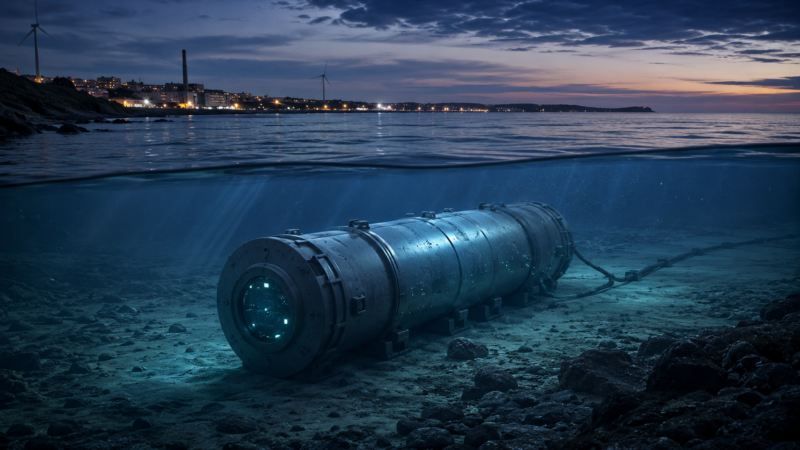
Underwater data centres have moved beyond the realm of concept, with China now operating commercial facilities that leverage seawater for cooling. This approach addresses one of the critical challenges faced by data centres—heat management—by utilising the ocean’s natural thermal capacity to reduce reliance on mechanical cooling systems. Microsoft’s earlier Project Natick demonstrated promising results with a submerged data centre pod off Scotland, showing significantly lower server failure rates, but it remained an experimental venture rather than a commercial rollout. China’s recent developments, including a 24 MW installation near Shanghai powered by offshore wind, mark a significant step towards real-world adoption of underwater data centre technology. Despite the cooling benefits, underwater data centres face substantial practical and logistical hurdles that temper enthusiasm for their widespread deployment. Maintenance is a major concern, as accessing and repairing servers sealed inside underwater modules is far more complex than in conventional land-based centres. The infrastructure demands extend beyond cooling, encompassing power supply, fibre optic connectivity, permitting, environmental impact assessments, and the challenges of subsea cable installation and repair. These factors collectively complicate the operational model and increase costs, highlighting that underwater data centres are not a straightforward replacement for terrestrial facilities. Environmental considerations also play a crucial role in the viability of underwater data centres. While the ocean’s vastness offers some mitigation, local impacts such as seabed disturbance, thermal plumes, antifouling chemicals, noise pollution, and electromagnetic interference from cables require careful evaluation. The long-term effects of deploying sealed modules on marine ecosystems remain site-specific and necessitate detailed study rather than broad assumptions. Moreover, cybersecurity presents unique challenges, with research indicating that underwater data centres could be susceptible to acoustic attacks due to sound propagation in water, adding a novel dimension to data centre security protocols. The emergence of underwater data centres reflects ongoing innovation in addressing the growing energy and cooling demands of data-intensive technologies like artificial intelligence. However, the technology is still in its infancy relative to the scale and complexity of global data infrastructure. While China’s projects demonstrate feasibility, they do not yet signal a shift towards underwater data centres becoming the dominant architecture. Future developments will depend on overcoming operational constraints, refining environmental safeguards, and ensuring robust security measures, suggesting that underwater data centres will complement rather than replace traditional land-based facilities in the near term.