Article By:
Charged EVs
2026-04-18 18:57:30
Toshiba ships SmartMCD samples with zero-speed sensorless FOC for automotive BLDC motors
Summary By: eMotoX
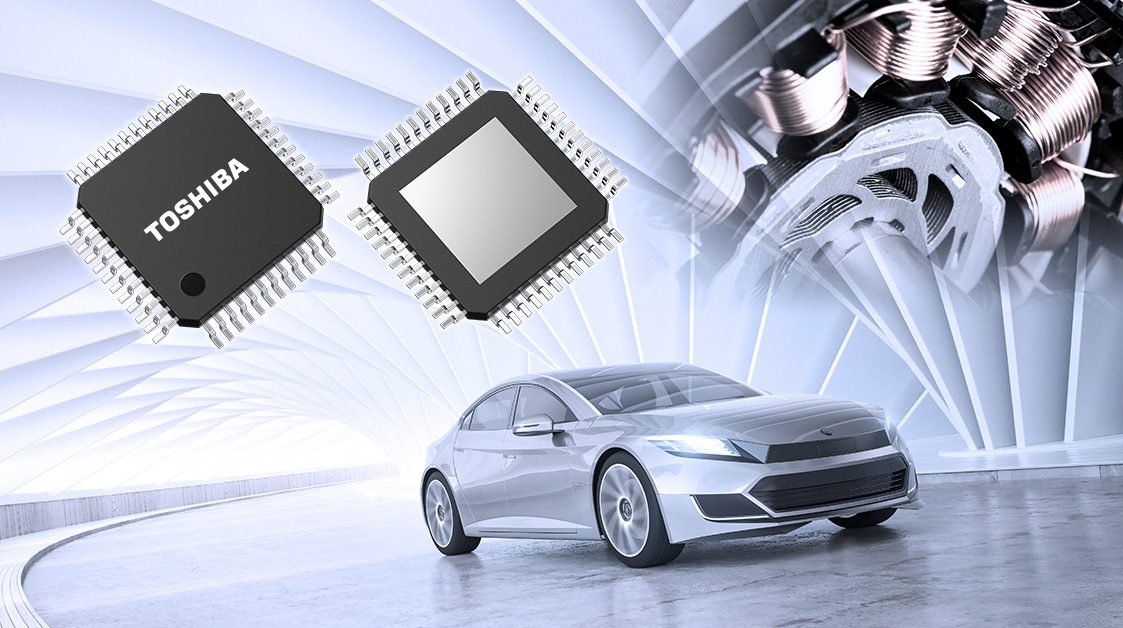
Toshiba Electronic Devices & Storage Corporation has begun distributing engineering samples of its latest SmartMCD motor control device, the TB9M030FG, designed specifically for automotive applications. This new chip integrates a microcontroller and gate driver within a single package and features a proprietary sensorless control method that enables field-oriented control (FOC) of brushless DC (BLDC) motors from zero speed. Unlike conventional sensorless techniques that rely on high-frequency signal injection and generate acoustic noise, Toshiba’s approach allows for quieter operation by eliminating the need for such harmonic signals.
The primary challenge addressed by the TB9M030FG lies in accurately detecting rotor position at low speeds without sensors. Traditional sensorless methods inject high-frequency voltage signals into the motor drive waveform to infer rotor position, but this process produces audible noise that can be problematic in automotive environments. Toshiba’s solution achieves stable sensorless FOC across the low-speed range on salient-pole motors without this acoustic drawback, offering a significant advancement in motor control technology for electric water pumps, oil pumps, fans, and blowers.
Technically, the TB9M030FG is built around a 32-bit Arm Cortex-M0 core running at 40 MHz, with 64 KB of flash memory, 12 KB of ROM, and 4 KB of RAM. It supports communication protocols including LIN, UART, SPI, and PWM, and features a single-shunt resistor current sense amplifier alongside 12-bit and 10-bit ADCs. The device is qualified to AEC-Q100 Grade 0 standards, ensuring suitability for demanding automotive environments, with operating temperatures ranging from –40 to +150 °C.
One of the key benefits of the TB9M030FG is its built-in vector engine hardware, which handles FOC computations independently from the main CPU core. This design reduces software overhead and program size, making it easier for manufacturers to implement efficient, integrated motor control solutions. Toshiba plans to commence mass production of the chip in January 2027, positioning it as a timely offering for the growing electrification of automotive auxiliary systems.
The introduction of this sensorless, zero-speed FOC technology could have wide-reaching implications for quieter, more efficient electric motor control in vehicles. By addressing the noise and complexity issues inherent in traditional sensorless methods, Toshiba’s SmartMCD device may accelerate the adoption of electric motors in various automotive subsystems, contributing to the broader trend of vehicle electrification and enhanced system integration.