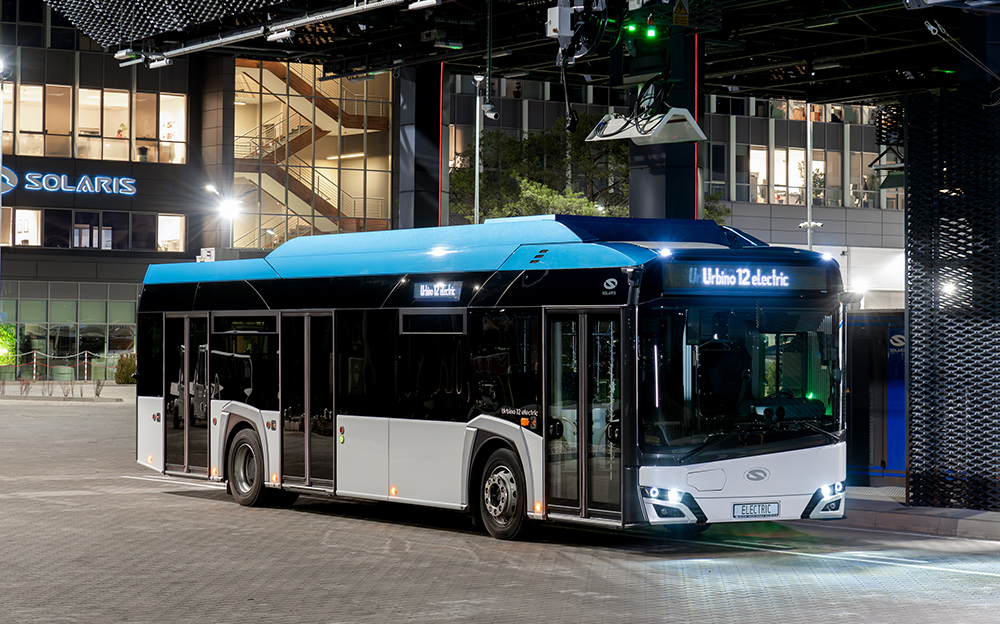
Summary By: eMotoXElectric bus fleets are expanding rapidly across several countries, with significant orders and deployments announced in Sweden, Italy, Brazil, and Uganda. In Sweden, Solaris Bus & Coach has secured large contracts to supply over 200 electric buses to operators Nobina and VR Sverige, with deliveries planned for 2027 in major cities including Stockholm, Skåne, and Göteborg. These orders will push Solaris’s total electric bus deliveries in Sweden past 550 units, underscoring the country’s commitment to electrifying public transport.
Italian manufacturer Menarini is broadening its footprint in the European electric bus market, preparing to launch a new electric bus model and developing a Class II battery-electric intercity coach. The company is shifting from its traditional focus on urban buses to also targeting intercity routes, reflecting growing maturity in electric technology and infrastructure. Menarini’s Head of Sales, Andrea Lamonaca, highlighted the company’s strategic expansion into key European markets such as Germany, France, and Eastern Europe, signalling a more sustained approach to market coverage.
In Brazil, the electric bus fleet has grown to approximately 1,500 vehicles serving around 30 municipalities, with São Paulo as the largest hub. Plans are underway to add 600 more electric buses within the next year as part of a federal goal to have 38,000 renewable-energy-powered buses by 2035, representing 35% of the country’s transit fleet. However, the transition faces challenges including high upfront costs for electrical infrastructure upgrades and lengthy grid capacity enhancements, with technical support from the International Council on Clean Transportation helping to address these issues.
Uganda has introduced locally manufactured electric buses in its capital Kampala, operated by E-Bus Xpress Kiira, a subsidiary of state-owned Kiira Motors. The electric fleet currently serves busy commuter routes in the city’s central business district, with plans to expand to 300 buses by mid-2028 and a national target of 1,500 electric buses across 14 cities supported by 260 charging stations. The government emphasises this initiative as part of a broader strategy to modernise transport, reduce fossil fuel dependence, and stimulate local economic growth through job creation.
In the UK, First Bus is piloting managed charging systems at its electric bus depots in Glasgow and Great Yarmouth, integrating with the National Grid balancing mechanism to optimise electricity use. By adjusting charging times to align with periods of excess renewable energy, particularly wind power in Scotland, the operator aims to enhance grid stability and improve the cost-effectiveness of electrification. First Bus currently runs over 1,400 zero-emission vehicles, about a quarter of its fleet, and is expanding its electric depot infrastructure while also offering charging services to third parties through its First Charge initiative.