Article By:
CleanTechnica
2026-04-08 22:17:04
Tesla’s Price-to-Earnings Ratio Is Nuts
Summary By: eMotoX
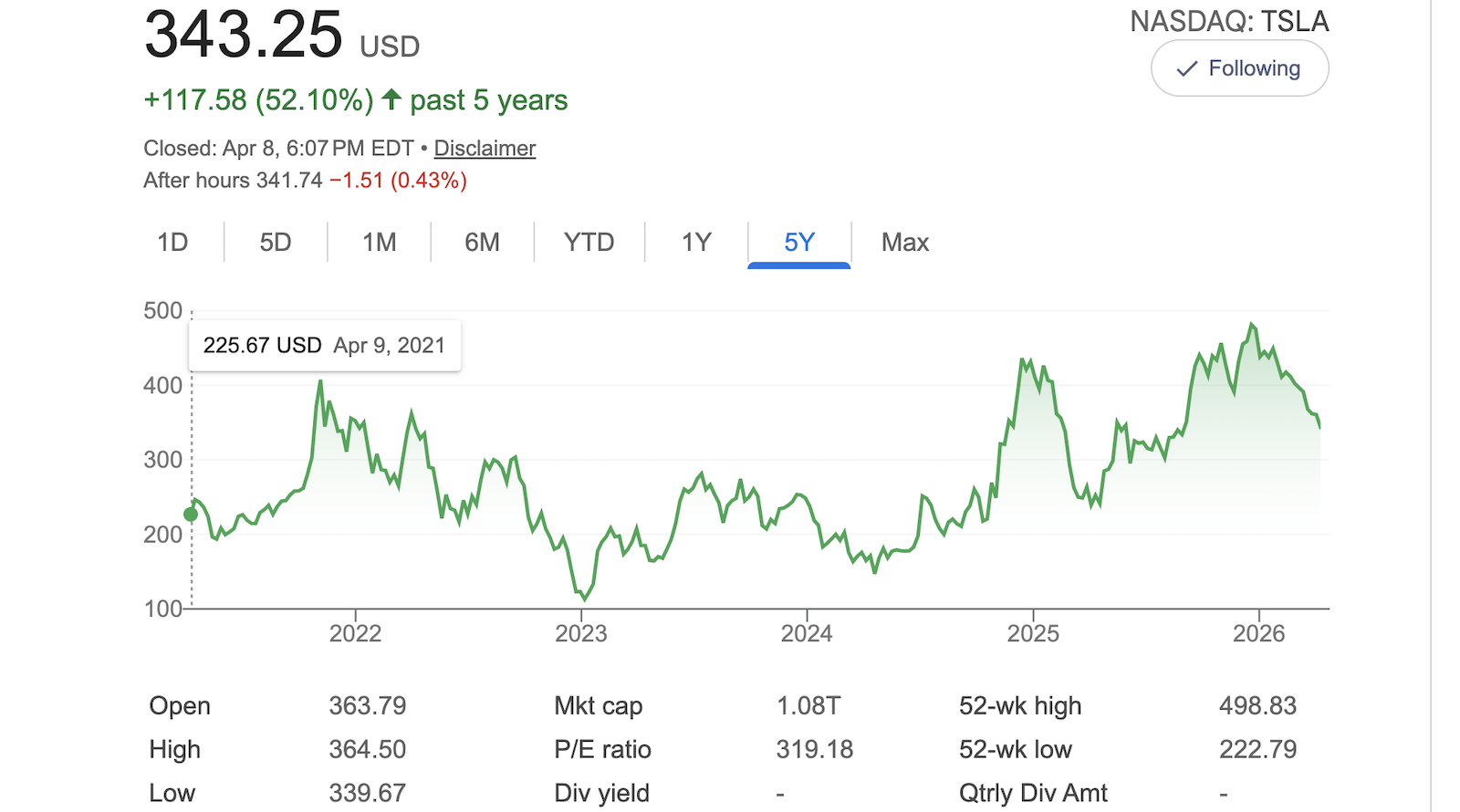
Tesla’s price-to-earnings (P/E) ratio has reached extraordinary levels, currently exceeding 300, a figure that dwarfs those of other major technology companies such as Apple, Microsoft, and Amazon. This disparity has raised questions about the sustainability of Tesla’s stock valuation, especially given the company’s recent performance. Despite a 20% decline in its stock price over the past six months, Tesla’s P/E ratio remains far above typical market norms, leading some analysts and investors to view the current valuation as disconnected from the company’s actual earnings.
The high P/E ratio is particularly striking in light of Tesla’s recent sales stagnation and missed growth targets. Whereas the company was expected to maintain annual growth rates of around 50% through the 2020s, sales have plateaued, and several product launches have been delayed or cancelled. This has led to scepticism about whether Tesla can justify its lofty valuation without a significant turnaround. Some commentators suggest that the stock’s premium is based more on past achievements and future potential—such as the promise of a robotaxi revolution—rather than current financial fundamentals.
Market analysts have expressed caution about Tesla’s prospects, with JPMorgan forecasting a further 60% decline in the stock price in 2026. While acknowledging Tesla’s innovative business model and strong product line-up, JPMorgan highlights risks including execution challenges, intensifying competition, and brand controversies. The bank’s price target of $145 reflects a more tempered view of Tesla’s near-term growth potential, particularly as the company attempts to expand into lower-priced vehicle segments where demand and competition pose significant uncertainties.
Despite these concerns, Tesla has shown pockets of growth, such as a 300% increase in sales in South Korea during March and ambitious plans to become Japan’s largest auto importer by the end of the year. The company is expanding its retail and service infrastructure in Japan to support this goal. However, these developments represent only a fraction of Tesla’s overall business and do not yet provide a clear rationale for the company’s extreme valuation.
The ongoing debate around Tesla’s valuation underscores the tension between investor optimism and financial reality. While some view Tesla as a “meme stock” driven by sentiment rather than fundamentals, the substantial investment in the company and its pivotal role in the clean technology sector mean that its valuation merits close scrutiny. Whether Tesla can deliver the monumental progress required to justify its P/E ratio remains uncertain, making this a critical story to watch in the coming years.