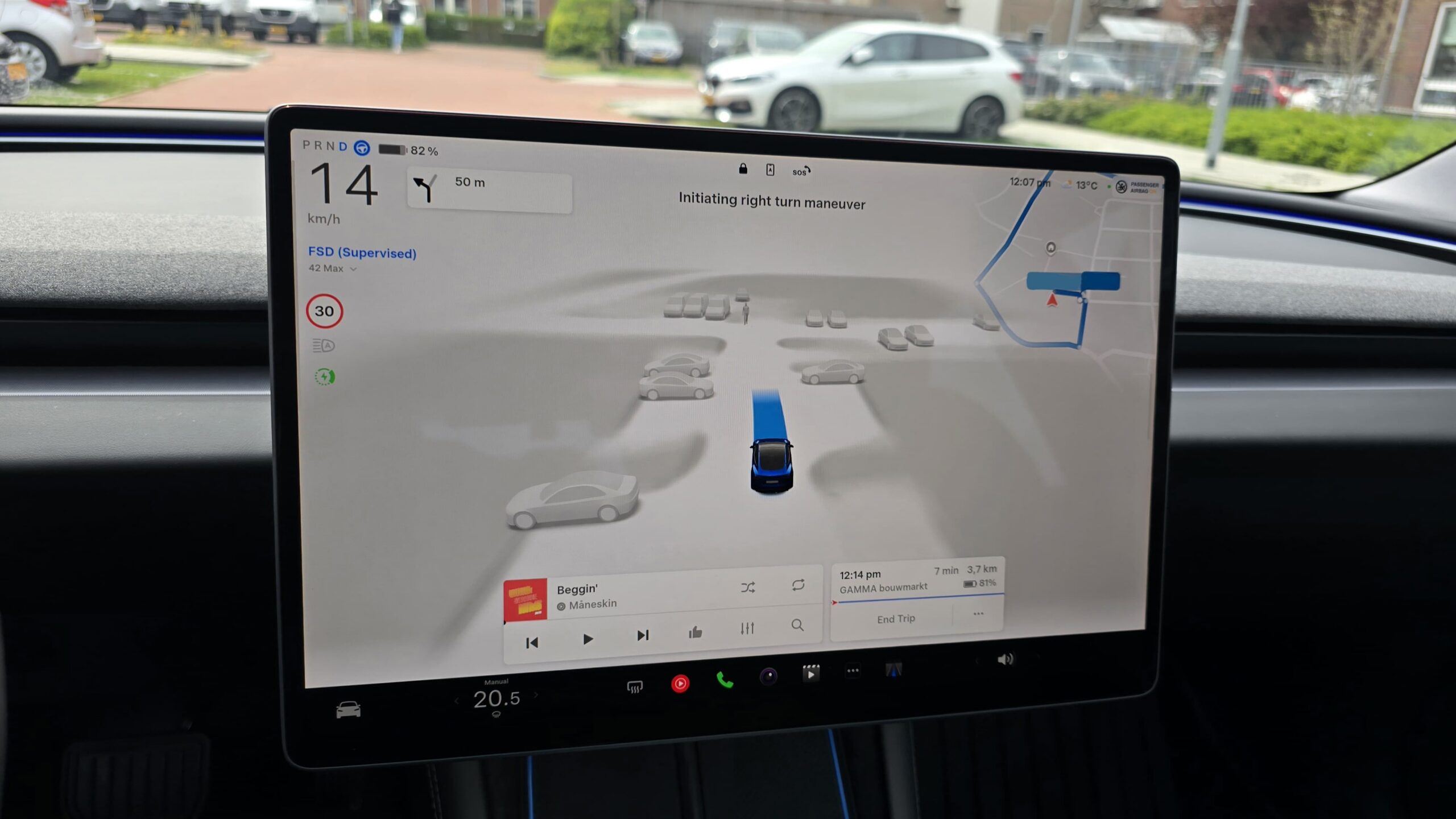
Summary By: eMotoXTesla has recently received regulatory approval from the Dutch road authority (RDW) to deploy its Full Self-Driving (FSD) system in the Netherlands, marking a significant milestone in the rollout of autonomous driving technology in Europe. The update, identified as version 2026.3.6 or FSD v14.3, began reaching a very limited number of vehicles shortly after the announcement. Early access has been granted to a small group of Tesla owners, primarily influencers, with surveys indicating that fewer than 20 vehicles in the Netherlands have received the update so far, highlighting the exclusivity of this initial release.
Initial impressions of the European FSD version have been overwhelmingly positive, with users reporting near-flawless performance across a variety of driving environments, including suburban streets, regional roads, and complex highway construction zones. Unlike Tesla’s previous Autopilot system, which occasionally struggled with certain road markings, the FSD system adheres strictly to Dutch traffic regulations, such as the precise use of indicators when exiting highways. This meticulous compliance reflects the stringent requirements imposed by the RDW and explains the lengthy approval process.
The contrast between FSD and Tesla’s earlier driver assistance systems is stark, with many European drivers previously sceptical of Autopilot now recognising FSD as a fundamentally different and far more capable technology. Comparisons with other advanced driver-assistance systems (ADAS) and even Waymo’s autonomous vehicles suggest that Tesla’s FSD demonstrates superior responsiveness and decision-making, especially in complex traffic scenarios. Notably, the system is able to navigate challenging situations such as overtaking multiple bicycles and merging safely in heavy traffic, behaviours that impressed early testers.
Despite these strengths, the system is not without its flaws. The driving style has been described as overly cautious, often operating well below the speed limit to prioritise comfort and safety, which can frustrate other road users. Drivers can override this cautiousness by accelerating manually, but this carries risks as the vehicle might be anticipating hazards that are not immediately apparent to the human driver. While the vision system has improved dramatically, offering near-superhuman perception capabilities, there remain areas for refinement before FSD can be considered fully mature.
Looking ahead, Tesla’s European FSD rollout is still in its infancy, with broader availability expected to follow as the system is further tested and refined. The initial success in the Netherlands sets a precedent for regulatory acceptance in other European markets, but Tesla will need to continue demonstrating the system’s reliability and safety to gain wider trust. For now, the early adopters’ experiences provide a promising glimpse into the future of autonomous driving on European roads.