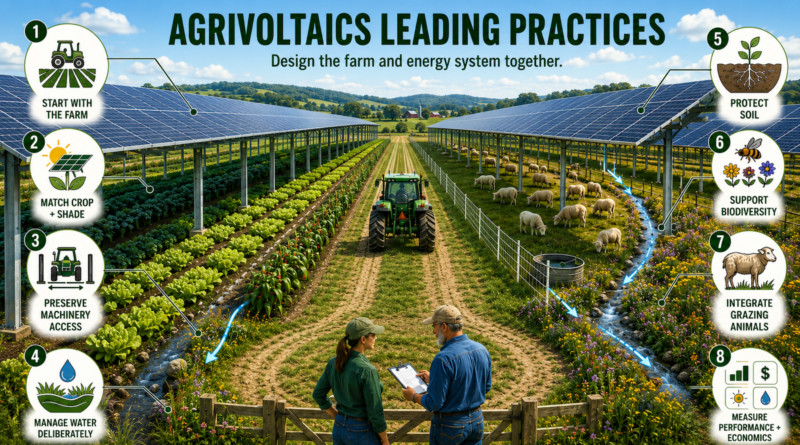
Summary By: eMotoXAgrivoltaics, the practice of combining solar photovoltaic systems with agricultural activities on the same land, is gaining attention for its potential benefits but remains a complex and varied field. While some examples, particularly in hot and dry climates, have demonstrated that crops grown under solar panels can benefit from reduced water stress and cooler microclimates, these outcomes are not universal. The concept encompasses a wide range of configurations, from elevated panels shading vegetables to sheep grazing beneath conventional solar arrays, and even solar installations integrated with fish ponds or orchards, making it difficult to generalise about its effectiveness or scalability.
China leads the world in agrivoltaic deployment by a significant margin, boasting over 130 GW of capacity across nearly 1,700 projects as of 2022. This figure includes diverse forms of land and water co-use, such as crop cultivation, fisheries, greenhouses, and animal husbandry, reflecting a broad and integrated approach to rural infrastructure. By contrast, the United States had reached around 10 GW by late 2024, with projects primarily focused on grazing, pollinator habitats, and vegetation management rather than large-scale crop production under elevated solar arrays. Europe occupies an intermediate position, with over 2.8 GW spread across more than 200 projects, but faces regulatory and definitional challenges that affect the pace and nature of agrivoltaic development.
Japan’s experience highlights the importance of governance and agricultural integrity in agrivoltaics. Despite thousands of solar-sharing sites, some projects failed to deliver meaningful agricultural output, prompting stricter regulations on cultivation plans and monitoring to ensure that farming remains a genuine component of these installations. This underscores a broader concern that agrivoltaics should contribute to food security and biodiversity rather than serve as a token or ornamental farming exercise. Meanwhile, regions such as Southeast Asia and Africa show promising theoretical potential but lack transparent data on capacity and deployment, reflecting the early stage of agrivoltaic adoption in these areas.
The global landscape of agrivoltaics is shaped by varying priorities and capabilities. China’s dominance is driven by its vast solar manufacturing industry, strong provincial support, and pressing land-use and environmental challenges, allowing it to integrate photovoltaics deeply into rural economies. In contrast, the United States and Europe are still defining the scope and standards of agrivoltaics, balancing energy production with agricultural viability and policy frameworks. The future of agrivoltaics will depend on refining these models, ensuring genuine agricultural benefits, and addressing local conditions to unlock its full potential as a sustainable land-use strategy.