EV news article header featuring electric vehicle news, EV charging station, electric car updates and industry insights

News Menu

bicycle news feed and industry updates for eBike and cycling news
Click for Bicycle News
latest eBike news aggregator covering electric bike updates, reviews and industry trends
Click for eBike News
electric motocross news feed with latest dirt bike updates, reviews and industry insights
Click for eMotocross News
latest eScooter news aggregator featuring electric scooter news feed, updates, reviews and industry trends
Click for eScooter news
Article By:
CleanTechnica
2026-05-24 13:05:59

REPORT: U.S. Adds 10 GWh of New Energy Storage Capacity in 1st Quarter, Best Q1 on Record

Summary By: eMotoX
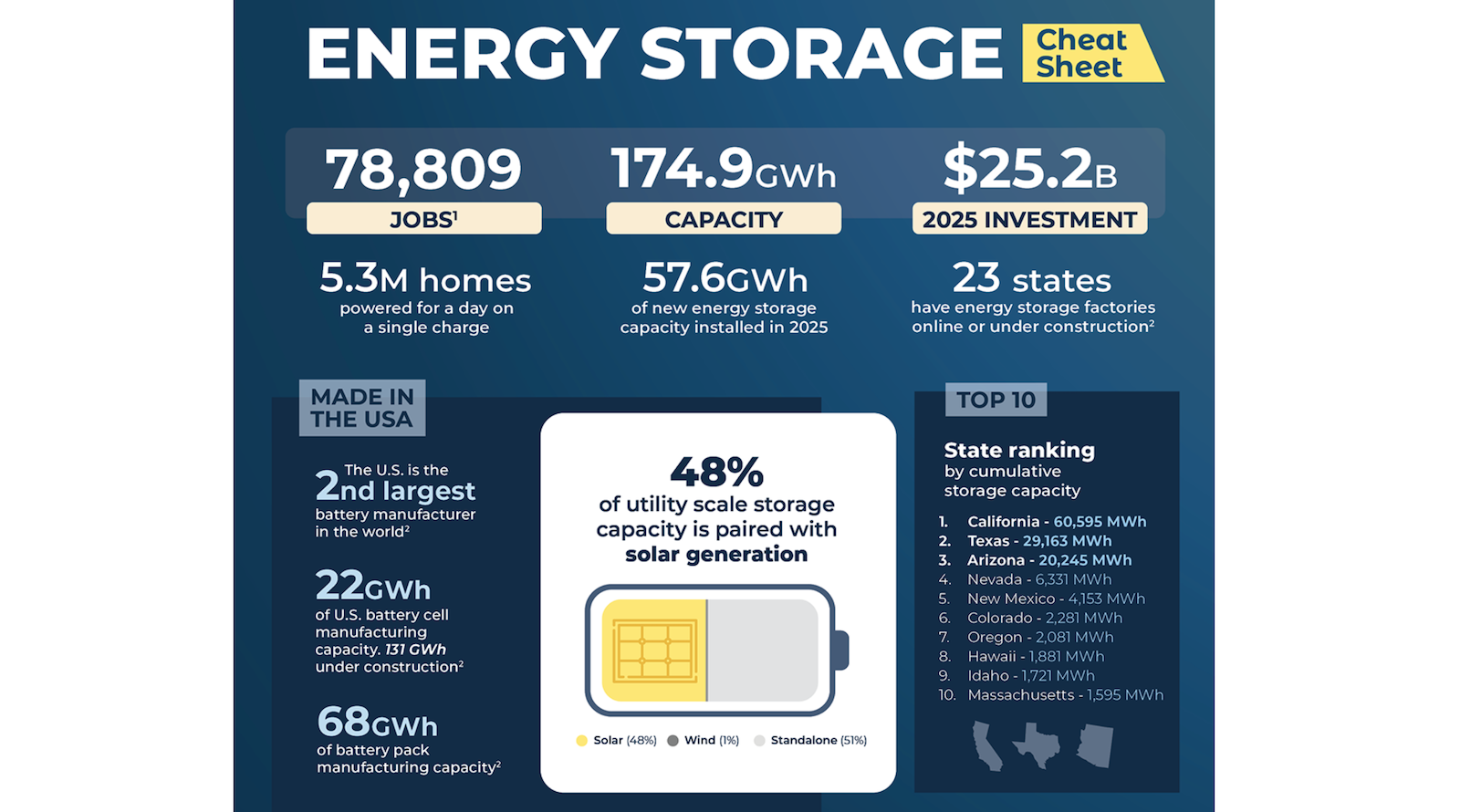
The United States energy storage sector achieved a record-breaking first quarter in 2026, installing 9.7 gigawatt-hours (GWh) of new capacity, marking the strongest Q1 performance in its history. This represents a 32% increase compared to the same period last year, highlighting robust growth despite regulatory challenges in Washington. Projections for total energy storage installations by 2030 have been revised upwards to over 610 GWh, reflecting heightened investor and developer interest amid global energy price volatility and supply disruptions. Key drivers behind this surge include the growing demand from data centres, with major tech firms such as Google and Meta committing to significant energy storage procurements. The increased deployment of solar and storage technologies is seen as a strategic response to energy security concerns, providing a buffer against fuel price shocks and contributing to grid reliability. However, ongoing federal permitting delays pose a risk to this momentum, potentially hampering the industry’s ability to meet rising energy needs and keep consumer costs in check. Industry leaders emphasise the critical role of energy storage as infrastructure vital to national energy security and the expansion of emerging technologies like artificial intelligence. Darren Van’t Hof, interim president and CEO of the Solar Energy Industries Association (SEIA), stressed that while demand is growing, political obstacles could slow progress. Meanwhile, Shan Tomouk from Benchmark Minerals highlighted the necessity of supportive policies to facilitate the rollout of battery energy storage systems (BESS) and mitigate cost impacts on consumers. Regionally, Texas, Arizona, and California remain the dominant markets for utility-scale battery storage, accounting for the majority of installations in the first quarter. Notably, 71% of new utility-scale capacity was added in states that supported former President Donald Trump, illustrating bipartisan interest in energy storage. Additionally, thirteen states now have explicit energy storage targets, with emerging markets such as Georgia, Iowa, and Mississippi also contributing to the sector’s expansion. Looking ahead, the energy storage industry’s growth will depend heavily on overcoming permitting bottlenecks and securing a favourable policy environment. Failure to address these challenges could lead to higher household electricity bills and allow international competitors, particularly China, to widen their lead in technology sectors reliant on reliable and affordable energy. The industry’s trajectory underscores the importance of energy storage in the broader transition to a resilient, clean energy economy.