EV news article header featuring electric vehicle news, EV charging station, electric car updates and industry insights

News Menu

bicycle news feed and industry updates for eBike and cycling news
Click for Bicycle News
latest eBike news aggregator covering electric bike updates, reviews and industry trends
Click for eBike News
electric motocross news feed with latest dirt bike updates, reviews and industry insights
Click for eMotocross News
latest eScooter news aggregator featuring electric scooter news feed, updates, reviews and industry trends
Click for eScooter news
Article By:
CleanTechnica
2026-06-06 00:40:25

People Who Worked On Tesla “Full Self Driving” Don’t Trust Tesla “Full Self Driving”

Summary By: eMotoX
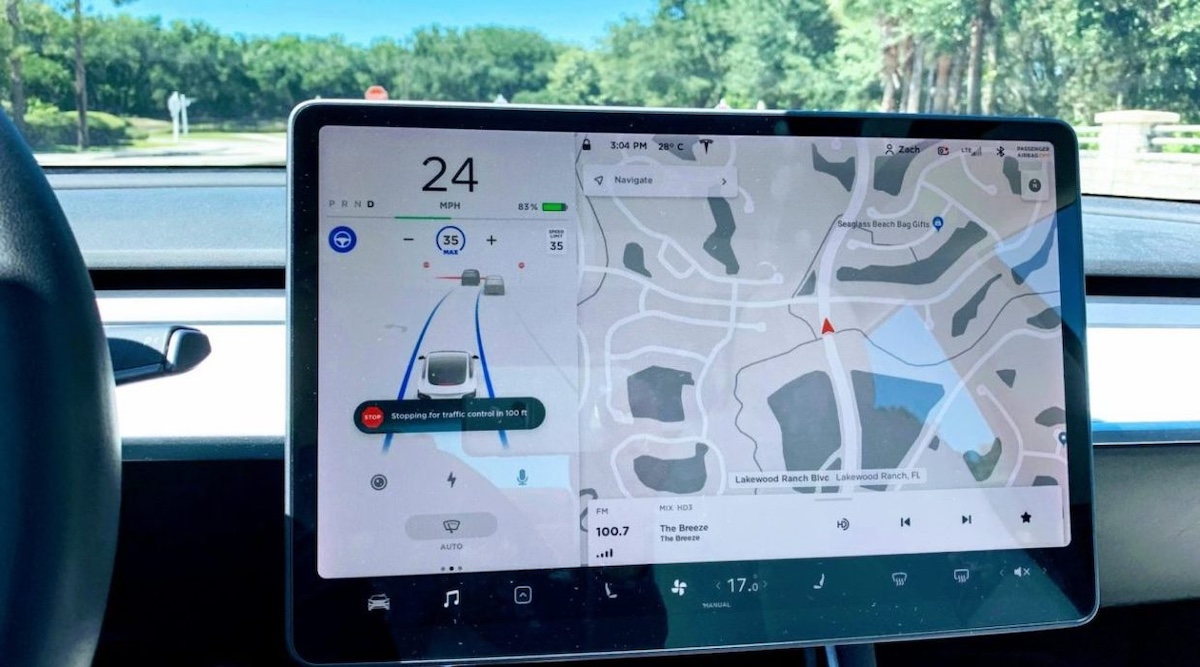
Several former Tesla employees involved in the development and monitoring of the company’s Full Self-Driving (FSD) system have expressed deep scepticism about its current capabilities and safety. Interviews conducted by Reuters with a former Tesla self-driving engineer and nine ex-data labelers reveal a troubling picture of the system’s performance, including instances where Tesla vehicles failed to brake for animals or pedestrians and engaged in risky behaviours such as speeding. These insiders highlighted the intensive, route-specific training required to prepare the system for public demonstrations, contradicting Tesla’s public claims that FSD could soon be deployed broadly and operate reliably without human oversight. The revelations challenge long-standing assertions by Tesla and Elon Musk that their FSD technology would not require the geofencing and localised mapping used by competitors like Waymo. While Tesla has historically criticised rivals for their limited, geofenced operations, the company’s own early robotaxi deployments have been restricted to small, tightly controlled areas, suggesting a convergence towards similar operational constraints. Former staff emphasised that scaling FSD safely across diverse environments would demand extensive manual labour and local calibration, undermining the narrative of a simple “flip the switch” global rollout. Concerns about the reliability of Tesla’s safety claims were also raised by independent traffic safety researchers who reviewed the company’s data. They criticised Tesla’s methodology for inflating safety statistics by comparing only airbag-deployment crashes involving FSD vehicles against a broader federal crash database that includes less severe incidents. This approach, combined with benchmarking against an older average vehicle fleet, was described as misleading and more akin to marketing than rigorous safety analysis. Ten out of eleven experts questioned the validity of Tesla’s public safety figures, casting further doubt on the system’s readiness. The perspectives of former Tesla workers paint a stark picture of internal doubts about FSD’s readiness for widespread use. Among the data labelers interviewed, seven stated they would not trust the system to drive them personally, and one even refused to ride in a Tesla robotaxi regardless of payment. Such candid admissions from those intimately familiar with the technology underscore the gap between Tesla’s public optimism and the practical challenges of achieving truly autonomous driving at scale. The findings suggest that significant technical and operational hurdles remain before FSD can be considered safe for broad consumer deployment.