Summary By: eMotoXThe US Army appears to be renewing its interest in electric vehicles (EVs), particularly those equipped with range extenders, after years of tentative exploration and a recent policy shift away from electrification. While early efforts dating back to the 2000s yielded limited progress, the concept of pairing electric drivetrains with gas-powered generators to extend range remains appealing, especially for military applications that demand reliability and operational endurance. This hybrid approach, known as extended-range electric vehicles (EREVs), combines the benefits of electric propulsion with the security of a fuel backup, a model already familiar in the civilian automotive market.
Range extenders were initially popularised in consumer vehicles like the Chevy Volt, offering a compromise for drivers concerned about battery range. However, they bring added complexity and cost, which has limited their broader adoption. The US Army’s interest in electrification has been more pragmatic, focusing first on anti-idling battery kits that reduce fuel consumption by powering auxiliary systems without running diesel engines. These kits have shown promising fuel savings of 10-20% on medium tactical vehicles and are set to be expanded across other platforms. The Army is also developing integrated power kits capable of delivering high-voltage DC power for advanced applications such as missile defence, mobile command centres, and directed energy weapons, which could significantly reduce logistical burdens and fuel consumption.
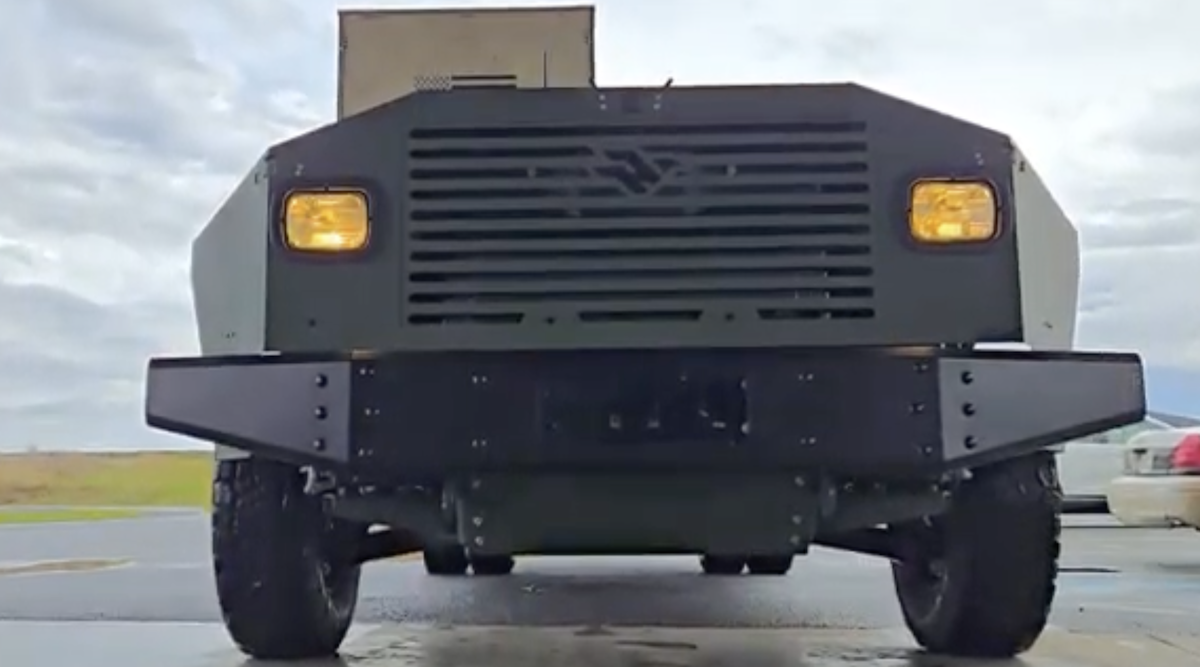
The next logical step for military electrification is the deployment of EREVs, particularly in autonomous and robotic vehicle platforms. US electric truck manufacturer Harbinger, in partnership with Rheinmetall’s American division, is pursuing this opportunity by developing cabless, uncrewed tactical vehicles that combine scalable battery systems with range-extending hybrid powertrains. These vehicles are designed to operate with reduced acoustic and thermal signatures, enabling silent watch capabilities and extended mission durations in challenging environments. This collaboration aligns with the US Army’s priorities for autonomy and manned-unmanned teaming, reflecting a broader strategic push towards electrification in military logistics and combat support.
The partners’ confidence is bolstered by the Office of the Under Secretary of Defense’s “Other Transactions Guide,” which facilitates rapid acquisition of innovative technologies. The Army’s Sustainment Other Transactional Authority (OTA) has already seen submissions of autonomous electric vehicles, signalling a clear pathway for further electrification projects. The rationale for this shift is underscored by operational realities: military vehicles spend a significant portion of their time stationary, idling engines to power systems, which consumes substantial fuel and strains supply chains. Reducing petroleum dependency is also seen as a strategic imperative, highlighted by recent conflicts where fuel shortages have hampered military operations, emphasising the tactical advantages of hybrid-electric drive vehicles.
As the US Army continues to explore and invest in hybrid and electric technologies, the implications extend beyond fuel savings to enhanced operational capabilities and reduced logistical vulnerabilities. The evolving landscape of military vehicle electrification suggests a future where electric and hybrid platforms play a central role in sustaining combat readiness and efficiency. Observers should watch for further developments through the OTA process