EV news article header featuring electric vehicle news, EV charging station, electric car updates and industry insights

News Menu

bicycle news feed and industry updates for eBike and cycling news
Click for Bicycle News
latest eBike news aggregator covering electric bike updates, reviews and industry trends
Click for eBike News
electric motocross news feed with latest dirt bike updates, reviews and industry insights
Click for eMotocross News
latest eScooter news aggregator featuring electric scooter news feed, updates, reviews and industry trends
Click for eScooter news
Article By:
CleanTechnica
2026-04-16 17:10:31

Latest Research Suggests AMOC Could Collapse Sooner Than Expected

Summary By: eMotoX
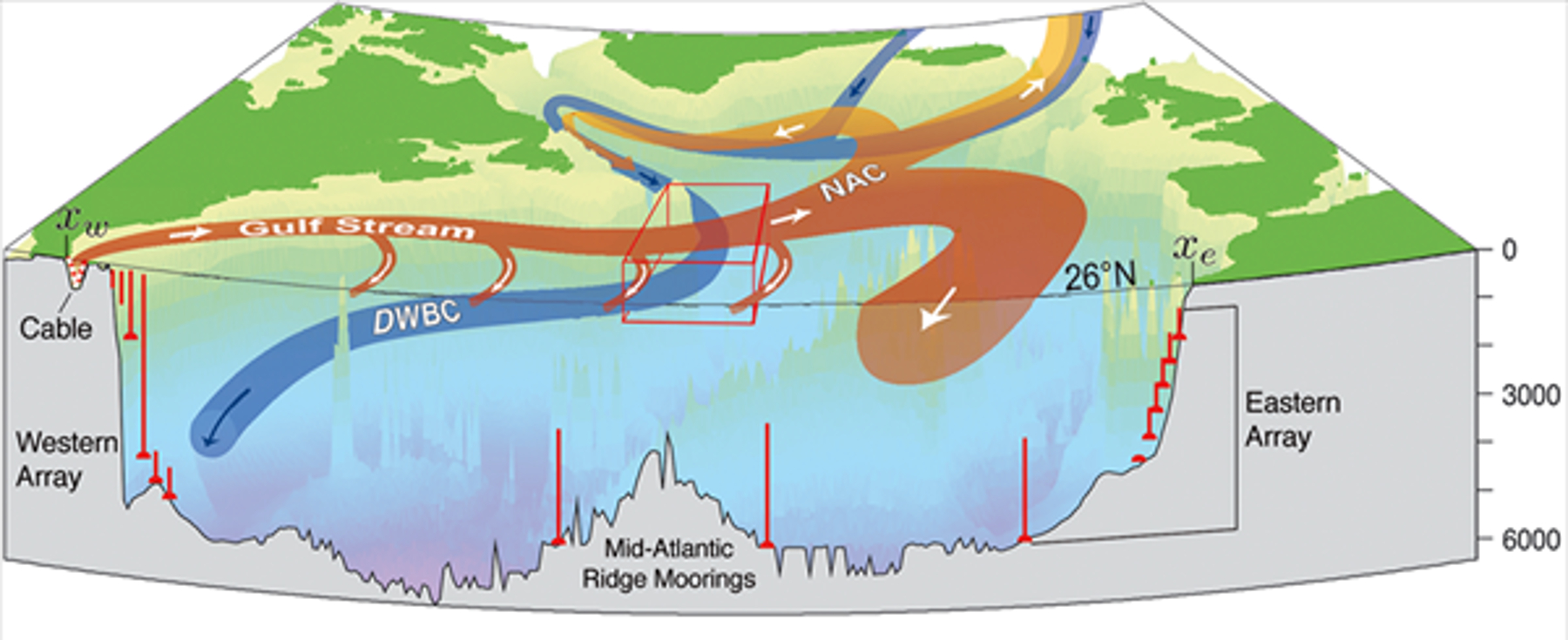
New research indicates that the Atlantic Meridional Overturning Current (AMOC), a crucial ocean circulation system responsible for transporting warm water from the tropics to northern Europe, may collapse sooner than previously anticipated. The AMOC plays a vital role in moderating the climate of regions such as the UK, Scandinavia, and Iceland, and its failure would lead to significant cooling and disruption across these areas. While scientific models have long varied in their predictions about the AMOC’s future, the latest study suggests that the more pessimistic forecasts, which foresee a collapse by the middle of this century, are increasingly credible. The study, led by Valentin Portmann from the Inria Centre de recherche Bordeaux Sud-Ouest in France and published in Science Advances, employed innovative statistical techniques to refine climate models and reduce uncertainty. By focusing on surface salinity patterns in the South Atlantic, researchers were able to identify models that more accurately reflect real-world observations. This approach revealed that the AMOC is closer to a tipping point than previously thought, with a decline expected to be more severe by 2100. Professor Stefan Rahmstorf of the Potsdam Institute for Climate Impact Research emphasised the gravity of these findings, warning that the risk of an irreversible AMOC shutdown has risen from around 5 percent to over 50 percent. The primary cause of the AMOC’s weakening is linked to rapidly rising Arctic temperatures due to global warming. Warmer waters in the North Atlantic are less dense and sink more slowly, disrupting the delicate balance of temperature and salinity that drives the current. Additionally, increased rainfall and melting ice from Greenland introduce fresh water into the ocean, further reducing salinity and impeding the sinking process that powers the AMOC. These changes threaten to destabilise the ocean circulation system, which operates without any mechanical pump, relying solely on natural forces such as temperature gradients, salinity differences, and Earth’s rotation. Understanding and predicting the behaviour of the AMOC remains a complex challenge due to natural variability and the intricate interplay of oceanic factors. However, the new research’s methodological advancements provide a more reliable basis for future projections. Rahmstorf noted that current models may still underestimate the impact of Greenland’s ice melt, suggesting that the real-world situation could deteriorate even faster than the latest assessments indicate. The potential collapse of the AMOC carries profound implications for global climate patterns, underscoring the urgent need for concerted efforts to mitigate climate change and monitor oceanic systems closely.