Summary By: eMotoXIreland’s recent fuel protests, which severely disrupted key infrastructure including the Whitegate oil refinery and led to widespread fuel shortages, have exposed significant vulnerabilities in the country’s rural energy system. The government’s emergency response, involving a €755 million relief package with excise cuts and subsidies, provided short-term relief but failed to address the underlying issue: the heavy reliance of Irish agriculture on diesel fuel. Rather than viewing the protests as a setback to decarbonisation efforts, they highlight the urgent need to accelerate farm electrification to improve energy resilience and security in the sector.
Agriculture in Ireland accounts for a relatively small share of national energy use and emissions—around 3%—but remains heavily dependent on oil, particularly for machinery. Despite the availability of electrification technologies, progress has been slow because farm electrification has not been prioritised as a strategic energy security goal. The structure of Irish farming, characterised by smaller, grass-dominated holdings and a high proportion of livestock, presents unique opportunities for electrification, especially given the prevalence of short-distance, repetitive machine work and significant fixed electrical loads such as milking and cooling.
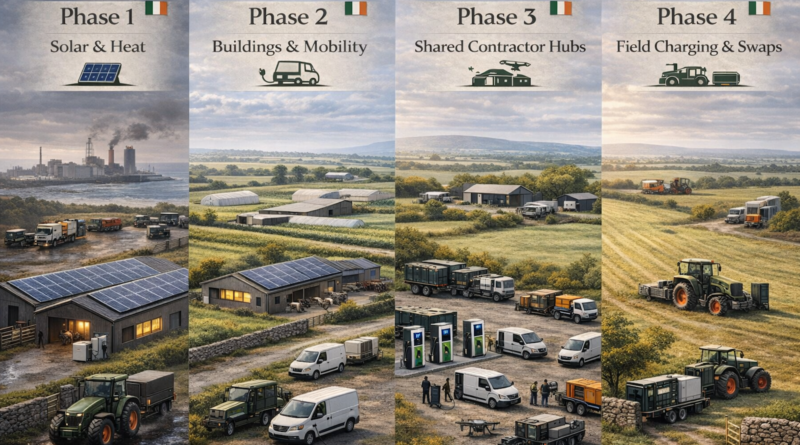
The energy demands of Irish farms can be categorised into three main areas: fixed electrical loads (milking, cooling, lighting), thermal loads (water and building heating), and mobile diesel loads (tractors, loaders, transport). While fixed and thermal loads are increasingly amenable to electrification through technologies like heat pumps and solar power, the mobile diesel component remains the most challenging. However, existing commercial technologies could already address about half of on-farm energy needs, substantially reducing fuel exposure even if biological emissions from livestock remain the dominant source of agricultural greenhouse gases.
Dairy farming emerges as a prime candidate for immediate electrification efforts, with electricity consumption largely driven by milk cooling, water heating, and milking machinery. Studies indicate that many dairy farms could meet the majority of their electricity needs through rooftop solar installations, which offer attractive payback periods and significant cost savings. Similarly, pig and poultry farms, with their concentrated energy use in heating buildings, represent another sector where electrification can deliver rapid benefits, reducing reliance on fossil fuels and improving operational efficiency.
The fuel protests have underscored the fragility of Ireland’s current agricultural energy model and the pressing need for a coherent, phased electrification strategy. Prioritising sectors like dairy and pig farming for electrification, supported by targeted public investment and incentives, could enhance energy security, reduce emissions, and shield farmers from volatile fuel prices. The challenge now lies in translating these insights into policy and action to ensure Ireland’s rural economy is more resilient and sustainable in the years ahead.