Summary By: eMotoXHydrogen Vehicle Systems (HVS), once a promising player in the zero-emission heavy-duty freight sector, has recently entered administration, marking a significant setback for hydrogen trucking ambitions. Despite raising around £55 million from private and public sources, including substantial backing from EG Group and the UK government, HVS’s assets were sold for a mere £145,000. This stark contrast highlights the difficulty of translating engineering innovation into a viable business model, especially in a sector where success depends on more than just the vehicle itself—it requires a comprehensive ecosystem including manufacturing, supply chains, customers, refuelling infrastructure, and ongoing service operations.
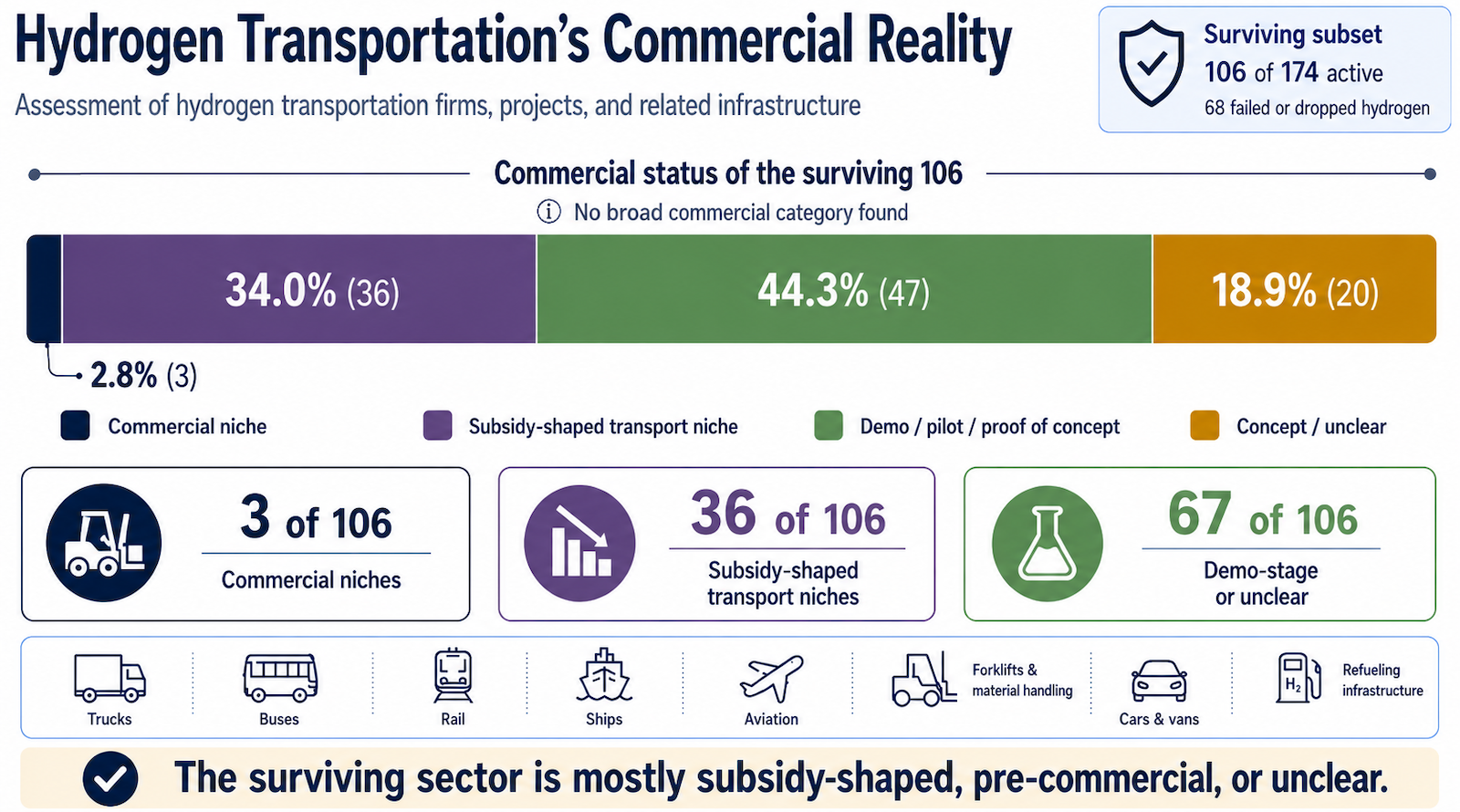
A broader analysis of the hydrogen transportation landscape reveals a mixed picture. Out of 174 companies and projects focused on hydrogen mobility, nearly 40% have failed or abandoned hydrogen initiatives. Among the survivors, only a tiny fraction—about 3%—operate in genuine commercial niches with repeat customers and sustainable business models. These niches are predominantly in material handling, such as hydrogen-powered forklifts used in warehouses, where hydrogen’s advantages are more tangible and economically justifiable compared to long-haul trucking or other heavy transport sectors.
The majority of ongoing hydrogen transportation efforts fall into two main categories: subsidy-dependent operations and demonstration projects. Around a third of active projects rely heavily on government grants, mandates, or industrial policies, including hydrogen buses, taxis, rail services, and some truck fleets, often clustered in regions like China where state support shapes the market. Meanwhile, nearly half remain in pilot or proof-of-concept stages, with ongoing trials across various vehicle types and infrastructure developments. These demonstrations serve to reduce uncertainty but have yet to translate into widespread commercial adoption, often lingering in this phase for many years.
A significant portion of hydrogen initiatives also occupy a nebulous space where progress is unclear or stalled. These projects may maintain a public narrative around hydrogen transport but lack concrete evidence of active deployment or market traction. This “concept or unclear” category underscores the challenge of sustaining momentum in hydrogen transport, as many ventures quietly fade, rebrand, or await new funding rounds without delivering substantial commercial outcomes. Collectively, these trends indicate that while hydrogen transportation has not vanished, it remains confined to narrow niches and heavily supported pilots rather than broad, self-sustaining markets.
The collapse of HVS exemplifies the broader structural challenges facing hydrogen in transport, particularly in sectors like heavy-duty trucking where the vehicle is only one part of a complex system. The economics of hydrogen trucks are difficult to justify without a mature ecosystem, including affordable fuel supply and refuelling infrastructure, which remain underdeveloped. Consequently, hydrogen’s future in transportation may be limited to specialised applications where its unique benefits outweigh the costs, while broader ambitions will require continued innovation, policy support, and infrastructure investment to move beyond pilot stages.