Article By:
CleanTechnica
2026-05-20 03:46:25
How High-Performance Computing and AI Accelerated Applied Energy Research in 2025
Summary By: eMotoX
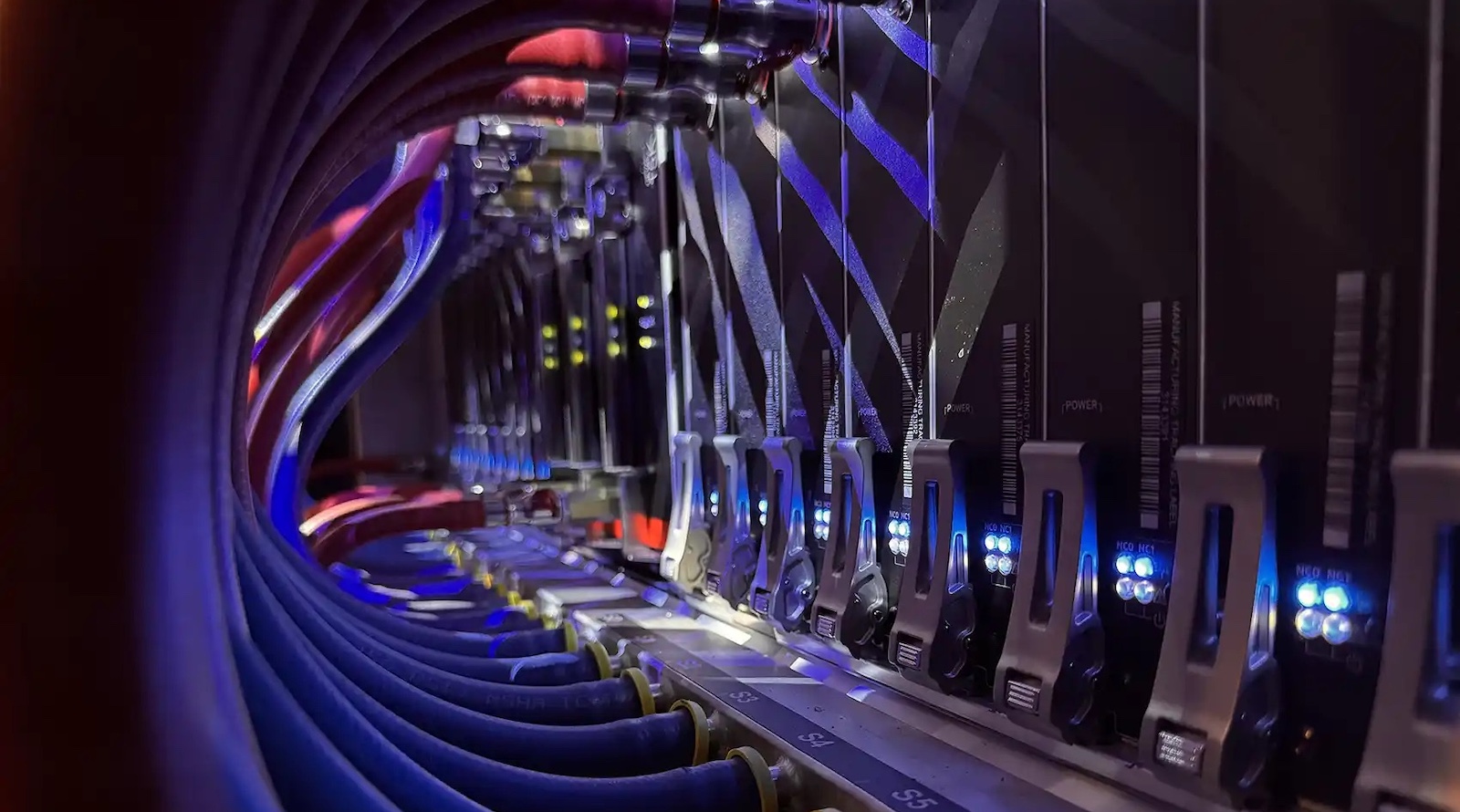
The National Laboratory of the Rockies (NLR) has significantly advanced its applied energy research capabilities in 2025 through upgrades to its Kestrel supercomputer, which now delivers 56 peak petaflops. These enhancements have enabled the laboratory to support over 500 modelling and simulation projects, involving more than 800 users and resulting in nearly 300 peer-reviewed publications within the fiscal year. The supercomputer’s expanded processing power and memory capacity have been crucial in handling complex AI-driven workflows, accelerating scientific discovery across diverse fields such as materials science, fluid dynamics, and integrated energy systems.
Key improvements to Kestrel include upgrades to central processing unit racks and an increased allocation of graphics processing units, which have boosted throughput for machine learning tasks like large model training and surrogate modelling. This has allowed researchers to work with larger datasets and more intricate system models, addressing the growing demands of AI-enabled energy research. These technological advancements have directly contributed to projects that explore innovative energy solutions, such as developing cost-effective alternatives to scarce metals in battery technologies and optimising industrial bioreactor designs through virtual testing.
Among the highlighted initiatives is the ElectroCat modelling team, which leverages machine learning to identify efficient and affordable electrocatalysts free from critical minerals, potentially reducing reliance on expensive materials in energy storage. Another notable project, BioReactorDesign, employs computational fluid dynamics to predict gas-liquid flows in bioreactors, aiming to lower the financial and operational risks associated with scaling up new bioreactor designs. Additionally, the demand-side grid (dsgrid) team is enhancing electricity load forecasting tools by integrating sector-specific models, thereby improving regional power system planning and enabling more comprehensive analysis of future energy scenarios.
NLR’s program manager for Advanced Computing, Kris Munch, emphasised the growing role of AI in applied energy research, particularly highlighting the contributions of early-career researchers who are driving innovation in computing-enabled energy solutions. The laboratory’s continued investment in high-performance computing infrastructure underscores its commitment to addressing complex energy challenges and supporting the Department of Energy’s mission. Looking ahead, the expanded capabilities of Kestrel are expected to facilitate further breakthroughs in sustainable energy technologies and system optimisation.
The Fiscal Year 2025 Advanced Computing Annual Report offers detailed insights into these developments and showcases how NLR’s advanced computing resources are empowering researchers to tackle real-world energy problems. As AI and high-performance computing become increasingly integral to energy research, NLR’s experience may serve as a model for other institutions aiming to harness computational power for scientific progress and practical applications in the energy sector.