Article By:
CleanTechnica
2026-06-10 01:49:34
GM Empower Event — GM Announces Sodium-Ion Grid-Scale Battery Storage Developed In The US
Summary By: eMotoX
General Motors has unveiled a significant advancement in grid-scale battery storage with the announcement of a new sodium-ion battery technology developed in partnership with Peak Energy. This initiative was revealed at a GM event in San Francisco, where the company also highlighted its activation of vehicle-to-grid (V2G) capabilities for existing customers and introduced a universal public charging interface called Energy Pass. The sodium-ion batteries are designed specifically for stationary energy storage, addressing the growing demand for reliable and cost-effective power solutions amid rising electricity consumption and the expansion of AI data centres.
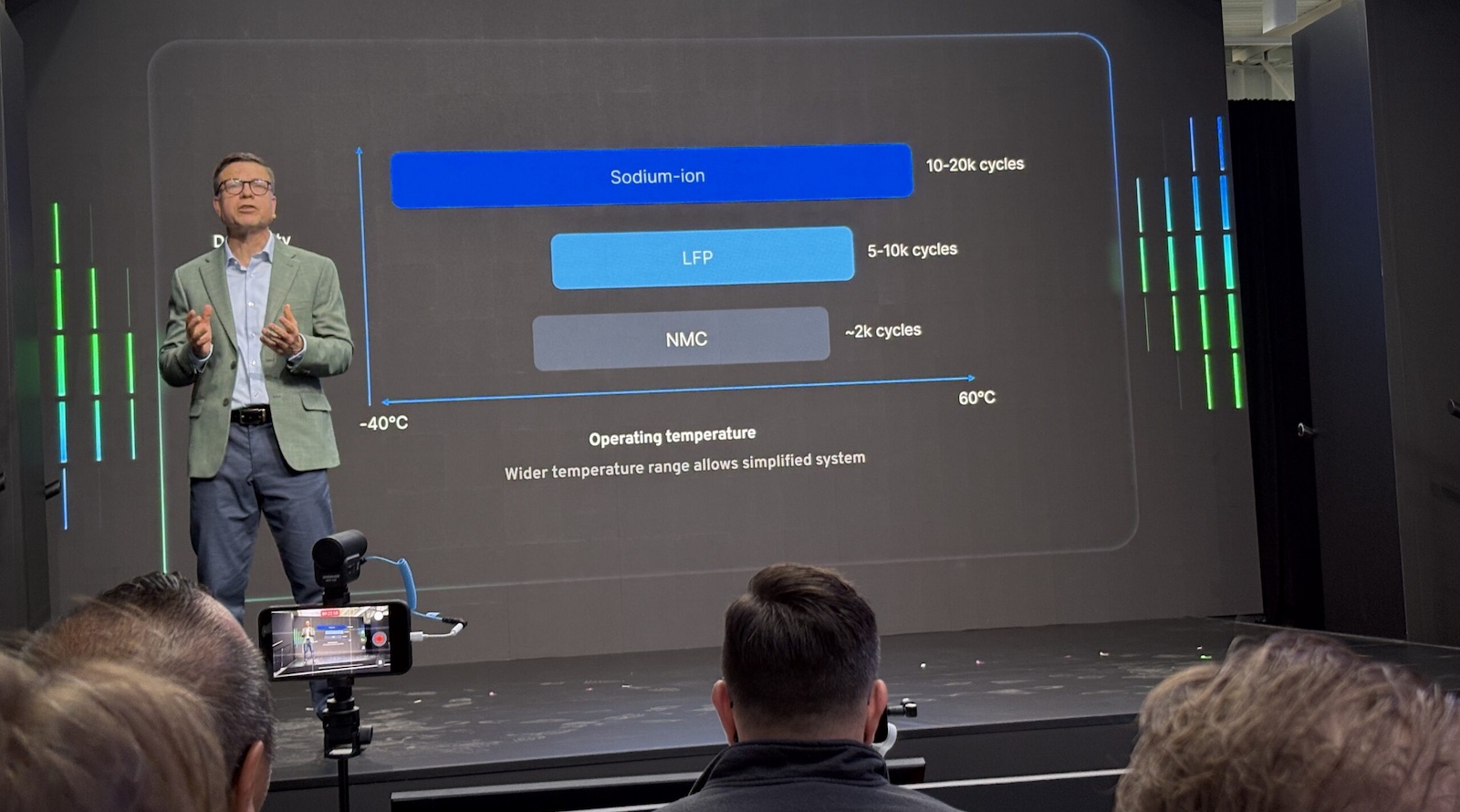
Sodium-ion chemistry offers several advantages over traditional lithium-ion batteries for grid applications. While both operate on similar principles, sodium-ion cells can endure a wider temperature range and support more charge cycles, potentially eliminating the need for active liquid cooling systems. This reduction in ancillary hardware translates into lower maintenance requirements, less energy loss, and decreased noise, which collectively reduce the total cost of ownership over the lifespan of large-scale installations. GM’s development work is based at its Warren, Michigan battery R&D centre, leveraging expertise from its electric vehicle battery programmes to accelerate prototyping and production.
The company’s approach reflects a strategic diversification of battery technologies tailored to specific applications rather than relying on a single chemistry. In addition to advancing sodium-ion batteries, GM continues to support near-term grid storage needs through lithium iron phosphate (LFP) batteries produced via its Ultium Cells joint venture with LG Energy Solution. Moreover, GM is repurposing used EV batteries in collaboration with Redwood Materials, deploying thousands of second-life packs to power infrastructure projects such as AI data centres and its own facilities, demonstrating a comprehensive lifecycle strategy.
Industry leaders from Peak Energy emphasised the cost benefits and supply chain advantages of sodium-ion technology. Sodium’s abundance reduces reliance on geopolitically sensitive materials, while domestic development in the US avoids licensing fees and royalties. Although sodium-ion batteries currently have lower energy density compared to lithium-ion, this is less critical for stationary storage where longevity, durability, and affordability are paramount. GM’s investment in this technology signals a commitment to evolving energy storage solutions that support grid stability and renewable integration over the coming decades.
This announcement complements GM’s broader energy ecosystem vision, which integrates vehicle electrification, grid interactivity, and public charging infrastructure. By advancing dedicated stationary battery chemistries alongside vehicle-based energy solutions, GM aims to address the diverse needs of modern power grids and accelerate the transition to sustainable energy systems. The sodium-ion programme is set to begin prototyping this year, marking an important step towards commercial deployment and long-term energy resilience.