Article By:
CleanTechnica
2026-04-21 13:59:49
From Handshakes to Shovels in the Ground: How the EU Can Reset Its Minerals Diplomacy
Summary By: eMotoX
The European Union faces a critical challenge in securing reliable supplies of minerals essential for the clean energy transition, as the global energy crisis exposes vulnerabilities in resource dependencies. While the shift from fossil fuels to renewables and electric vehicles promises reduced reliance on oil, it raises concerns about new dependencies on critical raw materials such as lithium, manganese, and rare earth elements. Unlike oil, these minerals are recoverable and widely distributed globally, but the EU’s current diplomatic efforts have yet to translate into tangible increases in supply, largely due to concentrated processing control—most notably by China—and a lack of effective investment mechanisms.
Despite numerous initiatives, including the Critical Raw Materials Act and the establishment of Clean Trade and Investment Partnerships (CTIPs) with resource-rich countries like Chile and Zambia, the EU has struggled to convert political agreements into concrete mining and processing projects. The article highlights a disconnect between political will and practical implementation, emphasising the need for a strategic reset in the EU’s minerals diplomacy. This involves not only selecting partners with care but also actively involving European companies that can provide the necessary expertise, investment, and market access to resource-rich nations, with South Africa’s manganese resources cited as a prime example of untapped potential.
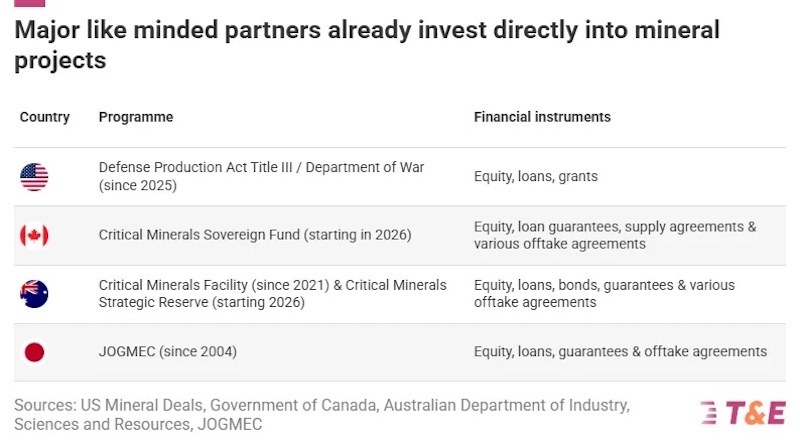
To overcome these challenges, the EU must develop robust financial tools that enable direct investment in mineral projects, similar to strategies employed by countries such as Canada, the US, Japan, and Australia. The current reliance on fragmented national export credit agencies lacks the strategic cohesion needed to drive progress. The newly proposed Critical Raw Materials Centre could play a pivotal role if endowed with a substantial budget and an independent mandate to coordinate miners, refiners, investors, and buyers. This approach would not only enhance supply security but also ensure that sustainability and social standards are upheld throughout the supply chain.
Moreover, the EU’s influence in shaping global standards for responsible mineral sourcing could be strengthened through forums like the G7 Minerals Alliance. Establishing clear market access criteria based on environmental and social benchmarks would help distinguish compliant suppliers and encourage broader adoption of best practices among like-minded partners. Ultimately, the article argues that the EU’s minerals diplomacy must evolve from diplomatic gestures to actionable investments, combining financial firepower with strategic partnerships and business involvement to secure a sustainable and resilient supply of critical raw materials essential for Europe’s green transition.