EV news article header featuring electric vehicle news, EV charging station, electric car updates and industry insights

News Menu

bicycle news feed and industry updates for eBike and cycling news
Click for Bicycle News
latest eBike news aggregator covering electric bike updates, reviews and industry trends
Click for eBike News
electric motocross news feed with latest dirt bike updates, reviews and industry insights
Click for eMotocross News
latest eScooter news aggregator featuring electric scooter news feed, updates, reviews and industry trends
Click for eScooter news
Article By:
The Driven
2026-04-28 21:31:57

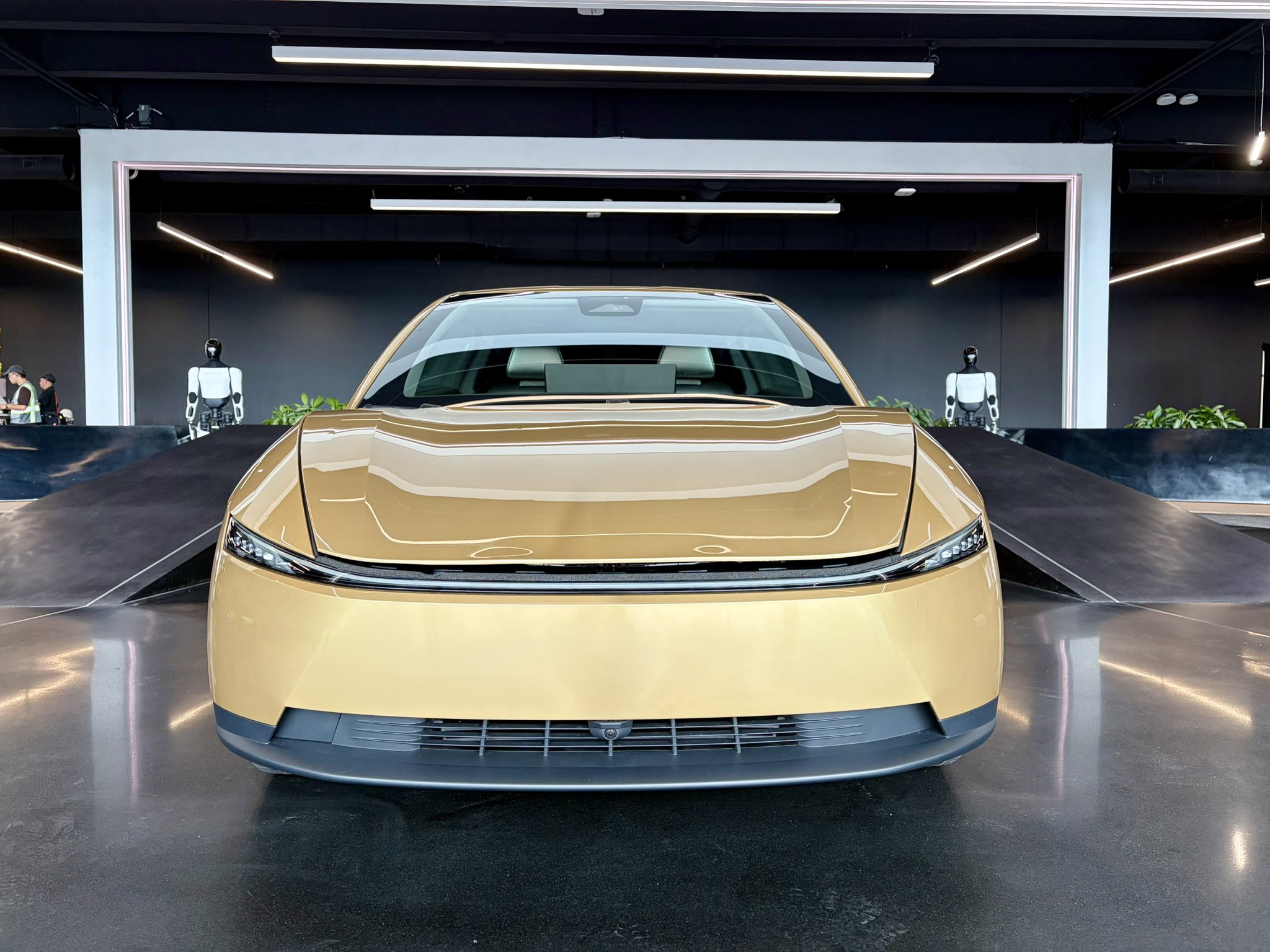
First Tesla Cybercab with production VIN rolls off production line

Summary By: eMotoX
Tesla has completed production of the first official Cybercab, its two-seater autonomous robotaxi, at the GigaTexas factory. This milestone marks the beginning of the company’s venture into mass-producing self-driving vehicles. The initial production model, dubbed VIN Zero, was unveiled in a striking glossy gold finish, a departure from the matte paint seen on earlier test units. Photographs shared online provide a clear view of the vehicle’s refined exterior and interior, including black seats with a fold-down centre armrest, offering a glimpse of what customers can expect from the production version. The Cybercab was originally introduced at Tesla’s exclusive “We, Robot” event in late 2024, where attendees experienced fully autonomous rides on closed tracks. Since then, the vehicle has been spotted frequently around Tesla’s test facilities in California and Texas, suggesting ongoing development and refinement. Priced at approximately $45,000, the Cybercab is designed to be a cost-effective solution for autonomous ride-hailing, featuring a simplified interior and practical boot space. Tesla aims to streamline production by reducing the number of parts by half compared to the Model 3, which should facilitate faster scaling compared to competitors like Waymo. Tesla’s approach to manufacturing the Cybercab involves an innovative “unbox assembly” method, which is expected to result in a gradual production ramp-up as the company optimises this new process. The reduced complexity of the vehicle’s design is a strategic move to accelerate deployment and lower costs in the competitive autonomous vehicle market. Industry experts see this as a significant step in Tesla’s broader ambition to dominate the robotaxi sector, leveraging its expertise in electric vehicles and self-driving technology. The launch of the Cybercab production model signals Tesla’s commitment to advancing autonomous mobility, with implications for urban transport and ride-sharing services worldwide. As production scales, the company’s ability to deliver a reliable, affordable robotaxi could reshape public perceptions of self-driving cars and accelerate adoption. Observers will be watching closely to see how Tesla manages production challenges and regulatory hurdles in the coming months as it moves from prototype to commercial deployment.