EV news article header featuring electric vehicle news, EV charging station, electric car updates and industry insights

News Menu

bicycle news feed and industry updates for eBike and cycling news
Click for Bicycle News
latest eBike news aggregator covering electric bike updates, reviews and industry trends
Click for eBike News
electric motocross news feed with latest dirt bike updates, reviews and industry insights
Click for eMotocross News
latest eScooter news aggregator featuring electric scooter news feed, updates, reviews and industry trends
Click for eScooter news
Article By:
CleanTechnica
2026-04-28 03:58:09

Elon Musk’s Nutso Comments on US National Debt & Robots

Summary By: eMotoX
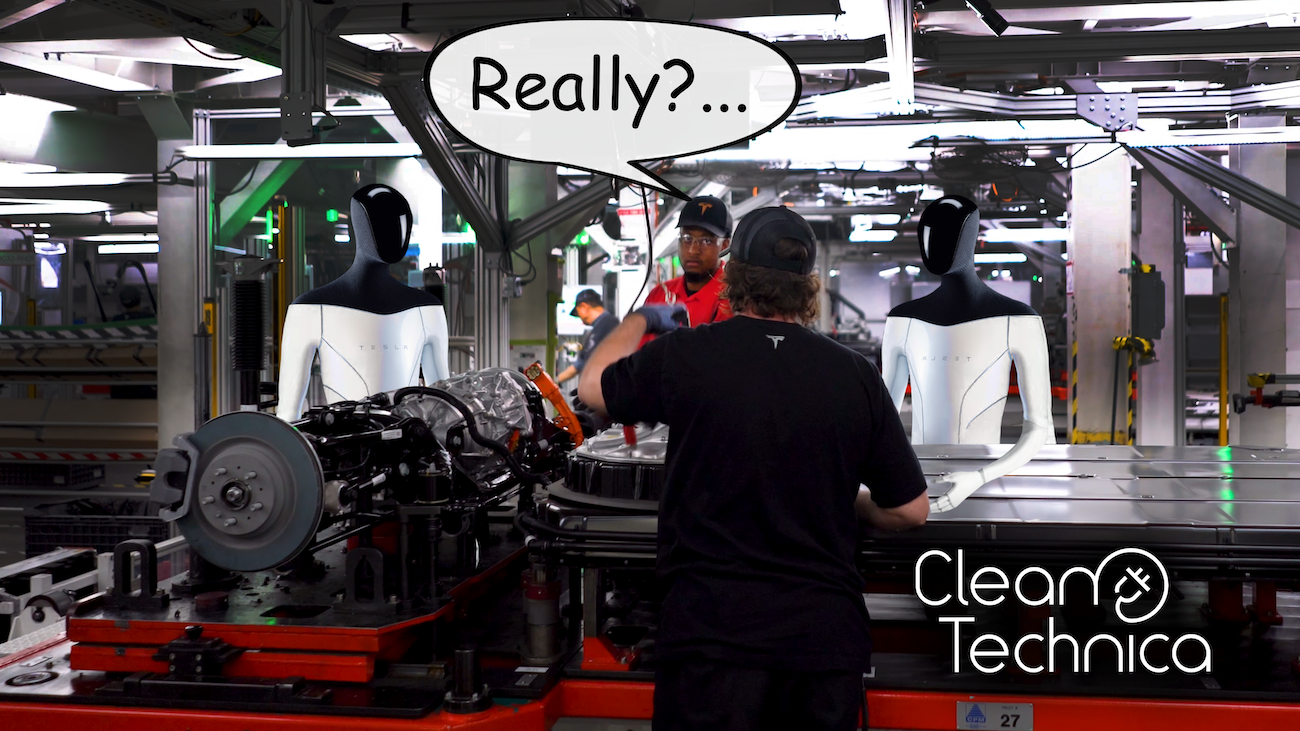
Elon Musk recently announced that Tesla’s first production line for the Optimus robot is set to go live this quarter, with an ambitious target of manufacturing one million units annually. This new production facility will replace the existing Model S and Model X lines at Tesla’s Fremont, California plant. Musk’s bold projection raises questions about the market demand for such a vast number of robots and whether Optimus could ultimately surpass the significance of Tesla’s established electric vehicle models. In a separate discussion on the Dwarkesh Podcast, Musk made a striking claim regarding the United States’ fiscal future, asserting that the country is inevitably headed towards bankruptcy due to its mounting national debt. He argued that the only viable solution to this crisis lies in the widespread adoption of robots and artificial intelligence, suggesting that these technologies will be essential in resolving the nation’s financial woes. Musk’s assertion has drawn scepticism, particularly given the complexity of national debt issues and the role of government policy in managing economic stability. The context surrounding Musk’s comments highlights the scale of the US national debt, which currently stands at nearly $39 trillion and continues to grow as government spending outpaces revenue. Recent military conflicts and proposed defence budgets, including a significant increase under the Trump administration, have contributed substantially to this fiscal challenge. Additionally, legislation such as the One Big Beautiful Bill Act is projected to add trillions more to the debt over the coming decade, underscoring the multifaceted nature of the country’s financial predicament. Musk’s stance has also attracted criticism due to his previous political endorsements, particularly his support for Republican candidates who have historically overseen large increases in the national deficit. This apparent contradiction has led to questions about the coherence of his economic views. The suggestion that technological innovation alone can rectify deep-rooted fiscal problems has been met with concern, reflecting broader debates about the limits of automation and AI in addressing systemic policy issues. Looking ahead, the implications of Musk’s vision for Tesla and the US economy remain uncertain. While the Optimus robot production line represents a significant technological leap for Tesla, the practical impact of mass robot deployment on national debt and economic recovery is far from clear. As Tesla moves forward with its ambitious plans, the broader conversation about the intersection of technology, policy, and fiscal responsibility is likely to intensify.