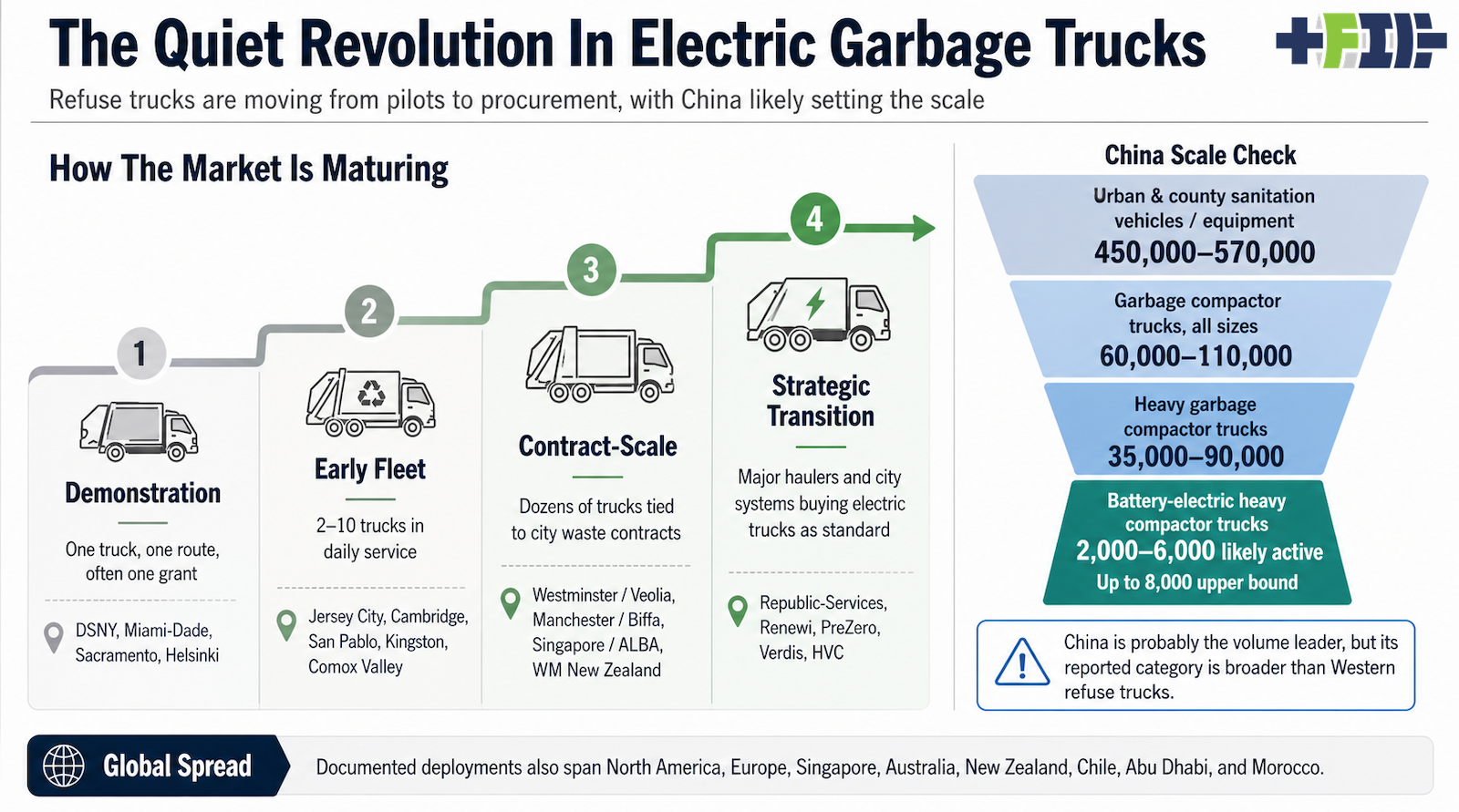
Summary By: eMotoXElectric garbage trucks represent a significant yet often overlooked segment in the electrification of heavy-duty vehicles. Unlike the more high-profile electric pickups, buses, or long-haul trucks, refuse vehicles perform essential, predictable work within urban environments, operating on fixed routes with frequent stops and heavy energy demands. Their daily routine involves constant acceleration, braking, bin lifting, and waste compaction, all within close proximity to residents, making the shift to electric models particularly impactful for reducing local emissions, noise, and pollution exposure.
The scale of the refuse truck fleet is substantial, especially in North America, where estimates suggest around 180,000 such vehicles are in daily operation, with the vast majority still powered by diesel or natural gas. When considering Canada and Mexico, the total fleet size grows further, and globally the number ranges from several hundred thousand to over a million vehicles, depending on the type of sanitation equipment included. Despite this large base, the current penetration of electric garbage trucks remains minimal, with recent orders like Republic Services’ 150 electric trucks representing only a tiny fraction of the total fleet.
The transition to electric refuse trucks is expected to be gradual due to the long service life of these vehicles, typically eight to twelve years. Even with increasing procurement of electric models, the overall fleet electrification will take time to materialise, making early adoption and repeat purchases critical indicators of future growth. The operational characteristics of refuse trucks—short, local routes starting and ending at a depot with predictable energy needs—make them particularly well-suited to electrification, as fleet operators can manage charging and maintenance within controlled environments.
This practical fit contrasts with the challenges faced by long-haul electric trucks, which rely heavily on external charging infrastructure and face more variable routes. The shift towards electric garbage trucks could therefore serve as a blueprint for successful heavy-duty vehicle electrification in urban settings, providing cleaner, quieter, and more efficient waste collection. As municipalities and haulers increasingly integrate electric models into their fleets, the sector may see a steady rise in electric refuse trucks becoming standard rather than exceptional, signalling a meaningful step forward in urban sustainability and emissions reduction.