Article By:
Charged EVs
2026-04-07 15:01:42
Chinese automaker BYD plans to open 20 Canadian EV dealerships within a year
Summary By: eMotoX
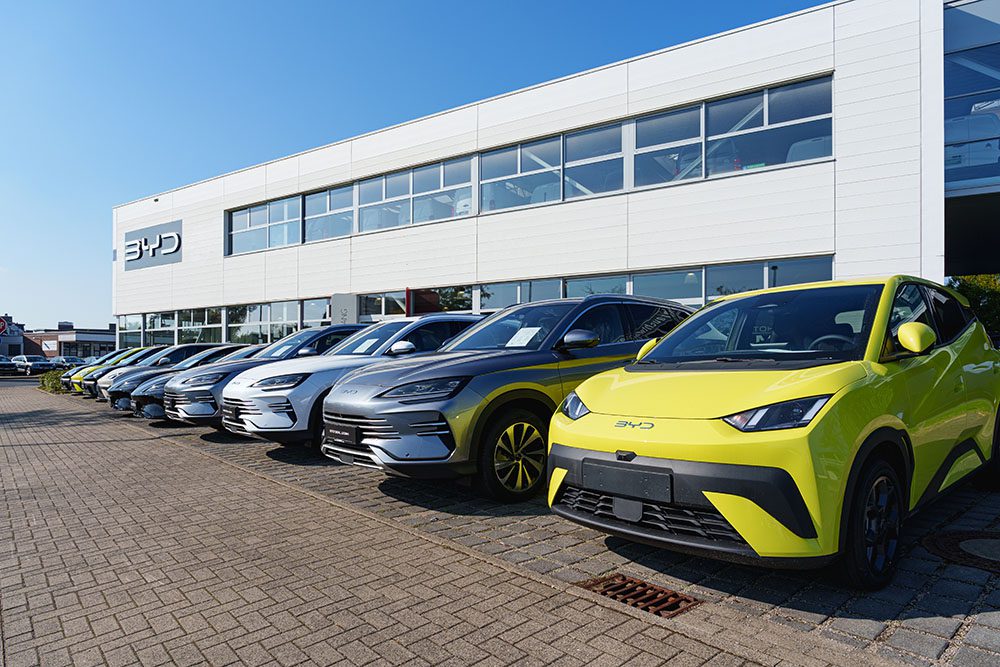
Chinese electric vehicle manufacturer BYD is set to establish a significant presence in Canada by opening 20 branded dealerships within the next year. This move follows a major shift in Canadian industrial policy, which has reduced tariffs on Chinese EV imports from 100% to just 6.1%, allowing a limited number of vehicles to enter the market. BYD has engaged Dealer Solutions Mergers & Acquisitions, an Ontario-based consultancy, to assist in locating suitable dealership sites nationwide, with initial discussions underway for three locations in the Greater Toronto Area and plans to expand into cities such as Vancouver, Montreal, and Calgary.
The Canadian government’s new trade agreement with China imposes a cap of 49,000 Chinese-made EVs in the first year, prioritising models priced below $35,000, a category that includes BYD’s Atto 3 compact SUV and Dolphin hatchback. This restriction applies collectively to all Chinese automakers, including competitors like Chery Automobile, which is also developing its own dealership network in Canada. The cap raises questions about whether BYD will be able to maintain sufficient sales volume to support 20 dealerships, although provisions exist to increase the import limit after the initial year.
Industry observers have described BYD’s aggressive market entry as a landmark development for the Canadian automotive sector. Fred Lambert of Electrek characterised the expansion as a “full-scale market entry” rather than a tentative experiment, highlighting the potential impact on both consumers and the broader market landscape. The arrival of competitively priced Chinese EVs is expected to benefit Canadian buyers by increasing choice and affordability, while also contributing to environmental goals through greater adoption of electric vehicles.
The expansion of Chinese EV brands into Canada also poses challenges and uncertainties. The import cap could limit growth in the short term, and there are concerns about the potential for unofficial channels to circumvent restrictions, potentially undermining market regulation. Moreover, the entry of BYD and others represents a significant threat to traditional North American automakers, particularly those based in Detroit, which may face increased competition from these new entrants.
Overall, BYD’s planned dealership rollout signals a new phase in the North American EV market, reflecting shifting trade policies and growing consumer demand for affordable electric vehicles. The coming months will be critical in determining how quickly BYD and other Chinese manufacturers can scale their operations and whether Canadian authorities will adjust import limits to accommodate rising sales. For now, Canadian consumers stand to gain from a broader range of electric vehicle options and potentially lower prices.