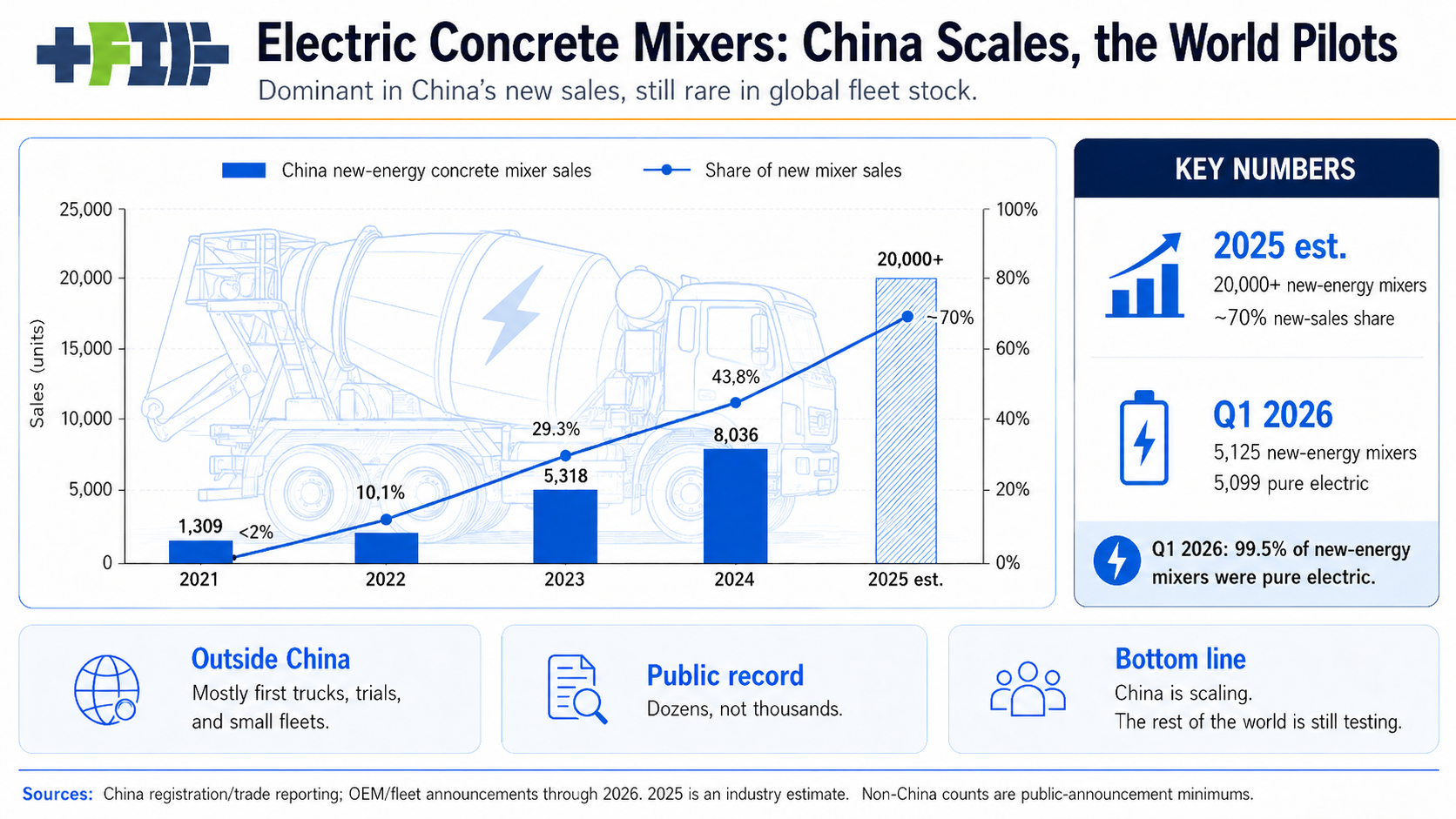
Summary By: eMotoXBattery-electric concrete mixers are rapidly gaining traction in China, marking a significant development in the electrification of heavy transport. Once a niche product, these vehicles have moved into mainstream procurement within just five years, with sales soaring from just over 1,300 units in 2021 to more than 8,000 in 2024. Projections for 2025 suggest sales could exceed 20,000, with electric models accounting for approximately 70% of new mixer purchases. This surge highlights a clear shift from demonstration projects to widespread adoption, driven primarily by battery-electric technology rather than hydrogen fuel cells or hybrids.
The appeal of electric concrete mixers lies in the nature of their operation rather than their weight, which is often cited as a challenge for electrifying heavy vehicles. Concrete mixers typically operate on predictable, local routes between fixed batching plants and construction sites, making charging or battery swapping more manageable than for long-haul freight trucks. This operational predictability allows fleet operators to install charging infrastructure at key locations and optimise dispatching to suit electric vehicle capabilities, reducing downtime and ensuring reliability, which is crucial given the costly consequences of failed concrete deliveries.
China’s leadership in this sector is underpinned by a combination of domestic manufacturing capacity, large battery suppliers, stringent urban air-quality regulations, and a sizeable construction equipment market that fosters rapid learning and scale. The country also benefits from extensive experience with heavy-duty battery swapping, which can be a practical solution for high-utilisation vehicles operating from industrial hubs. This alignment of industry, policy, and infrastructure contrasts with many other markets, where electric concrete mixers remain in the early stages, characterised by pilot programmes and small fleets rather than widespread adoption.
Outside China, electric concrete mixers have been introduced in several countries including Switzerland, the UK, Germany, Norway, Denmark, and others, but these deployments are limited in scale and often described as trials or initial commercial pilots. Although the geographic spread is broad, market penetration remains low, with operators still cautious and infrastructure less developed. The Chinese experience offers a valuable blueprint for policymakers and fleet owners worldwide, demonstrating that heavy-duty electrification is feasible and scalable when operational factors, supply chains, and regulatory frameworks align effectively.
The Chinese market’s preference for battery-electric over hydrogen fuel-cell technology in concrete mixers also provides insight into the practical considerations of heavy vehicle electrification. While hydrogen is often promoted for its range and refuelling speed advantages, the bounded, repetitive nature of concrete mixer routes favours the energy efficiency, simpler drivetrain, and established supply chain of battery-electric vehicles. This suggests that for certain heavy-duty applications, batteries may offer a more viable and cost-effective path to decarbonisation, a lesson that could influence future technology choices in other regions.