Summary By: eMotoXCATL unveiled six cutting-edge battery technologies at its Super Technology Day in Beijing, showcasing advancements across fast charging, energy density, hybrid systems, sodium-ion batteries, and integrated charging infrastructure. The company emphasised a multi-chemistry strategy, leveraging lithium iron phosphate (LFP) for rapid charging, nickel-cobalt-manganese (NCM) for high energy density, and sodium-ion batteries for applications in extreme temperatures and energy storage. Among the highlights was the third-generation Shenxing Superfast Charging Battery, capable of charging from 10% to 80% state of charge in under four minutes, even performing efficiently in sub-zero temperatures.
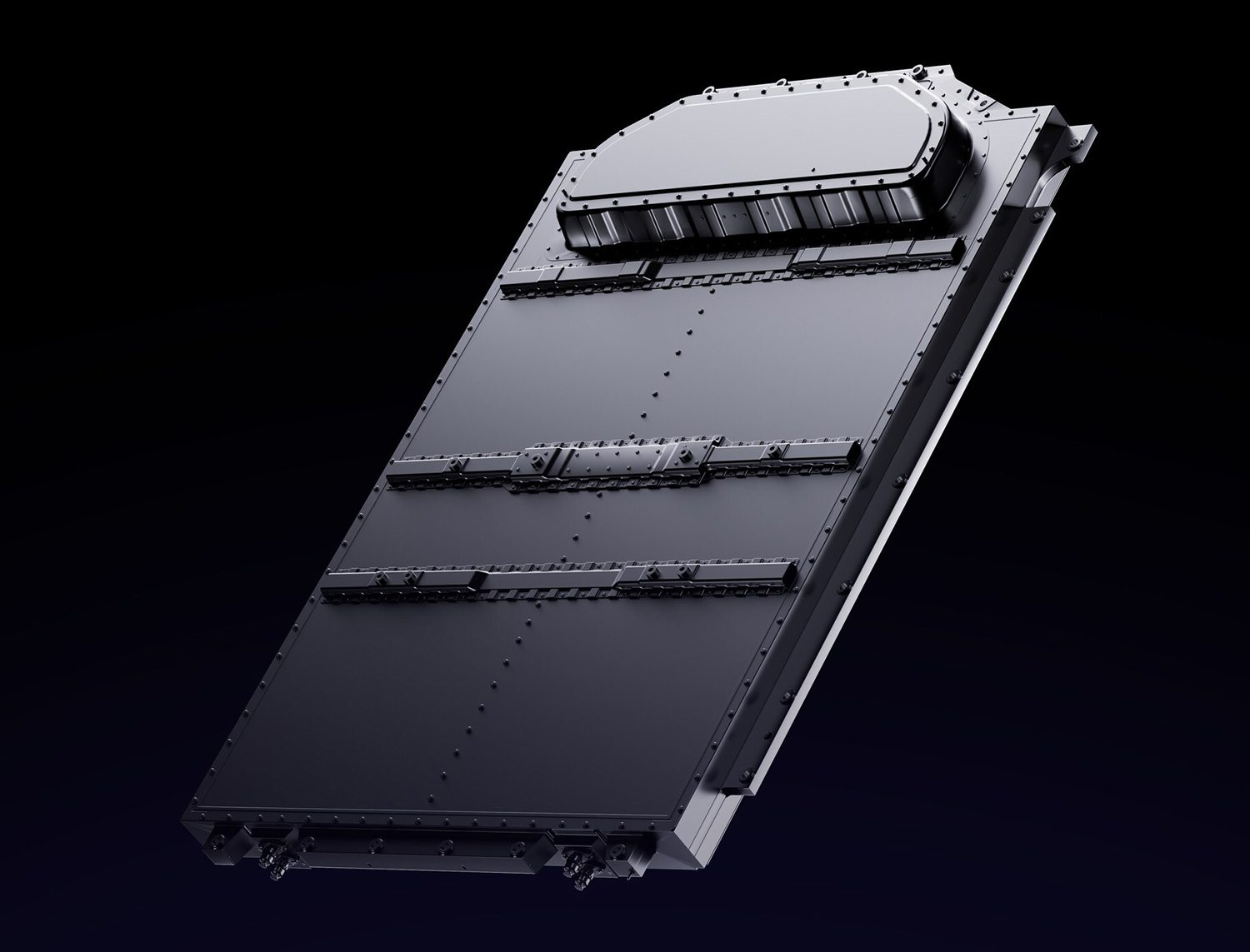
The third-generation Qilin Battery targets premium electric vehicles, delivering 280 Wh/kg cell energy density and enabling a 1,000 km range with superfast 10C charging capability. It boasts a peak power output of 3 MW, more than doubling the power of its predecessor used in Nürburgring track racing. CATL claims significant weight and volume reductions compared to equivalent LFP systems, resulting in improved energy consumption, acceleration, braking, and extended component lifespans, highlighting the battery’s potential to enhance overall vehicle performance.
A standout innovation is the Qilin Condensed Battery, which sets new records with 350 Wh/kg cell energy density and 760 Wh/L volumetric energy density for mass-produced batteries. This technology combines a high-nickel cathode with a silicon-carbon anode and employs a titanium alloy casing that is lighter and stronger than conventional materials. The condensed electrolyte system eliminates leakage and combustion risks, with CATL already validating similar technology in electric aviation applications, signalling a promising future for high-energy, safe battery solutions.
CATL also introduced the second-generation Freevoy Super Hybrid Battery, which integrates LFP and NCM chemistries at the particle level to achieve 230 Wh/kg, offering extended electric and total vehicle ranges alongside high peak power even at low charge states. Additionally, the company announced progress in sodium-ion battery industrialisation, aiming for gigawatt-scale production by the end of 2026 after overcoming key manufacturing challenges. Complementing these battery innovations, CATL expanded its integrated charging and swapping network, currently operating 1,470 stations with plans to quadruple coverage by 2026, partnering with major automakers to support widespread adoption of battery swapping and fast charging infrastructure.