EV news article header featuring electric vehicle news, EV charging station, electric car updates and industry insights

News Menu

bicycle news feed and industry updates for eBike and cycling news
Click for Bicycle News
latest eBike news aggregator covering electric bike updates, reviews and industry trends
Click for eBike News
electric motocross news feed with latest dirt bike updates, reviews and industry insights
Click for eMotocross News
latest eScooter news aggregator featuring electric scooter news feed, updates, reviews and industry trends
Click for eScooter news
Article By:
The Driven
2026-06-09 08:49:10

Blackouts, trickle charging and long waits: Canola oil returns to Nullarbor to rescue EV travellers

Summary By: eMotoX
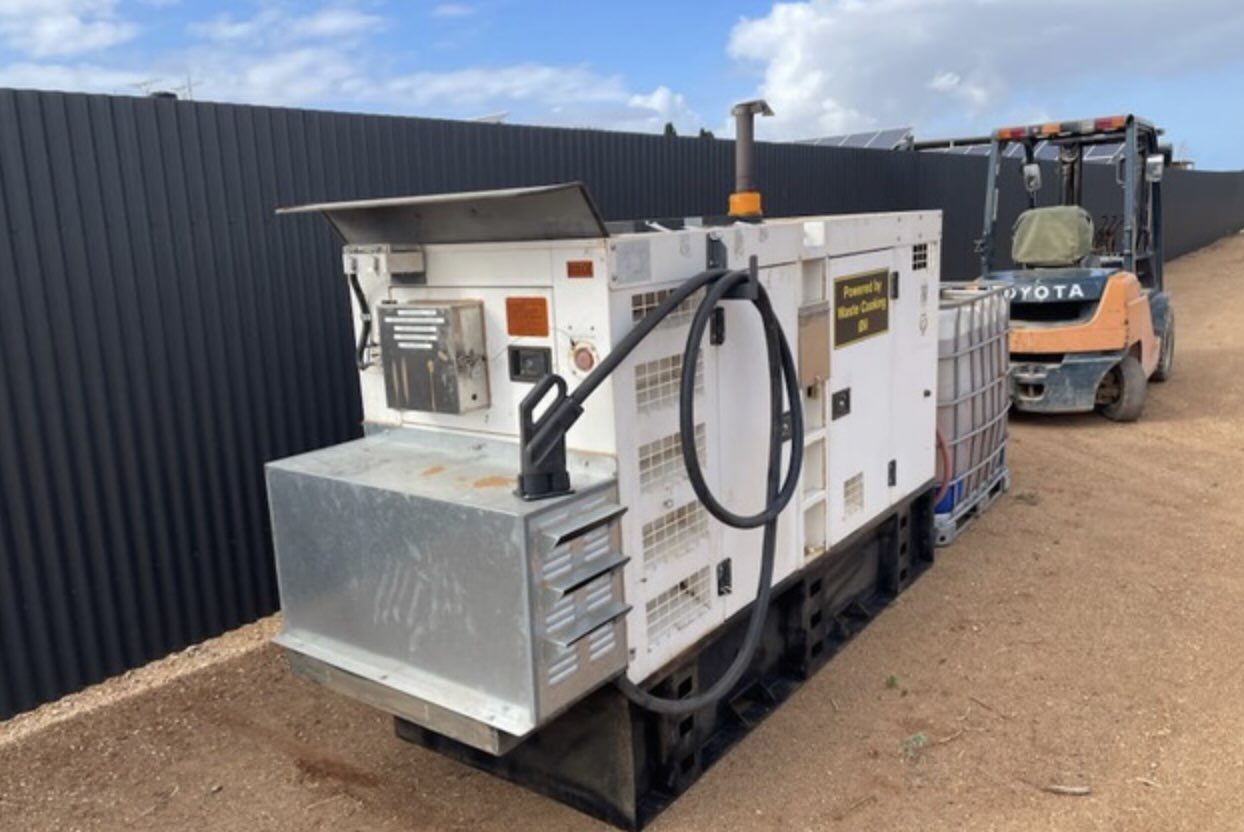
Electric vehicle (EV) travellers crossing the Nullarbor Plain along the Eyre National Highway have long faced significant challenges due to unreliable and underpowered charging infrastructure. Since their installation in 2025, the chargers at three remote, off-grid roadhouses have struggled with limited generator capacity, resulting in frequent blackouts and slow charging speeds. Notably, the Mundrabilla roadhouse has been forced to restrict charging to 11kW AC after its 30kW supply repeatedly caused power outages, leaving drivers of standard-range EVs enduring charging times of up to 14 hours to cover the 650-kilometre stretch. In response to these ongoing issues, a new 50kW Biofil unit powered by canola oil was recently installed at Mundrabilla, offering a free, off-network charging option. Developed by inventor Jon Edwards and supported by Horizon Power, this biofuel-powered charger recalls a brief period in 2024 when three similar units made the journey more manageable. The unit’s simplicity and clear instructions have made it a popular alternative, especially since the nearby NRMA solar charger at Border Village was destroyed, and the DC charger at Norseman has been out of service for nearly three months. The situation highlights broader concerns about the maintenance and accountability of Horizon Power, the utility responsible for the region’s charging network. Despite the Eyre Highway seeing roughly double the EV traffic of the more publicised North West WA routes, key chargers remain unreliable and slow, undermining confidence in the infrastructure. The free canola oil charger is a welcome stopgap but is not a sustainable long-term solution given the volume of users and the need for regular refilling of its fuel tank. Looking ahead, there is cautious optimism that new technology could provide a more dependable fix. Energy Policy WA’s recent contract with Queensland-based eLumina to deploy 160kW battery-based chargers on the Great Northern Highway suggests a promising model for off-grid sites with limited power capacity. These units, designed to mining sector standards, offer proven reliability at a fraction of the cost of the original Eyre Highway installations. The WA EV community is eagerly awaiting further decisions that could finally deliver robust and efficient charging infrastructure across these remote corridors.