EV news article header featuring electric vehicle news, EV charging station, electric car updates and industry insights

News Menu

bicycle news feed and industry updates for eBike and cycling news
Click for Bicycle News
latest eBike news aggregator covering electric bike updates, reviews and industry trends
Click for eBike News
electric motocross news feed with latest dirt bike updates, reviews and industry insights
Click for eMotocross News
latest eScooter news aggregator featuring electric scooter news feed, updates, reviews and industry trends
Click for eScooter news
Article By:
CleanTechnica
2026-04-05 20:41:29

Agrivoltaics Can Save US Farmers In More Ways Than One

Summary By: eMotoX
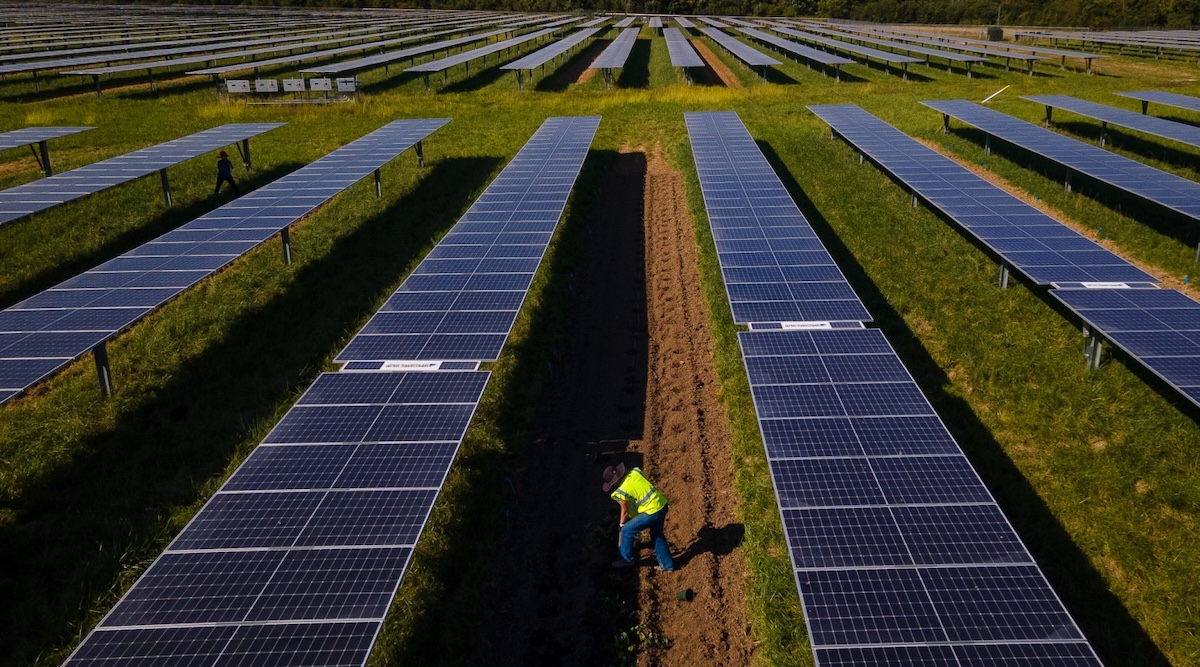
Agrivoltaics, the practice of combining crop cultivation with solar energy generation on the same land, is gaining renewed attention for its multiple benefits to US farmers. Recent research from Cornell University highlights a novel advantage: wind protection. Wind erosion causes significant damage to soils and crops, costing the US agricultural sector over $9 billion annually. The study suggests that solar panels arranged in agrivoltaic systems can serve as effective windbreaks, potentially outperforming traditional natural wind barriers like trees and shrubs. Traditional windbreaks have long been used to reduce soil erosion and improve crop yields, but their implementation faces challenges such as land-use trade-offs and maintenance issues. The Cornell team’s study fills a critical gap in understanding how solar panels affect airflow at ground level, using computational fluid dynamics to model wind patterns beneath solar arrays. Their findings indicate that tilted solar panels, especially when the front row is set lower, can reduce wind speeds by up to 50% across a wide shelter zone, offering superior protection compared to natural windbreaks. An additional advantage of agrivoltaic solar panels is their dynamic nature. Unlike static tree lines, solar panels equipped with tracking systems can adjust their tilt to either block or allow airflow, depending on the needs of the crops and prevailing weather conditions. This flexibility is particularly beneficial in regions like the Northeastern US, where managing moisture and aeration is crucial to prevent crop diseases such as mildew. The study’s insights provide agrivoltaic designers with new strategies to optimise both energy production and agricultural productivity. Beyond wind protection, agrivoltaics also supports other sustainable farming practices, including livestock grazing and pollinator habitats, which enhance biodiversity and crop health. However, integrating food crops within solar arrays remains a complex challenge due to potential yield reductions. Given the economic pressures on US farmers—including tariffs, labour shortages, and rising input costs—agrivoltaic systems offer a valuable source of supplementary income. This financial lifeline may help prevent farmland from being lost to urban development, despite ongoing opposition from some local groups resistant to solar installations on agricultural land.