Summary By: eMotoXEffective thermal management remains a crucial factor in advancing high energy-density lithium-ion battery packs for electric vehicles (EVs). Heat generated during charging and discharging cycles must be efficiently dissipated to maintain battery performance and longevity. This is typically achieved by using thermally conductive materials—either gap fillers or adhesives—that connect battery cells or modules to cooling plates or packs. These materials, often two-component polymeric resins with ceramic fillers, improve heat conduction by eliminating air gaps at microscopic and larger scales.
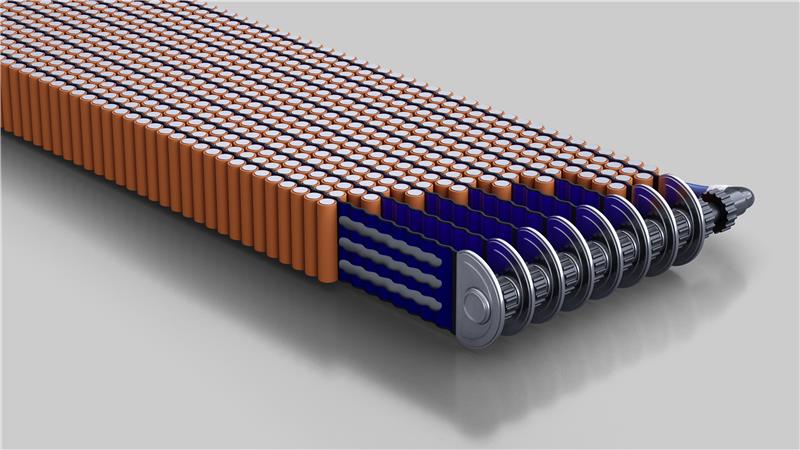
The architecture of EV battery packs is largely influenced by the cell form factor, which includes pouch, cylindrical, and prismatic cells. Each type presents unique design and thermal management challenges. Pouch cells, lacking structural rigidity, require modules for support, while cylindrical cells, due to their high quantity per pack, also rely on modular construction. Prismatic cells have recently shifted towards cell-to-pack or cell-to-plate designs, eliminating the need for modules. Various assembly methods exist for each cell type, involving thermal adhesives or gap fillers to enhance thermal contact and mechanical stability, with cooling systems integrated accordingly.
Each cell format presents distinct challenges for thermal adhesive application. Pouch cells suffer from limited structural strength and low surface energy films that restrict adhesive bonding, while cylindrical cells require precise positioning and robust mechanical fixturing due to their small size and high numbers. Prismatic cells, with their larger surface areas, face tolerance and thermal expansion issues, compounded by protective shrink-wrap films that hinder adhesive performance. Many of these obstacles can be addressed by selecting appropriate thermal adhesives or gap fillers, which have evolved from a limited range of specialised formulations to a broader portfolio offering varied performance and processing characteristics.
Parker Lord has been at the forefront of developing thermally conductive structural adhesives tailored for EV battery manufacturing. By combining decades of expertise in acrylic structural adhesives and thermally conductive potting materials, the company introduced CoolTherm TC-2002, a product that bonds challenging surfaces such as nickel-plated steel to powder-coated aluminium at room temperature with high strength and thermal conductivity. This innovation has enabled greater design flexibility, particularly for cylindrical battery modules, and supports the emerging cell-to-pack and cell-to-plate architectures becoming prevalent in EV powertrains.
Looking ahead, the demand for advanced thermal adhesives continues to grow as EV battery designs evolve. New formulations focus on adjustable bond strength to accommodate both permanent and reworkable assemblies, increased elongation for durability, and tailored cure speeds to support high-volume manufacturing. These developments promise to enhance the performance, reliability, and manufacturability of EV battery packs, underscoring the critical role of thermal adhesives in the future of electric mobility.