eMotocross news article header featuring electric motocross bike, electric dirt bike news, updates and industry insights

News Menu

bicycle news feed and industry updates for eBike and cycling news
Click for Bicycle News
latest eBike news aggregator covering electric bike updates, reviews and industry trends
Click for eBike News
latest eScooter news aggregator featuring electric scooter news feed, updates, reviews and industry trends
Click for eScooter News
electric vehicle news aggregator featuring latest EV updates, charging and technology news
Click for EV news
Article By:
Motocross Action
2026-04-21 20:00:06

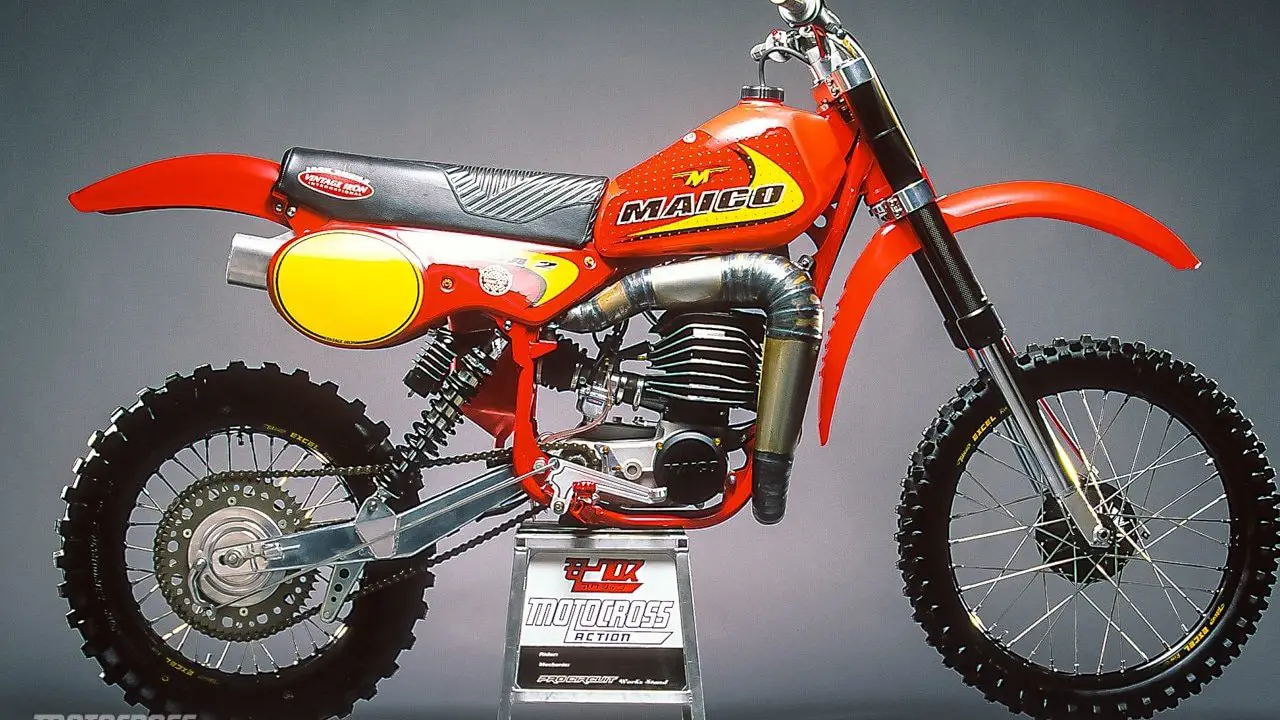
TWO-STROKE TUESDAY: THE BEGINNING OF THE END FOR MAICO

Summary By: eMotoX
Maico Motorcycles, once celebrated for producing some of the finest motocross bikes in the early 1980s, faced a rapid and dramatic decline beginning in 1982. The 1981 Maico 490 Mega-2 was widely regarded as a top contender on the track, praised for its performance and engineering. However, a pivotal change in suspension design for the 1982 model, shifting from twin shocks to a single shock setup, led to widespread mechanical failures. The Italian-made Corte Cossa shocks used were prone to shaft breakages, and Maico’s aggressive rising rate linkage only exacerbated the problem, turning what was once a reliable machine into a mechanical liability almost overnight. The company’s troubles were not limited to technical issues. Internal strife within the founding Maisch family severely undermined the brand’s stability and reputation. By 1983, despite launching three variants of the 490 model—including the motocross-focused Spider with a new engine and four-speed transmission—Maico struggled to attract buyers. The brand’s image had been tarnished by ongoing mechanical faults, including exploding rear hubs and failing transmissions, which alienated loyal customers. Warranty efforts failed to restore confidence, and Maico’s standing in the competitive motocross market rapidly diminished. Financial difficulties culminated in Maico facing bankruptcy in 1983, a significant blow for the family-run business that had been operating since the post-World War II era. The German government’s refusal to allow workforce reductions compounded the company’s woes, leaving it unable to adapt to the plummeting sales. Attempts by the American distributor to salvage the brand through rebranding as M-Star and partnerships with the founder’s sons could not stem the tide. Meanwhile, Japanese manufacturers capitalised on Maico’s decline, swiftly capturing market share and leaving the once-dominant brand struggling to survive. Although the M-Star name lingered until 1986, the glory days of Maico were effectively over. Since then, the brand has changed hands multiple times across Europe, with various underfunded efforts to revive it failing to gain traction. Maico’s fall from grace serves as a cautionary tale of how technical missteps, family discord, and market pressures can swiftly dismantle a storied name in motorsport. The legacy of riders like Danny “Magoo” Chandler, who helped elevate Maico’s reputation in its heyday, remains a reminder of what the brand once represented before its eventual demise.