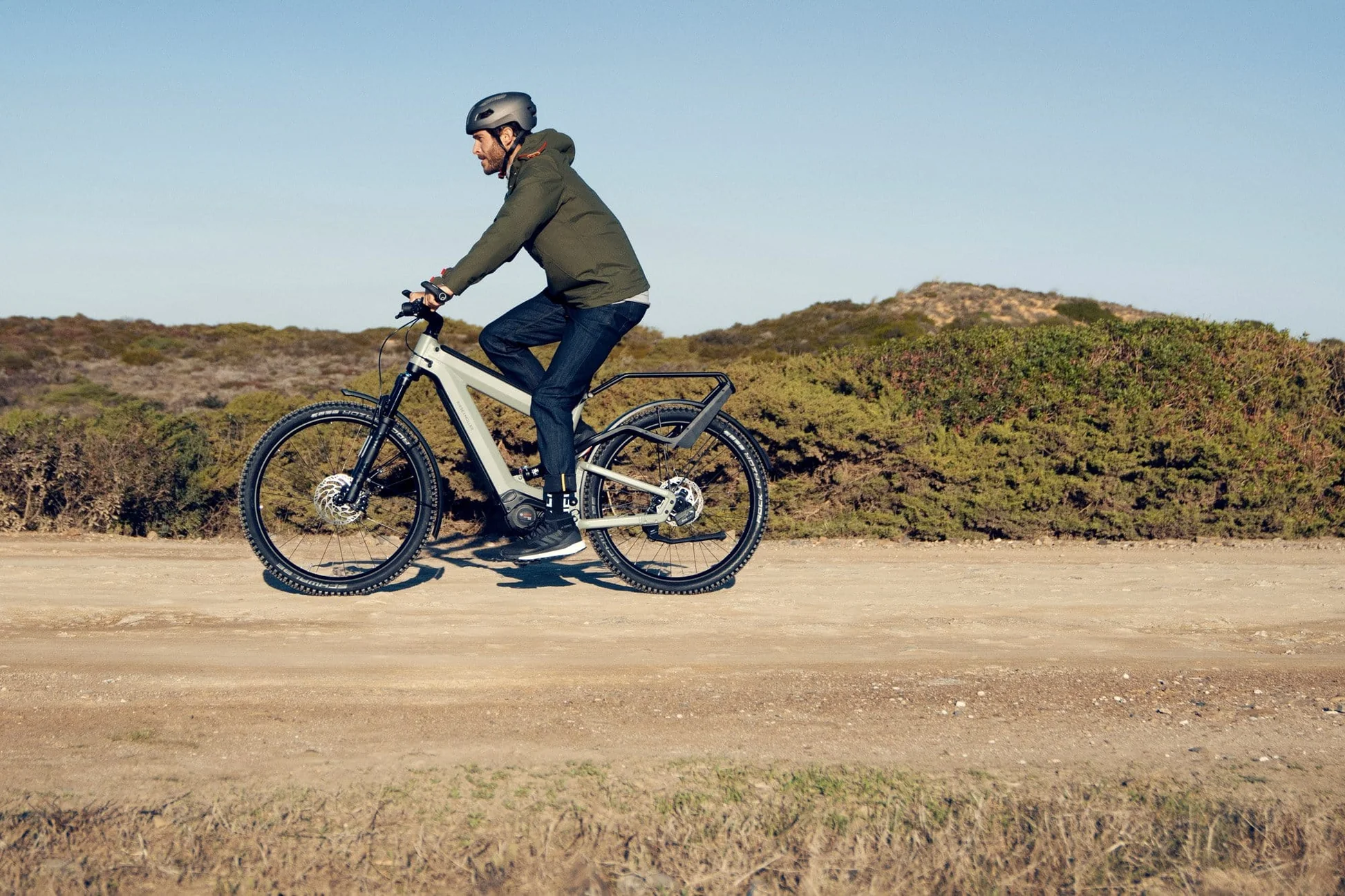
Summary By: eMotoXGerman premium e-bike manufacturer Riese & Müller has announced it will exit the US market by the end of July 2026, citing ongoing tariff instability and market volatility that have hindered long-term business planning. The company had previously paused shipments to the US in August 2025 due to a 50% steel tariff, which although since removed, left lasting uncertainty. While the withdrawal affects the US only, dealers and customers will continue to receive support, including access to parts and warranty coverage, with orders accepted until the withdrawal date and existing stock to be sold thereafter.
Meanwhile, regulatory developments in the US highlight a patchwork of evolving e-bike laws at the state level. California is currently considering two contrasting bills that could significantly alter e-bike classifications and usage. AB 1557 proposes stricter limits on motor power and speed for Class 1 and 2 e-bikes, reducing the maximum speed to 16 mph and capping motor output at 250W nominal, with exceptions for cargo bikes. This bill also introduces hefty fines for manufacturers selling bikes exceeding these limits and restricts younger riders from using higher-powered e-bikes. Conversely, SB 1167 seeks to clarify definitions for e-bikes, mopeds, and motor-driven cycles, maintaining a 750W motor limit for e-bikes and distinguishing mopeds as higher-powered vehicles intended for highway use.
The divergent approaches of these two California bills have sparked debate among stakeholders. AB 1557, supported mainly by medical groups and some municipalities, faces opposition from bicycle advocacy organisations and retailers who warn it could stifle e-bike adoption and complicate manufacturing due to inconsistent state regulations. SB 1167, developed with input from industry groups, is viewed as a more balanced framework that respects existing e-bike categories while addressing safety and classification concerns. Similar legislation is also under consideration in Minnesota, suggesting a growing trend toward clearer regulatory frameworks for electric mobility devices.
In Illinois, a separate legislative proposal, SB 3336, aims to impose licensing, registration, and insurance requirements on riders of high-speed e-bikes and e-mopeds capable of exceeding 28 mph. This move reflects increasing scrutiny of faster electric vehicles and the desire to align their regulation more closely with traditional motor vehicles. Such measures could have significant implications for riders and manufacturers, potentially raising barriers to entry and affecting the market for high-performance e-bikes and e-mopeds.
These developments underscore the complex and evolving landscape of e-bike regulation in North America, where manufacturers face challenges from both market conditions and shifting legal frameworks. The exit of a notable brand like Riese & Müller from the US market highlights the difficulties foreign companies encounter amid tariff uncertainties, while the varied state-level legislative efforts illustrate the ongoing debate over how best to integrate electric bikes and mopeds into existing transport systems. As these policies progress, they will shape the future accessibility, safety, and innovation within the rapidly growing electric mobility sector.