bicycle news article header featuring cycling news, bike updates, reviews and industry insights

News Menu

latest eBike news aggregator covering electric bike updates, reviews and industry trends
Click for eBike News
electric motocross news feed with latest dirt bike updates, reviews and industry insights
Click for eMotocross News
latest eScooter news aggregator featuring electric scooter news feed, updates, reviews and industry trends
Click for eScooter News
electric vehicle news aggregator featuring latest EV updates, charging and technology news
Click for EV news
Article By:
Cycling Weekly
2026-04-18 19:19:02

‘The Met are letting down cyclists left, right and centre’ – stats reveal topsy turvy police priorities in the capital

Summary By: eMotoX
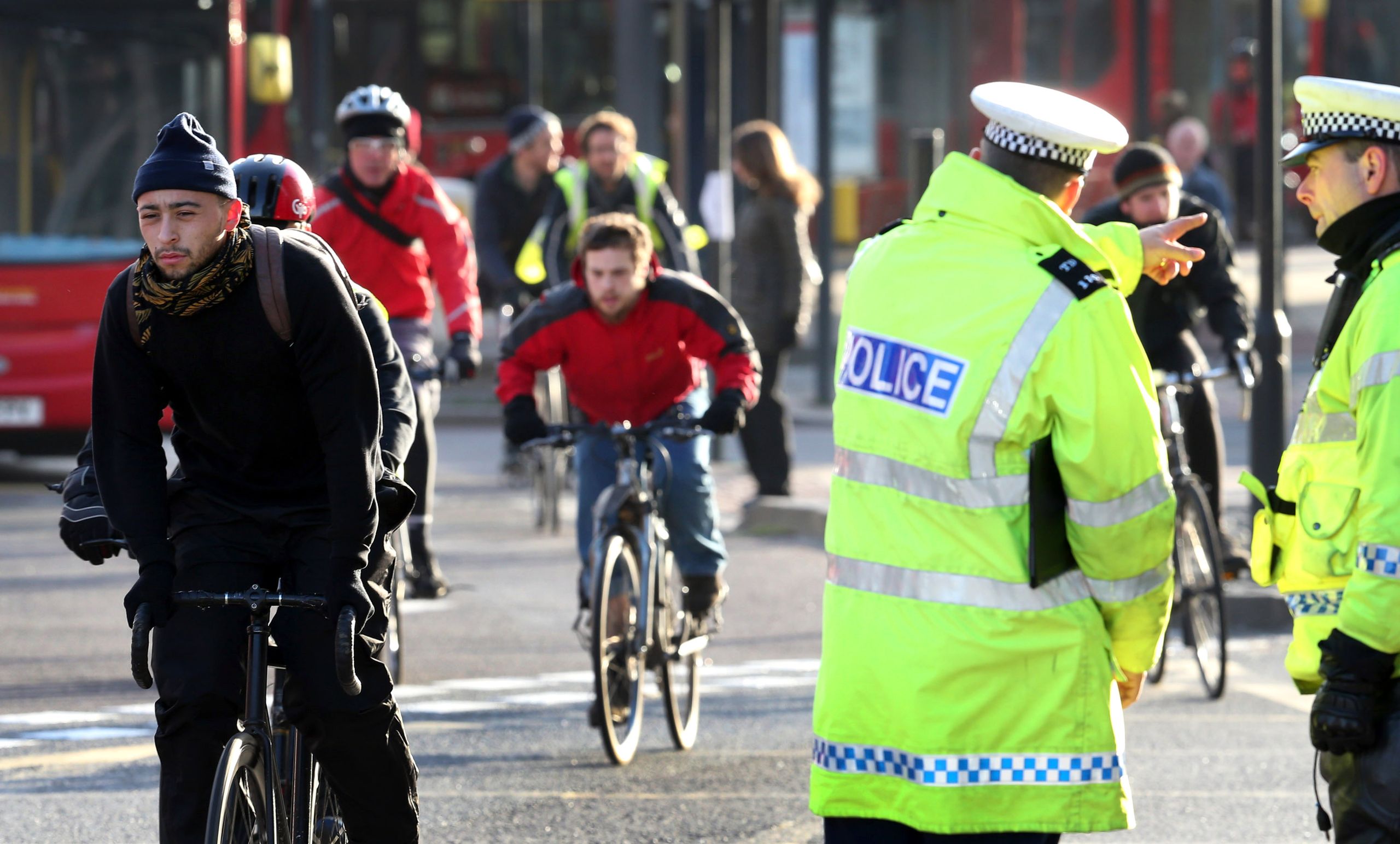
The City of London Police have significantly increased enforcement against cyclists running red lights, doubling the number of fixed penalty notices issued between April 2025 and March 2026 compared to the previous year. Officers are reportedly handing out around 25 fines per week, with the force emphasising its commitment to addressing anti-social behaviour and road offences. While this crackdown aims to improve road safety, it contrasts sharply with the Metropolitan Police’s handling of more serious incidents involving motorists and cyclists. Data obtained by LBC reveals a troubling lack of action by the Metropolitan Police in hit-and-run cases involving cyclists. Over the past year, none of the 106 recorded hit-and-run offences resulted in driver arrests, despite half of these incidents causing personal injury. Prosecutions only occurred when drivers voluntarily surrendered themselves, raising questions about police priorities and their willingness to pursue offenders in life-threatening situations. This disparity has drawn criticism from cycling advocates who argue that police efforts are disproportionately focused on minor cyclist infractions rather than dangerous motorist behaviour. Simon Munk of the London Cycling Campaign highlighted the need for proportionality in enforcement, pointing out that while running red lights is dangerous, hit-and-run offences pose a far greater threat to cyclist safety. He also noted a growing political tendency to blame cyclists for traffic problems, despite evidence that many motorists also break traffic laws. Munk further criticised police inaction on bike theft, citing low recovery rates and cases where stolen bikes equipped with trackers remain missing, reinforcing the perception that cyclists are being let down by law enforcement on multiple fronts. The personal experience of cyclist Nicolas Georgiou underscores the challenges faced by victims of hit-and-run incidents. After being seriously injured when a van clipped him and fled the scene, Georgiou found police response to be inadequate, with his case initially closed despite his efforts to provide information. He was also unable to access potentially useful council camera footage, and while the council eventually repaired a pothole that contributed to his accident, he was told he could not claim compensation. Georgiou’s story illustrates the frustrations many cyclists encounter when seeking justice and support following collisions with vehicles. The Metropolitan Police have been approached for comment regarding the apparent imbalance in enforcement between cyclists and motorists, as well as concerns about their prioritisation of offences. The situation highlights a broader debate about road safety in London and the need for a more balanced and effective policing strategy that protects vulnerable road users while addressing all forms of dangerous behaviour on the capital’s streets.