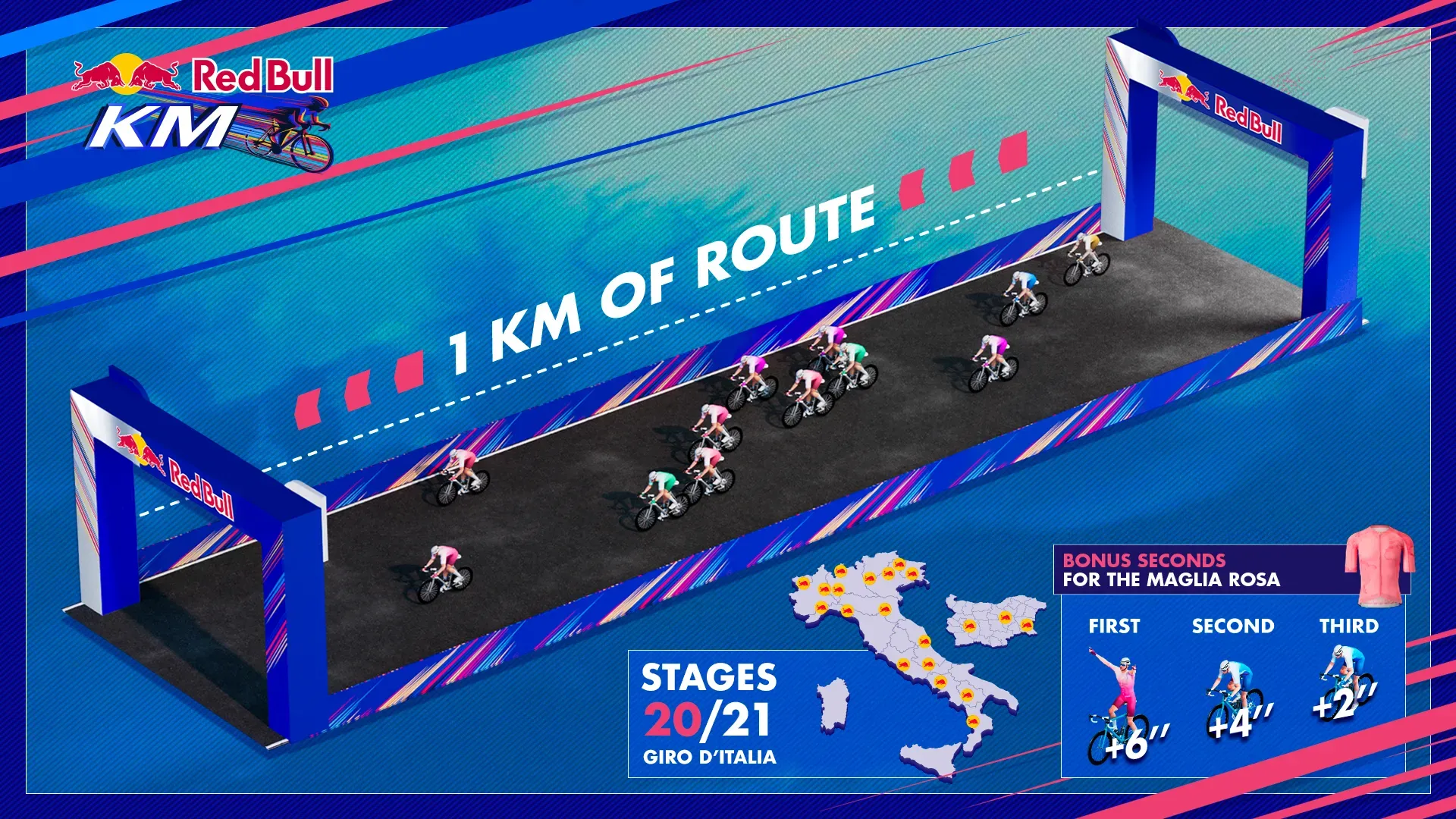
Summary By: eMotoXThe 2026 Giro d’Italia will once again feature the Red Bull Kilometre (KM) sprints and stage finishes as key opportunities for riders to gain valuable time bonuses and cash prizes throughout the race’s 20 road stages. Time bonuses of ten, six, and four seconds will be awarded at stage finishes, while the Red Bull KM sprints offer six, four, and two seconds, making these intermediate sprints strategically significant in the battle for overall victory. In addition to time bonuses, the Red Bull KM competition boasts a total prize fund of €130,000, contributing to the Giro’s overall prize pool of €1,642,860, which is split between jersey classifications and special awards.
The positioning of the Red Bull KM sprints has been adjusted for the 2026 edition, bringing them closer to stage finishes and thereby increasing their tactical importance. This change is expected to influence the race dynamics, potentially affecting who wears the coveted maglia rosa early on. For example, on the opening stages in Bulgaria, the sprints are located within 15 to 32 kilometres from the finish, offering riders a chance to gain crucial seconds in the initial phases of the race. These bonuses could prove decisive in shaping the general classification, especially in the opening week.
The Red Bull KM sprints are also integrated into the points competition, awarding 15, 8, 5, 3, and 1 points respectively to the top five finishers, alongside daily cash prizes of €5,000. Winners of these sprints earn the right to wear a distinctive blue race number the following day, while a red number is given to the rider deemed to have shown the most fighting spirit on the previous stage. The overall Red Bull KM General Classification, based on points accumulated, awards €15,000 to the winner, with further prizes for second and third place, adding another layer of competition within the race.
Strategically, the placement of these sprints on challenging stages, such as those finishing on climbs like Blockhaus and Corno alle Scale, means that general classification contenders may actively target these bonuses to gain precious seconds. This adds complexity to the race tactics, as riders balance efforts between stage wins, intermediate sprints, and mountain climbs. The Red Bull KM sprints thus serve as a dynamic element that could influence the leadership and momentum throughout the Giro.
With the 2026 Giro d’Italia promising intense competition bolstered by these time bonuses and prize incentives, the race is set to deliver thrilling tactical battles. The integration of the Red Bull KM sprints highlights the evolving nature of Grand Tour racing, where every second counts and intermediate efforts can have a lasting impact on the final outcome. Fans and riders alike will be watching closely to see how these bonuses affect the contest for the maglia rosa and other classifications.