Summary By: eMotoXThe recent Paris-Roubaix race offered a revealing glimpse into the evolving technology and equipment choices shaping the future of professional cycling. Among the standout innovations was Shimano’s prototype pedals, which drew attention partly because Alpecin-Fenix opted to equip only half their riders with them. However, the most intriguing technical development was Lidl Trek’s introduction of ‘double bubble’ wheel technology, signalling a creative approach to tackling the notoriously rough cobbles of the race. These innovations, alongside other equipment experiments, highlighted the ongoing quest by teams to find marginal gains and improve rider comfort on one of cycling’s toughest courses.
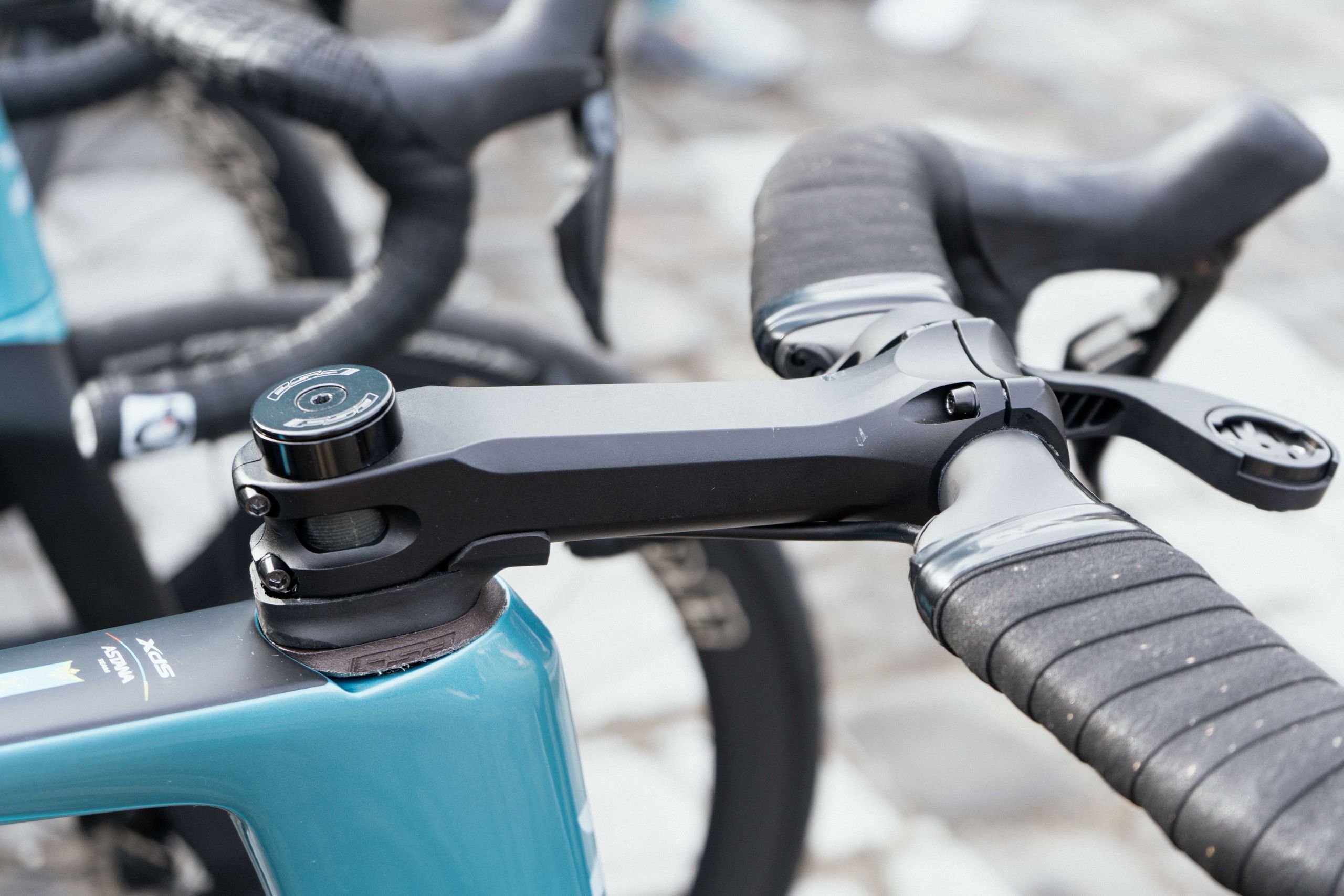
A significant trend observed was the widespread adoption of 32mm tyres, which have become the new standard for Paris-Roubaix, replacing the previously common 28mm sizes. Advances in bike frame design, particularly in aero bikes, have allowed for greater tyre clearance, enabling riders to run wider tyres that offer better cushioning without compromising performance. Notably, Tadej Pogačar pushed the limits further with 35mm tyres up front, barely fitting within the frame clearance, a tactic mirrored by a few other teams who balanced wider front tyres with narrower rears to avoid rubbing. This trend underscores the increasing importance of tyre width and comfort in surviving the punishing cobbles.
The race also exposed a technological gap between component manufacturers, with SRAM’s 1x drivetrain systems proving more suited to the rigours of Paris-Roubaix than Shimano’s offerings. SRAM’s streamlined 1x setups allowed for simpler, more reliable gear changes, while Shimano teams resorted to complex and sometimes improvised configurations involving mixed gravel and mountain bike components to approximate the same functionality. This disparity has created a perception that Shimano is lagging behind in innovation for cobbled classics, despite ongoing developments and prototypes that may close the gap in future seasons.
Sponsorship conflicts emerged as a curious subplot, with some teams running equipment from brands that did not align with their official sponsors. For example, Picnic and Jayco used Vittoria tyres despite being sponsored by Michelin and Cadex respectively, leading to last-minute attempts to obscure branding with markers. Such incidents suggest that at Paris-Roubaix, where equipment reliability is paramount, teams may prioritise performance over sponsor obligations, accepting the risk of sponsor displeasure in pursuit of competitive advantage.
Despite all the technological advancements and careful equipment choices, Paris-Roubaix remains a race where mechanical issues are inevitable. Several high-profile riders, including Mathieu van der Poel, Wout van Aert, Filippo Ganna, Mads Pedersen, and Tadej Pogačar, suffered punctures or tyre failures, demonstrating that even the most sophisticated setups cannot fully mitigate the challenges posed by the cobbles. The race reinforced the reality that while technology can improve resilience, the unpredictable nature of Paris-Roubaix ensures that mechanical luck remains a critical factor in the outcome.