bicycle news article header featuring cycling news, bike updates, reviews and industry insights

News Menu

latest eBike news aggregator covering electric bike updates, reviews and industry trends
Click for eBike News
electric motocross news feed with latest dirt bike updates, reviews and industry insights
Click for eMotocross News
latest eScooter news aggregator featuring electric scooter news feed, updates, reviews and industry trends
Click for eScooter News
electric vehicle news aggregator featuring latest EV updates, charging and technology news
Click for EV news
Article By:
Cycling Weekly
2026-04-27 10:15:37

'It’s about giving our sport the visibility it deserves' – Demi Vollering criticises limited women's TV coverage after Liège-Bastogne-Liège win

Summary By: eMotoX
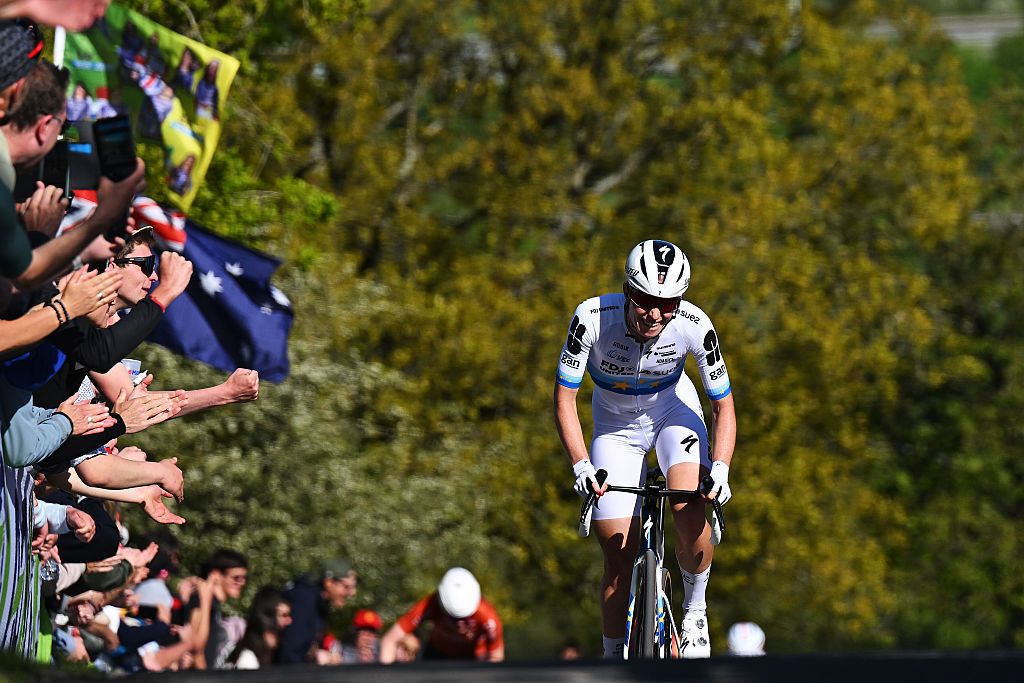
Demi Vollering has voiced strong criticism over the limited television coverage of women’s cycling following her commanding victory at Liège-Bastogne-Liège. The FDJ United-SUEZ rider highlighted the stark contrast between the men’s and women’s race broadcasts, noting that while the men’s event received extensive live coverage, the women’s race was relegated to a short segment starting only after the men’s race had finished. Vollering suggested that broadcasters could easily alternate or show both races simultaneously, especially when the outcome of the men’s race becomes predictable, as was the case with Tadej Pogačar’s solo dominance. Vollering’s comments came in the wake of Pogačar setting a record as the fastest winner of Liège-Bastogne-Liège, finishing with an average speed of 44.42 km/h. Despite the excitement of the men’s race, there was a significant forty-minute gap before the women’s coverage began, a delay that underscored the ongoing disparity in media attention. The Dutch rider emphasised the importance of continuing to raise awareness about these issues, reflecting the disappointment shared by many fans and athletes regarding the truncated broadcasts. Reflecting on the progress made in women’s cycling over the past decade, Vollering acknowledged the strides taken since she first turned professional, noting that the women’s version of Liège-Bastogne-Liège did not even exist eleven years ago. However, she lamented that the recent reduction in TV coverage runs counter to the sport’s development and visibility. Vollering insisted that showing only the final 30 kilometres of a race is insufficient and unfair, stressing that the sport deserves full and equal coverage to properly showcase the athletes and their efforts. This is not the first time broadcast decisions have sparked controversy in women’s cycling this year. Earlier in the season, the limited coverage of Paris-Roubaix Femmes drew widespread criticism for showing less than an hour and a half of the race compared to the full men’s event. Vollering’s outspoken stance adds to a growing call within the cycling community for broadcasters and organisers to provide women’s races with the visibility and respect they merit, signalling a push for more equitable treatment in the sport’s media representation.