Article By:
CyclingNews
2026-05-25 15:22:12
'I think the riders went too far'- Giro d'Italia organisers hit back at Jonas Vingegaard's pressure to neutralise GC times on rough roads of Milan
Summary By: eMotoX
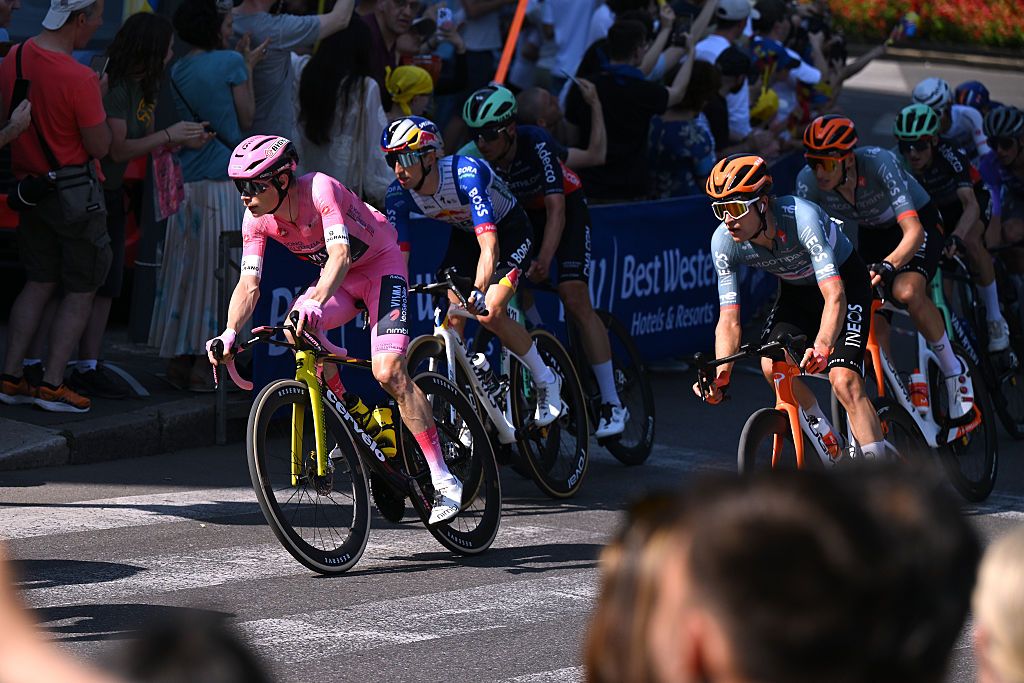
Tensions flared at the Giro d’Italia following the controversial decision to neutralise general classification (GC) times on the rough roads of Milan during the city-centre circuit finish. Race leader Jonas Vingegaard, representing Visma-Lease a Bike, was instrumental in pressing race officials to implement the neutralisation after concerns about rider safety emerged on the notoriously uneven and slippery cobbled streets. The move sparked a heated debate between the riders and organisers, with the latter expressing frustration over what they perceived as excessive caution from the peloton.
The Milan stage was intended as a showcase event to mend the strained relationship between the Giro and the city authorities after years of logistical and safety disputes. However, the poor condition of Milan’s tram tracks and polished stone surfaces, which riders had to cross multiple times per lap, raised serious safety concerns. Vingegaard and his fellow riders, including CPA representatives like Victor Campenaerts, decided to approach race officials during the event to request the neutralisation of GC times, a decision that was swiftly granted by the UCI chief commissaire and race management. This unexpected concession has prompted questions about whether similar measures might be applied in the race’s mountainous stages or the upcoming finale in Rome, where road conditions are also challenging.
While Vingegaard defended the riders’ decision as a responsible and collective effort to prioritise safety, RCS Sport CEO Paolo Bellini strongly criticised the move, describing the course as “beautiful, well-designed and not dangerous.” Bellini argued that neutralising times so late in the race was an overreaction and suggested that taking GC times five kilometres from the finish would have sufficed. Media outlets close to the race organisers echoed this sentiment, with some commentators accusing the peloton of lacking courage and diminishing the competitive spirit of the sport by avoiding any risk.
The incident has highlighted the ongoing tension between rider safety and race organisation in professional cycling, particularly on urban circuits with challenging surfaces. It also raises broader questions about the balance of power between riders, teams, and race authorities, especially in high-stakes events like the Giro d’Italia. As the race progresses towards its decisive mountain stages and the final showdown in Rome, all eyes will be on how these safety concerns are managed and whether the precedent set in Milan will influence future decisions.
Ultimately, the Milan episode underscores the evolving nature of professional cycling, where rider welfare is increasingly at the forefront, but where organisers remain keen to preserve the spectacle and challenge of the sport. Jonas Vingegaard’s role as a leader willing to engage directly with officials reflects a new dynamic in race governance, one that could shape the Giro’s approach to risk and competition in the coming days.