Article By:
Cycling Weekly
2026-05-26 13:44:50
'I reacted in the heat of the moment' – seven times we have seen headbutts and punch-ups have in the pro peloton
Summary By: eMotoX
At the conclusion of stage 15 of the Giro d’Italia, Enrico Zanoncello of Bardiani-CSF-7 was disqualified for headbutting British rider Bob Donaldson, causing a crash that left Donaldson with injuries and damaged equipment. The UCI jury swiftly imposed a 500 Swiss Franc fine and deducted 13 points from Zanoncello, citing a dangerous deviation from the chosen line. Under the updated 2025 UCI regulations, riders accumulating two yellow cards in a race face disqualification and suspension, but Zanoncello’s actions were deemed severe enough to warrant immediate ejection.
Incidents of physical altercations in professional cycling, while uncommon, have a notable history. Recent examples include Kiwi rider Kiaan Watts being suspended for punching a rival during a race in the Netherlands, and Belgian cyclocross rider Eli Iserbyt’s disqualification for deliberately damaging another competitor’s bike. These episodes reflect a pattern of escalating tensions in the peloton, where high stakes and intense competition sometimes boil over into aggression.
Some of the more high-profile clashes in recent years have involved well-known riders and major races. In the 2019 Tour de France, Luke Rowe and Tony Martin were both expelled after a confrontation that nearly caused a crash. Similarly, Gianni Moscon was disqualified from the 2018 Tour after punching Elie Gesbert, an incident for which Moscon later apologised, attributing his behaviour to a momentary loss of control. These examples underline the ongoing challenge of maintaining discipline amid the pressures of elite racing.
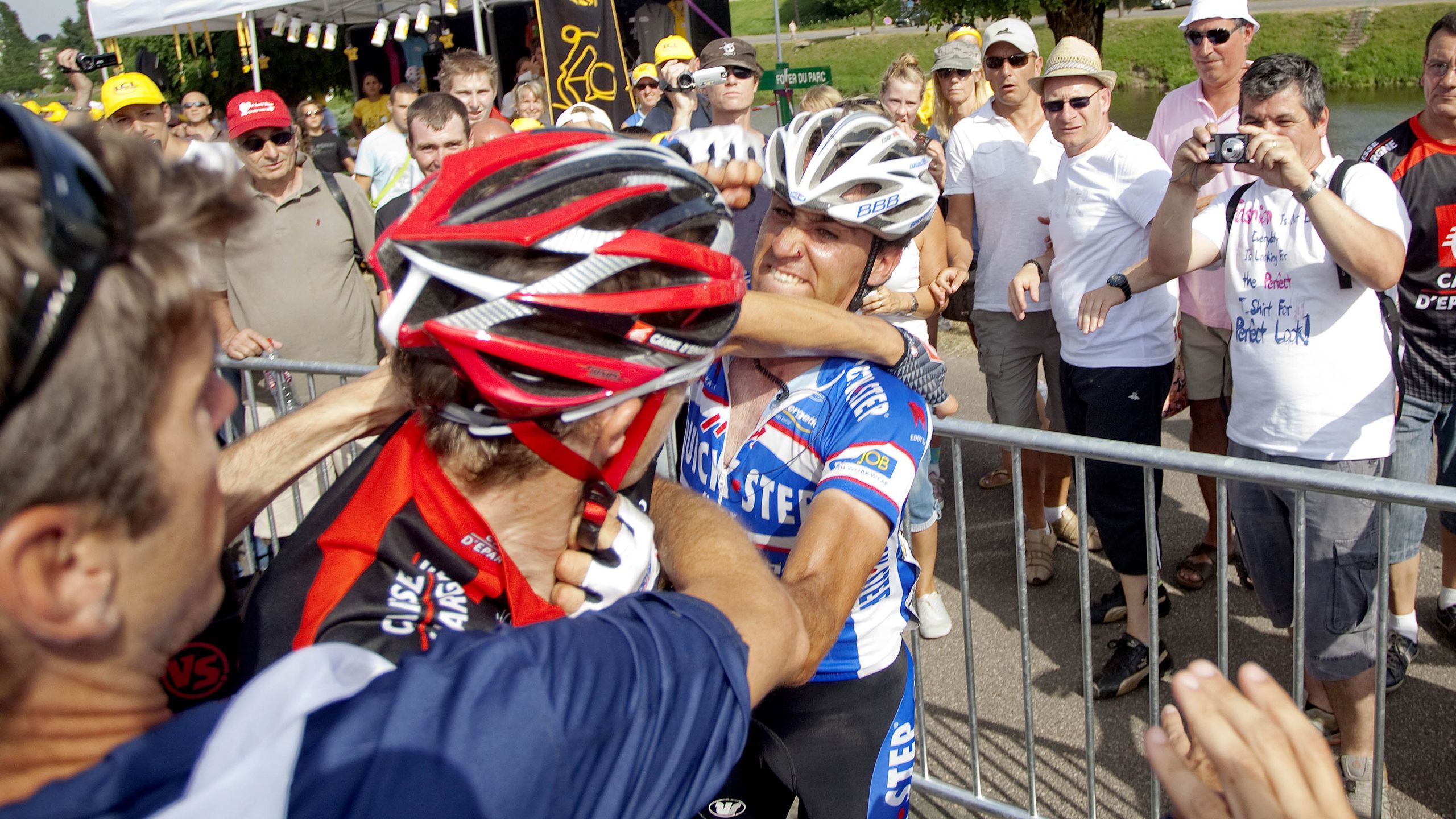
More violent episodes have also marked the sport’s recent past. During the 2017 Dubai Tour, Marcel Kittel suffered facial injuries after being punched by Andriy Grivko, who denied wrongdoing but received a 45-day ban. In 2010, Mark Renshaw was disqualified from the Tour de France for headbutting Julian Dean, while Rui Costa and Carlos Barredo engaged in a post-stage brawl involving punches and bike-wheel strikes. Although fines were imposed, both riders continued the race, highlighting the sometimes inconsistent consequences of such incidents.
These episodes of race rage demonstrate the fine line professional cyclists walk between competitive aggression and unacceptable conduct. The UCI’s evolving disciplinary framework aims to deter dangerous behaviour, but the high-pressure environment of pro racing continues to produce moments of conflict. As the sport grows in profile and intensity, governing bodies and teams will likely need to reinforce codes of conduct to preserve safety and sportsmanship on the road.