Article By:
Cycling Weekly
2026-06-09 11:45:36
How does the team time trial at the Tour de France work? The individually timed format has a dress rehearsal at the Tour Auvergne-Rhône-Alpes
Summary By: eMotoX
The Tour de France is reintroducing the team time trial this July for the first time since 2019, but with a significant change: riders will be timed individually rather than as a collective team. This format, trialled by race organisers ASO since 2023 at Paris-Nice, shifts the focus from a unified team effort to a hybrid strategy where individual performances within the team context are paramount. The upcoming Tour Auvergne-Rhône-Alpes race will serve as a crucial rehearsal for this new approach ahead of the Tour de France’s opening stage in Barcelona.
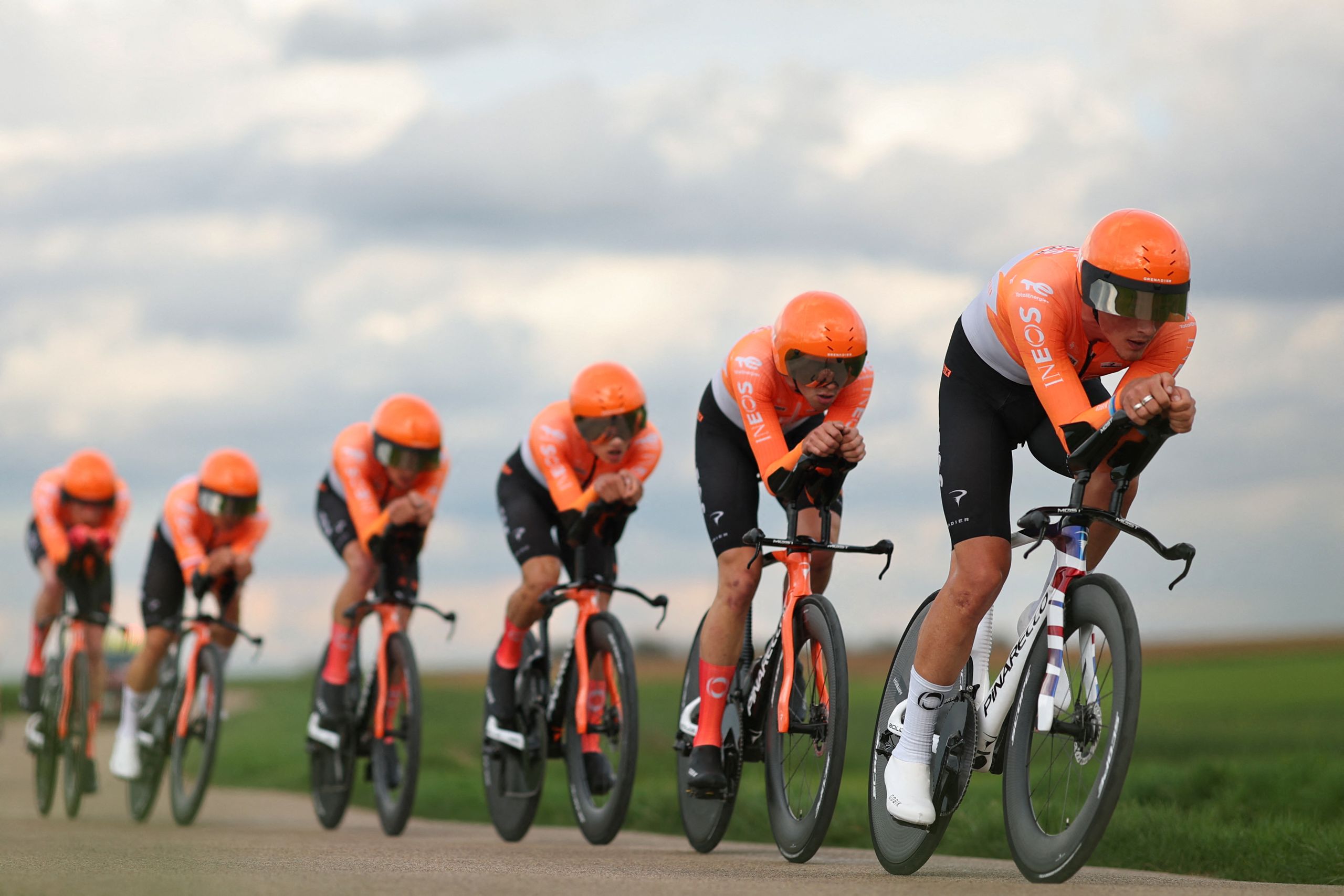
Traditionally, team time trials measure a team’s time based on the fourth rider to cross the finish line, with all team members receiving the same time. Under the new rules, however, each rider’s time is recorded separately, influencing both stage results and the general classification. Teams typically employ a lead-out tactic, protecting their leader for as long as possible before allowing them to sprint to the finish. While the stage winner is declared as the fastest team overall, individual riders’ times determine their standing in the general classification, encouraging strong individual efforts within the team framework.
This format introduces strategic complexity, as riders not targeting the general classification may drop off the pace once their role is fulfilled, while contenders push for the best possible times. A time cut-off remains in place, with riders finishing more than 30% slower than the winner being eliminated, ensuring a competitive pace throughout. The approach aims to prevent a single team from dominating the general classification and to inject tactical variety into the race.
Notable voices in the cycling community have welcomed the change. Six-time British time trial champion Alex Dowsett praised the individual timing system as “brilliant,” highlighting how it allows teams to conserve their leader’s energy by dropping them off near the finish for a final burst. This innovation is expected to make team time trials more dynamic and engaging, blending elements of team strategy with individual performance.
The upcoming team time trial at the Tour Auvergne-Rhône-Alpes covers 28.4km on a loop from Perreux, with teams starting in order based on the team classification. The Tour de France’s version will be shorter, at 19.6km, and will open the race in Barcelona. The first yellow jersey will be awarded to the fastest individual rider, reflecting the new emphasis on individual times within the team event. This evolution in the team time trial format marks a notable shift in one of cycling’s most prestigious races.