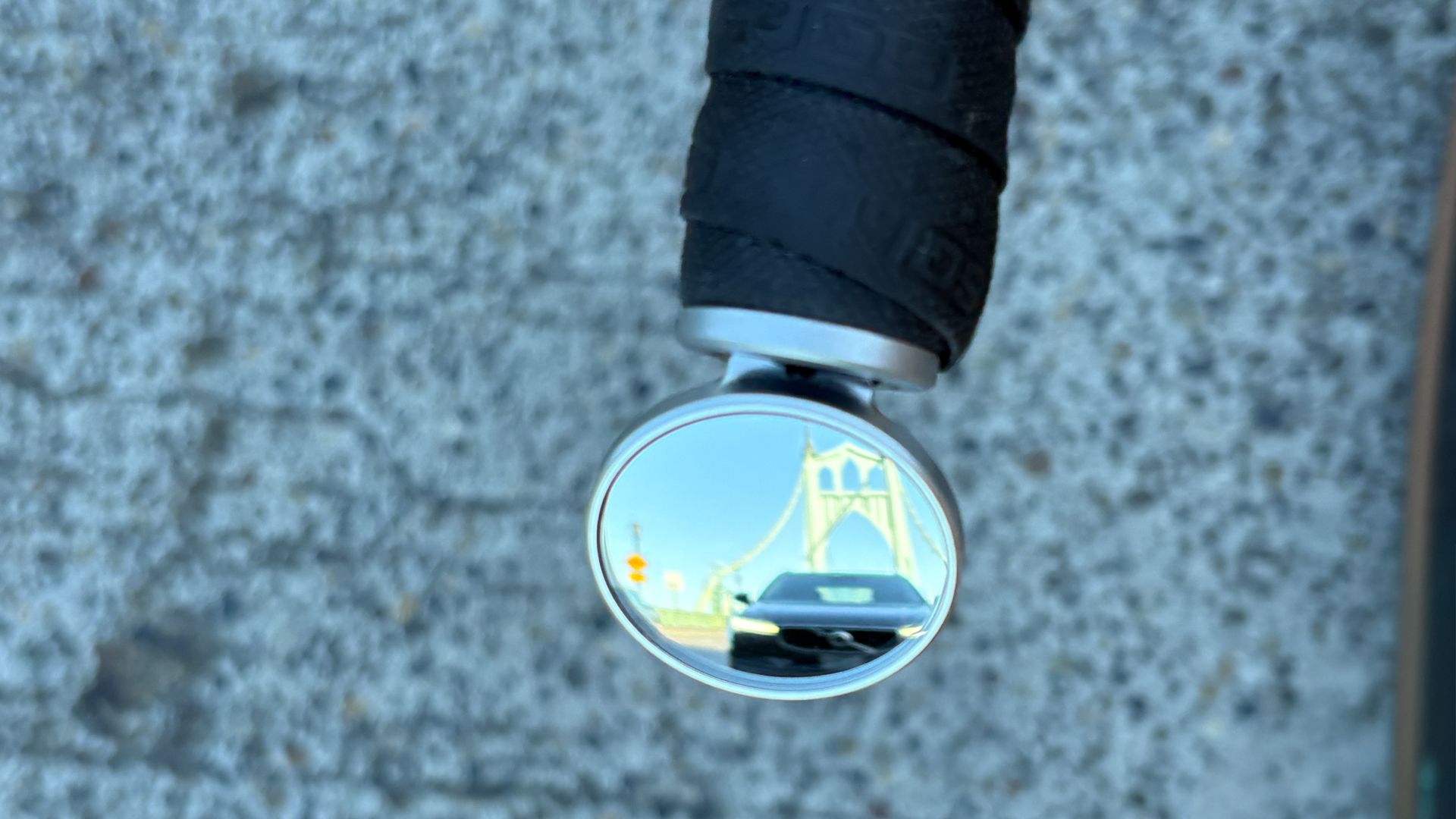
Summary By: eMotoXRear-view mirrors on bicycles, long dismissed as unfashionable accessories, are gaining renewed attention among cyclists, driven by safety concerns and technological advancements. Recently, Matej Mohorič, a Grand Tour stage winner and former gravel world champion, showcased a sleek rear-view mirror on his Instagram, signalling a shift in perception. These mirrors, which attach to sunglasses or handlebar ends, allow riders to monitor traffic behind without turning their heads, enhancing stability and awareness on the road.
The rise in cyclist fatalities, particularly in the U.S. where an average of 19 riders are killed weekly, has heightened the demand for safety innovations. While high-tech radar systems like the Garmin Varia have become commonplace, mirrors offer a simpler, mechanical solution to the same problem. Mohorič’s choice, the Rizoma R21, represents a significant evolution from earlier, bulky designs; it is lightweight, aerodynamically tested, and features a durable ZEISS lens. However, its premium price, reportedly exceeding $200, places it in the luxury segment of cycling accessories.
More accessible options are emerging, such as Spurcycle’s newly launched Pro Mirror, designed with input from competitive gravel and road cyclists. Available in two sizes, the Pro Mirror boasts a minimalist aluminium body, tempered glass optics, and a vibration-resistant build suitable for rough terrain. Its tool-free installation and compatibility with a range of handlebar diameters make it a practical choice, while a starting price of $69 USD offers a more affordable alternative to the Rizoma model. Spurcycle emphasises the mirror’s potential to enhance both safety and tactical awareness during races.
The growing acceptance of rear-view mirrors reflects a broader trend of integrating functional technology into cycling without compromising aesthetics or performance. As riders become more safety-conscious and open to new gear, these mirrors could move from niche gadgets to standard equipment. The conversation now centres on whether such devices will become mainstream or remain the preserve of enthusiasts prioritising safety and competitive advantage.