bicycle news article header featuring cycling news, bike updates, reviews and industry insights

News Menu

latest eBike news aggregator covering electric bike updates, reviews and industry trends
Click for eBike News
electric motocross news feed with latest dirt bike updates, reviews and industry insights
Click for eMotocross News
latest eScooter news aggregator featuring electric scooter news feed, updates, reviews and industry trends
Click for eScooter News
electric vehicle news aggregator featuring latest EV updates, charging and technology news
Click for EV news
Article By:
Cycling Weekly
2026-06-05 07:00:00

Is this the world's remotest Strava KOM? I smuggled a folding bike onto a dinghy just to get there

Summary By: eMotoX
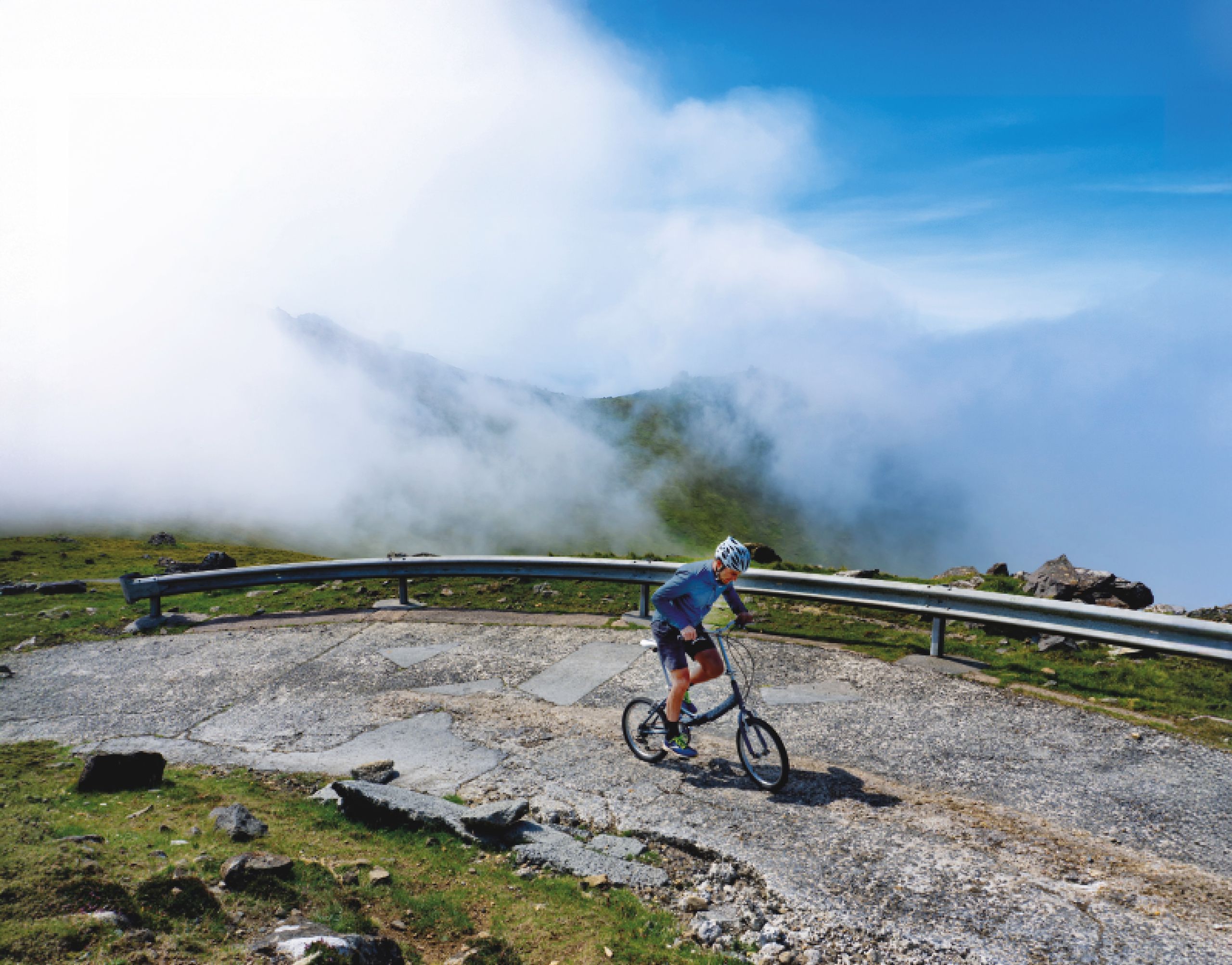
A passionate hill-climber and former road racer embarked on a remarkable journey to claim what may be the world’s most remote Strava King of the Mountain (KOM). His quest led him to St Kilda, an isolated volcanic archipelago located 40 miles west of the Isle of Harris in the Outer Hebrides. The climb up Mullach Mòr, the island’s highest point at 361 metres, presented a formidable challenge with steep gradients averaging 14 per cent over 2.4 kilometres. This route, barely marked on maps, offered a rare opportunity to conquer a truly undiscovered ascent in Britain’s wildest terrain. St Kilda’s history is as harsh and forbidding as its landscape. Once home to a small community for over two millennia, the islands were evacuated in 1930 due to the extreme living conditions and isolation. Today, the archipelago is primarily a military outpost with a radar station, and access is heavily restricted to protect its unique wildlife and environment. The only way ashore is by dinghy, as larger boats are prohibited to safeguard seabird colonies, making the logistics of transporting a bicycle particularly complex. To overcome this obstacle, the rider chose a folding bike, a second-hand Raleigh Swift, which could be packed into a manageable holdall for the boat transfer. The journey itself was an adventure, involving a combination of road, ferry, and sea travel across the Hebrides before reaching the remote island. Despite uncertainties about permissions and the condition of the route, the rider’s determination saw him through, culminating in a daring landing by dinghy and a direct appeal to the island’s ranger to allow him to attempt the climb. This expedition highlights the intersection of extreme cycling and exploration, pushing the boundaries of where competitive cycling can take place. It also raises questions about access and conservation on protected sites like St Kilda, where human activity must be carefully balanced with environmental preservation. For the rider, the experience was less about competition and more about discovery, underscoring a growing trend among cyclists who seek out hidden and challenging routes far from the usual racing circuits.