Article By:
CleanTechnica
2026-06-03 02:55:39
A Tale of Two Hybrids
Summary By: eMotoX
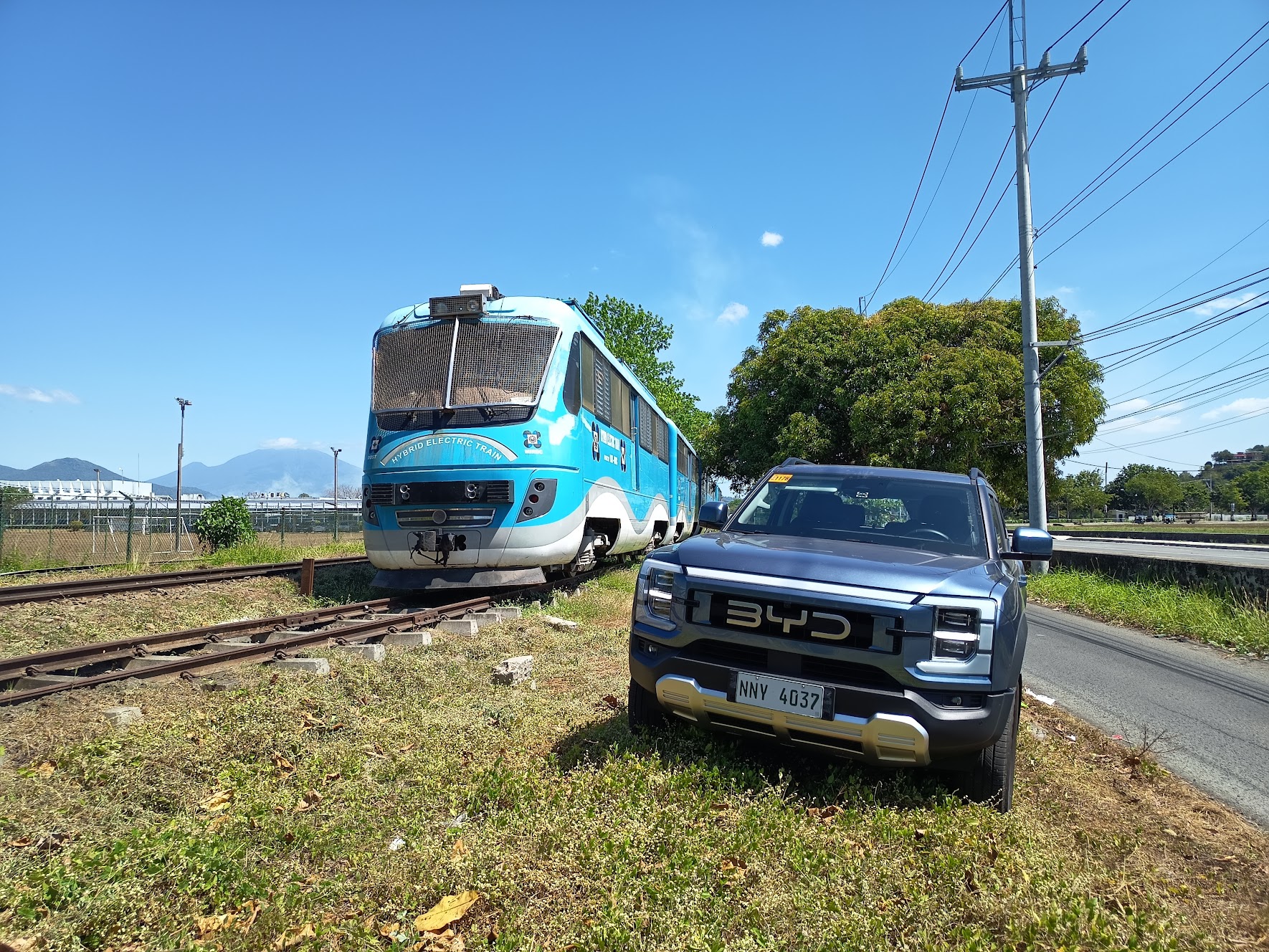
The encounter between the BYD Shark and the DOST Hybrid Electric Train (HET) in the Philippines highlights the contrasting stages of hybrid technology development in clean transportation. The DOST HET, developed in 2016 by the Philippine Department of Science and Technology, represents an early attempt to create a hybrid train suited to the country’s ageing rail infrastructure. It employs a series hybrid system where a diesel generator charges a large bank of lead-acid batteries, which in turn power electric traction motors. While this design reduces fuel consumption compared to conventional diesel locomotives, the reliance on heavy, low-energy-density lead-acid batteries severely limits the train’s efficiency and mobility, leaving it largely inactive since its debut.
In stark contrast, the BYD Shark, a modern hybrid off-road vehicle, showcases the advances in battery technology that have transformed hybrid systems in recent years. Utilising a lithium iron phosphate (LFP) Blade Battery with nearly four times the energy density of lead-acid cells, the Shark runs primarily on electric power, with its internal combustion engine serving as a range extender. This results in impressive performance figures, including rapid acceleration and a significant electric-only driving range, despite the vehicle’s substantial weight and rugged capabilities. The architectural similarity between the Shark and the HET—both using an engine to generate electricity for electric motors—underscores how critical battery technology is to unlocking the full potential of hybrid systems.
The technological gap between these two hybrids is not simply a matter of time but a reflection of how advances in battery chemistry can redefine what is achievable in clean transport. BYD’s expertise extends beyond automobiles to rail systems, as demonstrated by its recent SkyRail project in Brazil, which incorporates onboard LFP battery packs to maintain service during power outages. Additionally, BYD’s partnership with mining giant BHP to develop batteries for heavy-haul locomotives in Australia signals the company’s capability to supply robust energy storage solutions for demanding rail applications. This raises a pertinent question for the Philippines: why has the HET not benefited from such battery advancements, given that BYD already operates in the country and produces the very technology that could revitalise the train?
The story of these two hybrids ultimately speaks to the broader challenges and opportunities in the clean transport transition. The DOST HET embodies the engineering potential and local innovation that exist in developing nations, but it is hampered by outdated energy storage technology. Meanwhile, BYD’s modern hybrid systems demonstrate how far the industry has come and what could be possible if cutting-edge batteries were integrated into existing infrastructure. Bridging this gap will require not only technological upgrades but also the commercial and policy commitment to deploy advanced batteries in public transport projects. Without this, promising prototypes risk remaining sidelined, while the clean transport revolution advances elsewhere.