bicycle news article header featuring cycling news, bike updates, reviews and industry insights

News Menu

latest eBike news aggregator covering electric bike updates, reviews and industry trends
Click for eBike News
electric motocross news feed with latest dirt bike updates, reviews and industry insights
Click for eMotocross News
latest eScooter news aggregator featuring electric scooter news feed, updates, reviews and industry trends
Click for eScooter News
electric vehicle news aggregator featuring latest EV updates, charging and technology news
Click for EV news
Article By:
CyclingNews
2026-05-28 16:06:56

Gravel bikes wind tunnel tested: How does the new Specialized Crux stack up against the Argon 18 Anti Matter, Wilier Rave, Lauf Seigla, and more?

Summary By: eMotoX
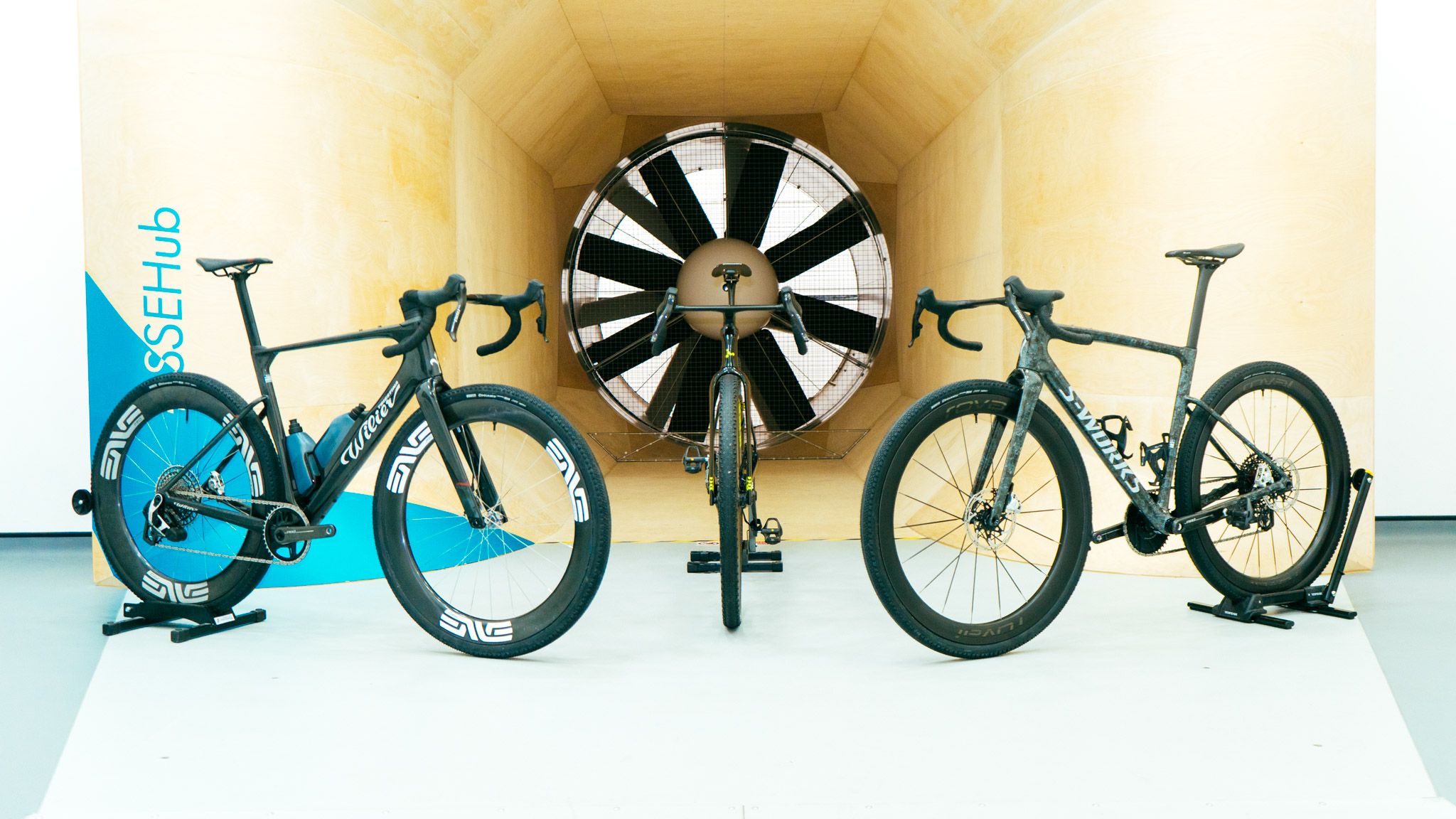
Gravel bikes have evolved significantly over the past decade, transitioning from a loosely defined category into a highly competitive segment focused on performance and aerodynamics. As gravel racing has gained prominence, riders and manufacturers alike have shifted their priorities towards optimising tyre clearance, frame aerodynamics, and handlebar width. This has given rise to a new breed of gravel race bikes that blend the need for speed on rough terrain with aerodynamic efficiency, prompting a detailed wind tunnel study to assess how these machines compare in terms of drag. The recent tests, conducted at the Silverstone Sports Engineering Hub, evaluated a selection of leading gravel race bikes including the new Specialized Crux 5, Argon 18 Anti Matter, Wilier Rave SLR ID2, Lauf Seigla, and others, with the Trek Emonda ALR serving as a road bike benchmark. Testing was performed at 35 km/h, a speed chosen to reflect elite gravel racing conditions such as those seen at Unbound Gravel, where average speeds approach this figure. The study measured aerodynamic drag across various yaw angles and considered the impact of tyre width on rolling resistance, recognising that the fastest bike is not necessarily the one with the lowest aero drag alone. Several manufacturers were unable or unwilling to provide bikes for testing, highlighting the challenges and complexities involved in gravel bike aerodynamic analysis. Brands like Ridley, Factor, and Canyon either declined or could not supply models in time, while Cervélo and Cannondale promised but ultimately did not deliver. This underscores the logistical and technical difficulties in standardising gravel bike aero testing, especially as the category continues to expand rapidly with new models expected in 2026. The findings from this wind tunnel work offer valuable insights into how gravel race bikes perform aerodynamically and how this interacts with rolling resistance from wider tyres. By quantifying the watts of drag for each model, the study provides a clearer picture of which bikes offer the best balance of speed and practicality on gravel surfaces. This data will be instrumental for riders seeking to optimise their equipment choices for competitive gravel racing, and it sets a benchmark for future developments in this burgeoning segment of cycling.