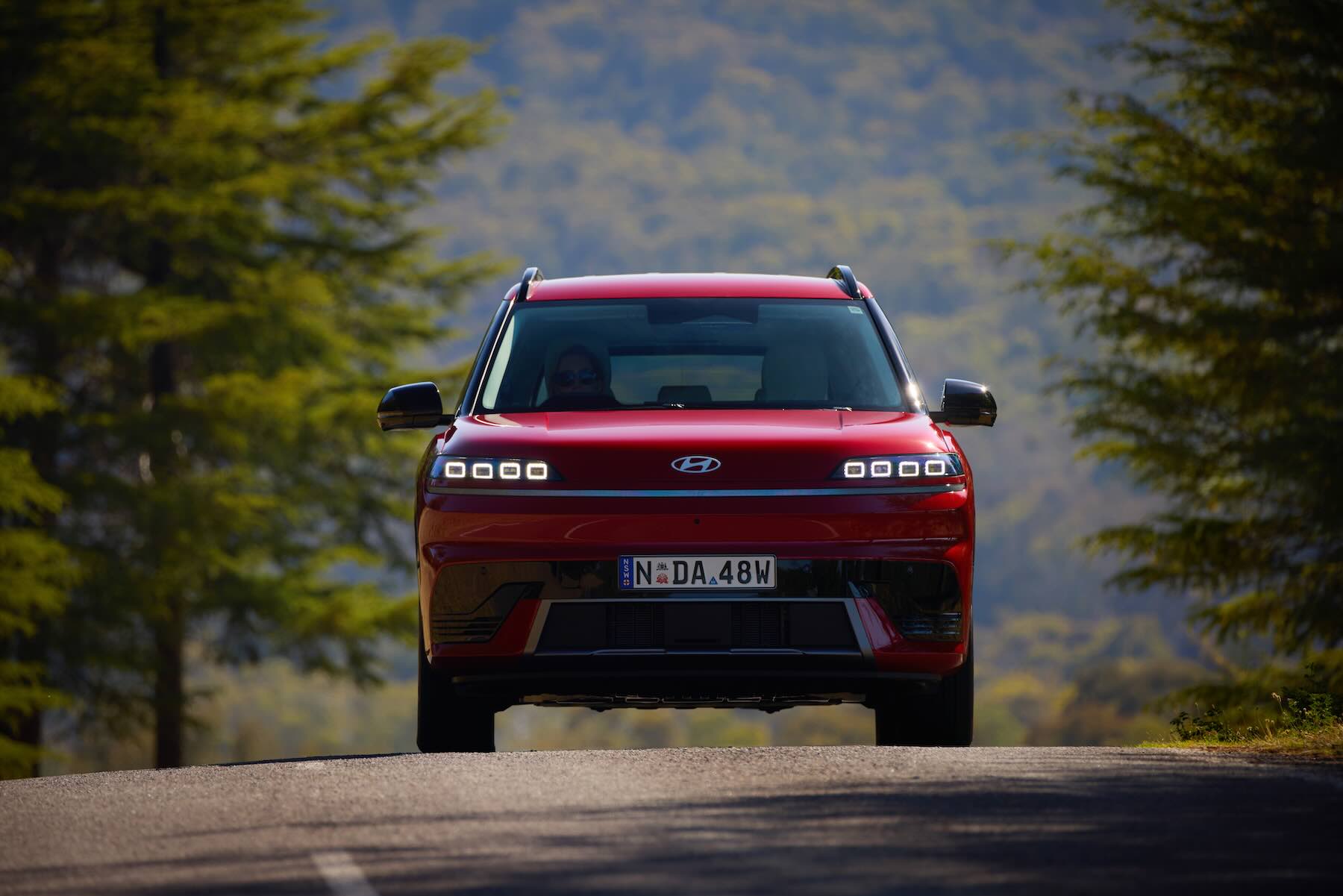
Summary By: eMotoXHyundai has introduced its latest electric SUV, the Elexio, to the Australian market with a clear strategic intent: to compete directly with Chinese EV manufacturers by producing the vehicle in China through its joint venture, Beijing Hyundai. This marks the first Hyundai electric vehicle sold in Australia that is built in China, signalling a shift in the company’s approach to the increasingly competitive electric SUV segment. Positioned in the crucial price bracket of high-$50,000s to low-$60,000s, the Elexio aims to offer a practical, family-sized electric SUV with a long driving range, distinguishing itself from Hyundai’s more niche or urban-focused EVs like the Ioniq 5 and Inster.
The Elexio comes in two trims, the base model at just under $58,000 and the better-equipped Elite at around $60,000, both sharing an 88.1kWh LFP battery and a front-wheel-drive setup delivering 160kW and 310Nm. Hyundai claims an impressive WLTP range of over 540km for both variants, with the Elite’s slightly lower range attributed to its larger 20-inch wheels and additional comfort features such as heated and ventilated seats, a heated steering wheel, and a power tailgate. While the base model’s manual tailgate feels somewhat out of place at this price point, the overall package is competitive and thoughtfully equipped for its segment.
Inside, the Elexio presents a modern but somewhat unconventional interior dominated by a sweeping 27-inch screen that stretches across the dashboard. This design, typical of many Chinese EVs, departs from Hyundai’s usual style and divides opinion due to its minimalist approach and lack of a traditional instrument cluster. Instead, key driving information is displayed via a head-up display and the left portion of the main screen, which can sometimes feel compromised, especially as some basic indicators are missing. The absence of physical buttons for climate control and other functions may also frustrate drivers accustomed to more tactile controls, although voice command functionality is well integrated.
Practicality is a strong suit for the Elexio, especially in the rear cabin and cargo areas. It offers more rear legroom than the Kona Electric, making it a more comfortable option for families, with ample space for child seats and convenient features like door cup holders and multiple USB-C ports. Boot capacity is generous at 506 litres with seats up and expands to 1,540 litres when folded, although the lack of a front trunk and limited underfloor storage are notable omissions. Charging capabilities include a 150kW DC fast charge, enabling a 10 to 80 per cent recharge in 38 minutes, and an 11kW AC charge rate, providing solid but unexceptional charging performance.
On the road, the Elexio delivers a competent driving experience rather than an exhilarating one. The Elite’s larger wheels contribute to a firmer ride compared to some softer-riding Chinese rivals, but overall the vehicle strikes a balance