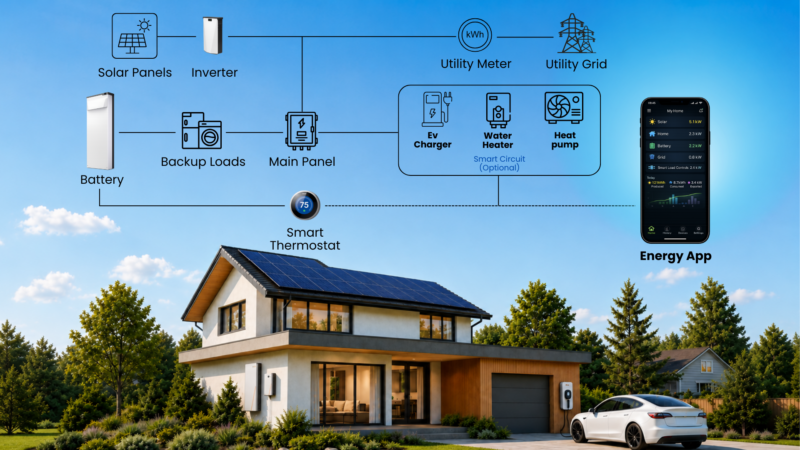
Summary By: eMotoXHome energy management is evolving into an intelligent, interconnected ecosystem that goes beyond individual upgrades to create a cohesive strategy tailored to each household’s needs. With the rise of electric vehicles, heat pumps, induction cooking, and smart appliances, homes are consuming more electricity than ever before, necessitating smarter coordination between solar panels, batteries, and energy controls. The true value of this approach lies not in the standalone equipment but in designing a system that aligns with the homeowner’s priorities and adapts to changing electricity usage patterns and grid conditions.
At the core of this ecosystem are several building blocks: solar generation, battery storage, smart load controls, and sometimes backup generators. The system’s effectiveness depends on clearly defining what loads must remain powered during outages, which can be deferred, and how long backup power should last. Large electric loads such as heat pumps and EV chargers require special consideration, as they consume significant energy and may need to be managed automatically to preserve battery life. A well-crafted energy plan balances these factors to maintain safety, comfort, and functionality without unnecessary complexity.
The integration of software is pivotal in making these components work seamlessly together. Advanced energy management platforms enable devices like smart thermostats, batteries, and EV chargers to communicate and respond dynamically to factors such as occupancy, weather, time-of-use rates, and stored energy levels. This software layer reduces the need for constant manual intervention by homeowners, optimising energy use while maintaining comfort and convenience. The system’s intelligence lies in its ability to coordinate diverse equipment, ensuring efficient operation without overwhelming users.
One of the most significant advantages of an integrated home energy system is the flexibility it provides amid fluctuating electricity rates, outages, and evolving household demands. Homeowners gain the ability to choose when to use solar power directly or store it for later, prioritise critical loads during blackouts, and accommodate future electrification needs such as additional EVs or heat pumps without redesigning the entire system. This optionality is increasingly important as homes become more electrified and utility programmes grow more complex and dynamic.
Looking ahead, the development of sophisticated home energy management software is expected to accelerate, further enhancing the coordination between solar, storage, and connected appliances. Research from institutions like the National Renewable Energy Laboratory underscores the potential for these systems to improve comfort, cost savings, and resilience. As these technologies mature, homeowners will benefit from smarter, more adaptable energy ecosystems that respond proactively to their needs and external conditions, marking a significant step forward in sustainable, user-centred home energy solutions.