EV news article header featuring electric vehicle news, EV charging station, electric car updates and industry insights

News Menu

bicycle news feed and industry updates for eBike and cycling news
Click for Bicycle News
latest eBike news aggregator covering electric bike updates, reviews and industry trends
Click for eBike News
electric motocross news feed with latest dirt bike updates, reviews and industry insights
Click for eMotocross News
latest eScooter news aggregator featuring electric scooter news feed, updates, reviews and industry trends
Click for eScooter news
Article By:
CleanTechnica
2026-05-19 22:28:08

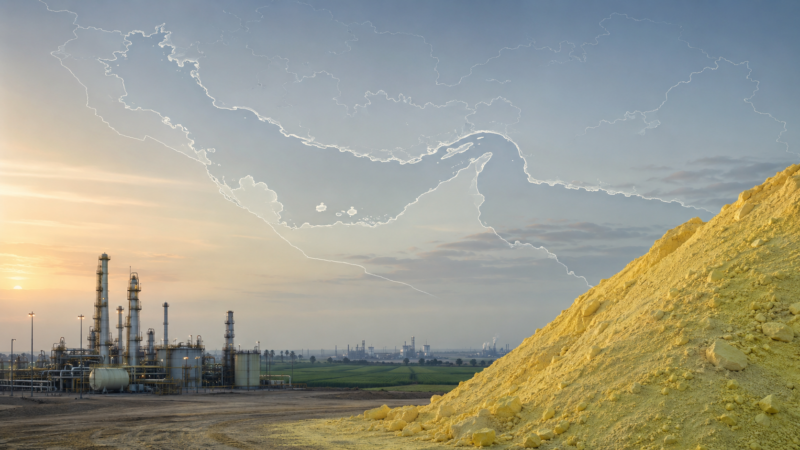
Strait Of Hormuz Sulfur Shock Previews Fertilizer’s Future

Summary By: eMotoX
The recent surge in sulfur prices linked to disruptions around the Strait of Hormuz highlights a critical but often overlooked component of global industrial supply chains. While the region is widely recognised as a strategic chokepoint for oil and liquefied natural gas shipments, it also plays a vital role in the flow of recovered sulfur, a key raw material for producing sulfuric acid. This acid is essential for manufacturing phosphate fertilisers, metal processing, and various chemical applications. The current price spike serves as a warning of future challenges as the traditional supply of cheap sulfur, largely a byproduct of oil refining and sour gas processing, diminishes in a decarbonising world. Sulfur’s unique market dynamics stem from its historical abundance, which was not due to deliberate mining but rather the necessity of removing sulfur from fossil fuels to meet environmental regulations. This byproduct model kept sulfur prices low for decades, supporting extensive supply chains for fertilisers and industrial chemicals. However, as the energy transition reduces reliance on heavy sour crude and natural gas, the volume of recovered sulfur is expected to decline significantly. This structural shift threatens to raise sulfur prices substantially, with potential knock-on effects on the cost of phosphate fertilisers, which rely heavily on sulfuric acid in their production. The economic implications of rising sulfur prices are profound, particularly for agriculture. Fertiliser production costs are directly linked to sulfur prices, with increases potentially adding hundreds of pounds per ton to key products like diammonium phosphate (DAP). Given that global food security depends on affordable fertilisers, sustained high sulfur prices could exacerbate challenges in agricultural productivity and food supply chains. Moreover, other industrial sectors such as copper and nickel processing, which also depend on sulfuric acid, may face increased operational costs, affecting the broader transition to critical minerals and clean technologies. Industry experts emphasise that the current market disruption caused by geopolitical tensions at the Strait of Hormuz is a preview rather than an isolated event. The gradual reduction in fossil fuel processing will impose a similar constraint on sulfur availability, but in a more prolonged and systemic manner. This evolving landscape calls for strategic adjustments in supply chain management, including exploring alternative sulfur sources or developing new technologies to reduce dependence on fossil fuel-derived sulfur. The challenge lies in balancing the demands of decarbonisation with the essential industrial uses of sulfur that underpin modern agriculture and manufacturing. Looking ahead, the sulfur market will likely experience increased volatility and higher baseline prices as the world transitions away from traditional energy systems. While sulfur is not geologically scarce, the cost and complexity of producing it independently of fossil fuel byproducts will rise. This reality necessitates a rethinking of industrial processes and supply chains to ensure resilience and sustainability in critical sectors. The situation around the Strait of Hormuz thus offers a valuable case study in how energy transition impacts extend beyond the obvious and into the foundational materials that support global economies.