EV news article header featuring electric vehicle news, EV charging station, electric car updates and industry insights

News Menu

bicycle news feed and industry updates for eBike and cycling news
Click for Bicycle News
latest eBike news aggregator covering electric bike updates, reviews and industry trends
Click for eBike News
electric motocross news feed with latest dirt bike updates, reviews and industry insights
Click for eMotocross News
latest eScooter news aggregator featuring electric scooter news feed, updates, reviews and industry trends
Click for eScooter news
Article By:
Charged EVs
2026-05-11 18:00:30

Posifa’s new battery thermal event sensors offer 100 ms response and 15-year service life for EVs

Summary By: eMotoX
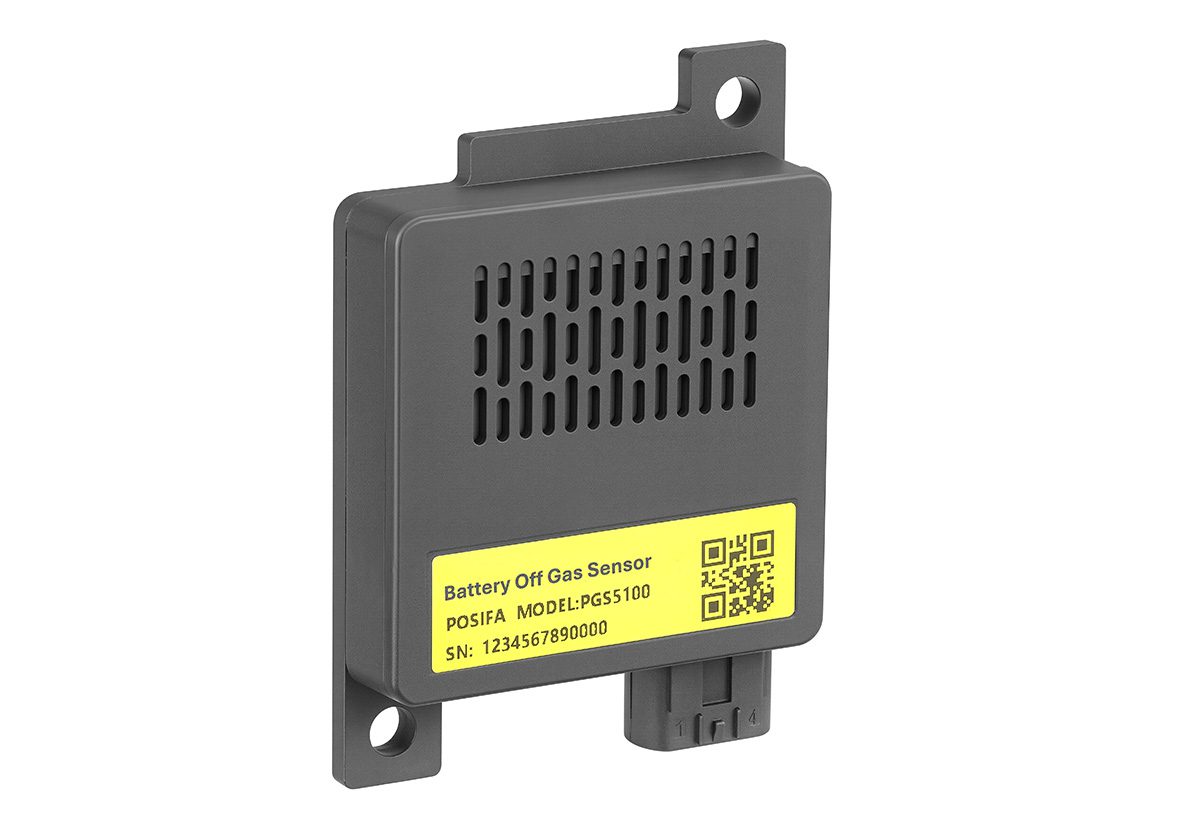
Posifa Technologies has launched the PGS5100 Series, a new line of MEMS-based thermal conductivity hydrogen sensors specifically designed for electric vehicle (EV) battery packs and fuel cell systems. These sensors aim to provide early-warning detection of hydrogen gas, which is a critical indicator during the initial off-gas phase of a thermal event, occurring before any significant heat escalation or ignition. By detecting hydrogen at this stage, the sensors enable vehicle control systems to activate safety measures promptly and give occupants valuable extra time to respond. The PGS5100 sensors represent a significant improvement over Posifa’s earlier PGS4100 series, boasting a response time ten times faster at just 100 milliseconds and a service life exceeding 15 years. They can detect hydrogen concentrations ranging from 0 to 25 per cent and incorporate integrated humidity and barometric pressure sensors to ensure accurate readings across varying environmental conditions such as temperature, altitude, and humidity. Additionally, the sensors are resistant to condensation and non-reactive to contaminants, addressing common failure issues found in traditional catalytic hydrogen sensors used in enclosed battery environments. Peng Tu, Posifa’s President and CEO, emphasised the importance of early hydrogen detection in preventing thermal runaway incidents. He noted that hydrogen release often precedes ignition by several minutes, providing a critical window for intervention. The PGS5100’s reliable detection capability inside battery packs offers original equipment manufacturers (OEMs) a dependable tool to enhance safety systems without the durability concerns associated with catalytic sensors. The sensor’s technical specifications include a 200-millisecond warm-up time, a 5-volt power supply, and a typical power consumption of 50 milliwatts. Communication is currently supported via MODBUS-RTU/RS-485, with plans to add CAN protocol compatibility. The device is housed in an IP6K9-rated enclosure with an automotive-grade connector, ensuring robustness suitable for demanding vehicle environments. Samples and production quantities of the PGS5100 are now available, signalling Posifa’s readiness to support the growing demand for advanced safety solutions in the EV sector.