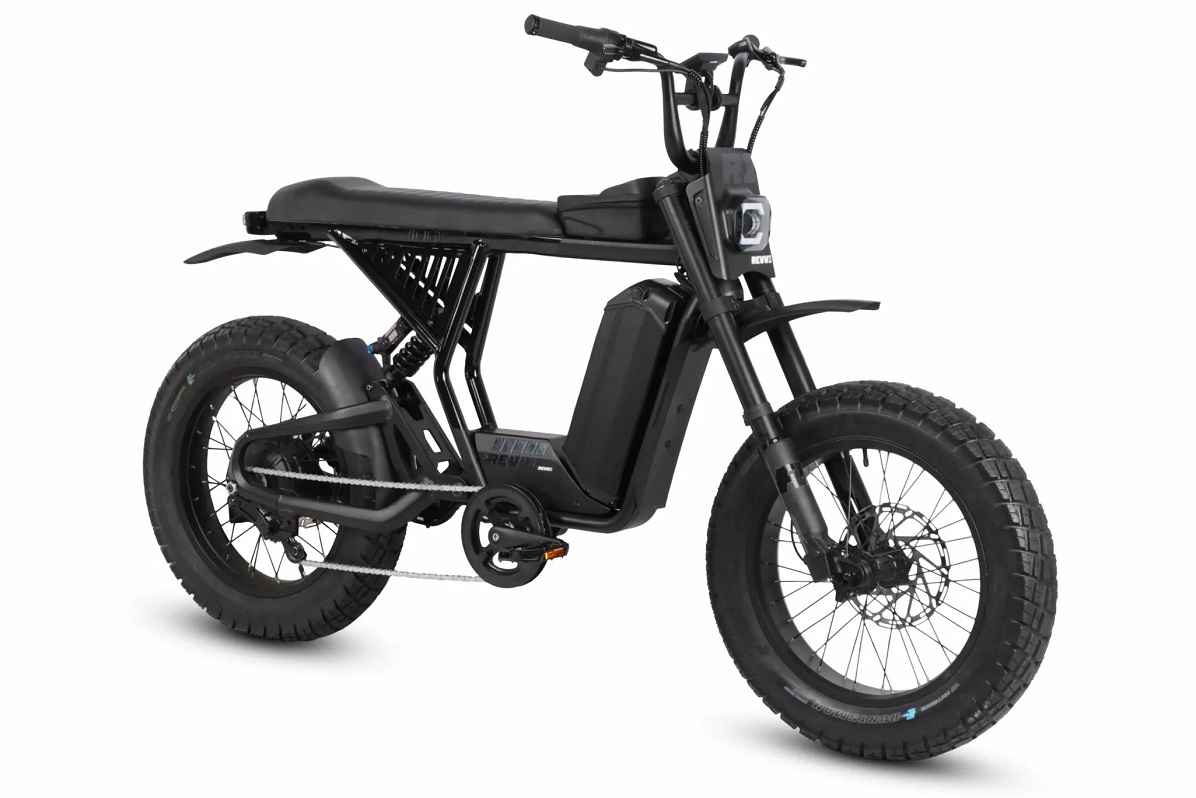
Summary By: eMotoXRide1Up has unveiled its Revv1 EVO, a new iteration of its popular moped-style e-bike that incorporates advanced semi-solid-state battery technology. This battery promises significant improvements over traditional lithium-ion packs, including a longer lifespan exceeding 1,200 charge cycles, faster charging times of just two hours with a 9A charger, and enhanced durability in cold weather conditions. Although not a fully solid-state battery, the gel electrolyte design offers greater stability and safety, successfully passing rigorous puncture, crush, thermal, and short-circuit tests. The EVO also boasts a powerful 750W motor with a peak output of 2,080W, upgraded suspension, and robust braking, positioning it as a high-performance yet legally compliant Class 2 e-bike.
The Revv1 EVO’s battery technology marks a notable advancement in the e-bike industry, potentially setting a new standard for power and reliability. Ride1Up’s early adoption of semi-solid-state batteries precedes similar announcements from major manufacturers like Giant, signalling a shift towards more resilient and efficient energy storage solutions. This development could help address longstanding concerns about battery safety and longevity, making e-bikes a more attractive investment for consumers. However, the true impact of this technology will only be confirmed once the bike is released and subjected to independent testing.
In parallel to product innovation, Massachusetts is considering new legislation aimed at refining the regulation of micromobility devices, including e-bikes. The proposed Ride Safe Act seeks to categorise these vehicles based on their maximum speeds, with clear definitions for Class 3 e-bikes, mopeds, and other powered mobility devices such as scooters and hoverboards. This approach intends to clarify legal distinctions and improve safety standards, requiring annual registration and insurance for certain categories. While the bill could streamline regulations, there is debate over whether it might complicate an already complex legal landscape for e-bike riders and manufacturers.
Additional news highlights include a recall of nearly 10,000 bike lights due to safety concerns for children, underscoring the importance of product safety in the growing electric cycling market. Meanwhile, accessories like the Bikase MIK Momo Basket and the Universal MIK Carrier Plate continue to enhance the versatility of e-bikes, offering practical solutions for cargo transport. These developments reflect the dynamic nature of the e-bike sector, where technological innovation, regulatory evolution, and consumer convenience are all advancing in tandem.