Article By:
CyclingNews
2026-05-08 00:20:47
'Let us have our race' - Geerike Schreurs and Lauren De Crescenzo share stories from The Traka 360 as pro women 'navigate around all the chaos of the amateurs'
Summary By: eMotoX
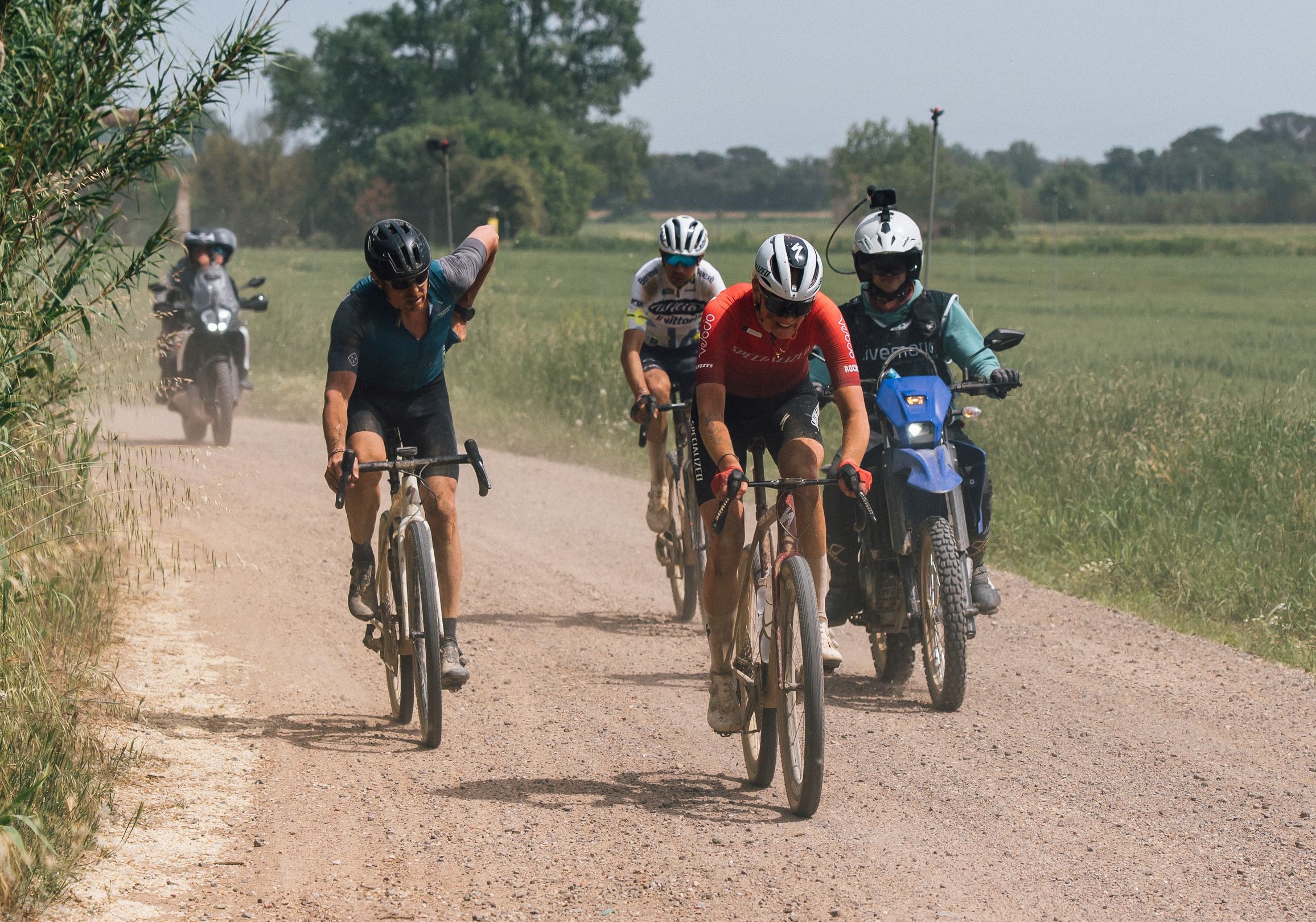
The Traka gravel races in Girona have experienced significant growth since their inception, expanding to a three-day event with multiple distances and attracting thousands of riders and spectators. However, this rapid expansion has brought challenges, particularly for professional women competitors who feel their race lacks the respect and safety protocols afforded in comparable events such as Unbound Gravel 200 in the United States. The Traka 360, a demanding 200-mile race akin to Unbound, saw a surge in participation this year, with amateurs comprising 77% of the field, creating a congested and chaotic race environment for the pro women.
Key issues highlighted by elite riders Lauren De Crescenzo and Geerike Schreurs centre on the race organisation and start procedures. Unlike Unbound Gravel, where pro women have separate start times and corrals to avoid interference from amateur riders, The Traka 360 placed pro women between pro men and amateurs with only ten minutes separating each group. This led to amateur men starting ahead of the pro women and failing to respect the designated start times, causing dangerous overlaps on the course. Race director Gerard Freixes attempted to manage the situation by instructing amateurs to return to the start line, but many ignored these requests, exacerbating the safety concerns.
Both De Crescenzo and Schreurs described the mental and physical toll of navigating through a mass of amateur riders, which complicated adherence to drafting rules and fair competition. De Crescenzo, making her debut at The Traka, found the course’s technical, twisty terrain a stark contrast to the wide, straight roads typical of American gravel races, adding to the challenge. Schreurs, a two-time podium finisher at The Traka 360, emphasised the need for mutual respect among all riders and recognised the unique difficulties posed by European gravel racing, particularly in the Girona region.
The frustrations voiced by the professional women underscore broader concerns about the integration of elite and amateur fields in large gravel events. The lack of clear separation and enforcement of start times not only compromises safety but also diminishes the competitive integrity of the pro women’s race. As The Traka continues to evolve, organisers face pressure to adopt more rigorous protocols similar to those at Unbound Gravel to ensure that professional women can compete on a level playing field without having to "navigate around all the chaos of the amateurs."
Looking ahead, both De Crescenzo and Schreurs are preparing for upcoming races, including the Unbound Gravel 200 later this year, where they expect a more structured and respectful race environment. Their experiences at The Traka highlight the growing pains of a rapidly expanding sport and the urgent need for organisers to balance inclusivity with fairness and safety, particularly as gravel racing gains prominence on the international stage.