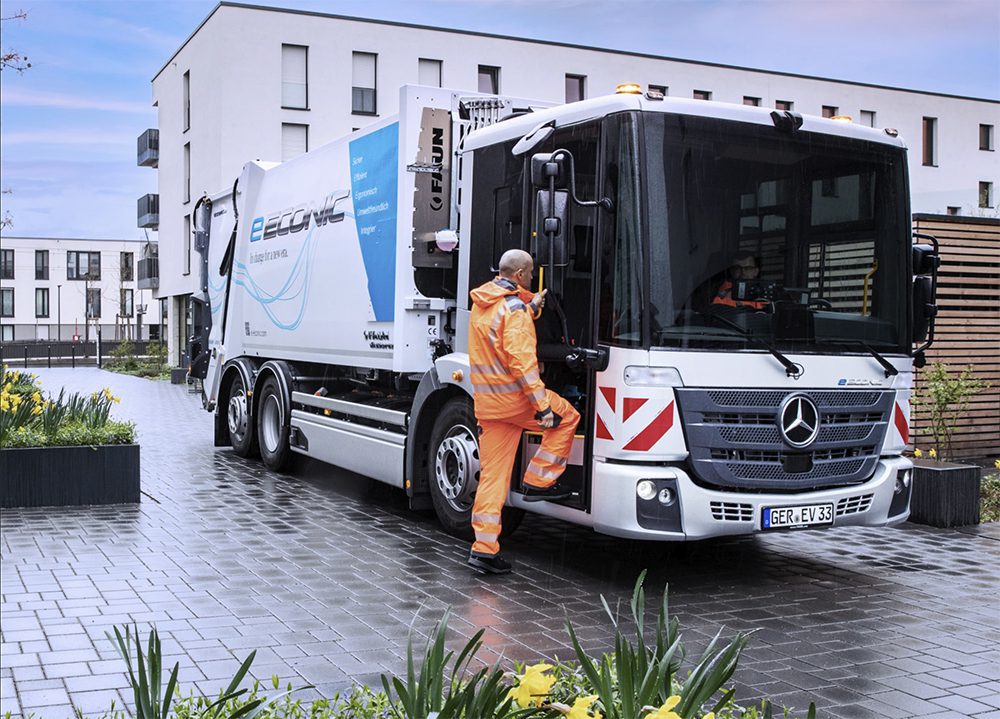
Summary By: eMotoXMercedes-Benz Trucks has unveiled the reECONIC, an electric waste collection vehicle concept that prominently incorporates recycled, natural, and bio-based materials in its construction. Developed in collaboration with 33 partners, the reECONIC demonstrates that approximately 80 percent of the truck’s components, excluding the powertrain, can be made from sustainable materials. These include recycled steel and aluminium, bio-based interior elements, retreaded tyres, and even wooden parts in the cab and exterior, underscoring the company’s commitment to circular economy principles.
The vehicle features several innovative material applications, such as carbon dioxide-reduced steel for the front axle and side members, aluminium components with at least 75 percent post-consumer recycled content, and glazing with an average recycled glass content of 64 percent. Interior components replace petroleum-based plastics with recycled polymers and natural fibres, while the use of retreaded tyres enhances the proportion of renewable materials after multiple cycles. Wood, specifically beech, is used for structural elements like the seat shell and cab roof, highlighting the integration of renewable resources that also contribute to carbon absorption.
Roland Dold, Project Manager for reECONIC, emphasised the pioneering nature of the project, noting the use of recycled materials sourced from diverse origins such as fishing nets and automotive parts. He expressed optimism that the insights gained from this concept will inform future series production, enabling more trucks with high recycled content to enter the market. Real-world testing of the reECONIC is planned for the latter half of 2026, after which it will enter a practical usage phase, signalling Mercedes-Benz’s intention to advance sustainable commercial vehicle technologies.
Despite these advances, Mercedes-Benz’s broader environmental stance has attracted criticism due to its involvement in lobbying efforts alongside Volvo and Traton to weaken emissions standards in the US and Europe. These actions, which include defending the repeal of key climate regulations, suggest a complex and somewhat contradictory approach to sustainability. While the reECONIC showcases significant progress in material recycling and resource efficiency, the company’s simultaneous political manoeuvres raise questions about the pace and scope of its commitment to decarbonisation in the transport sector.