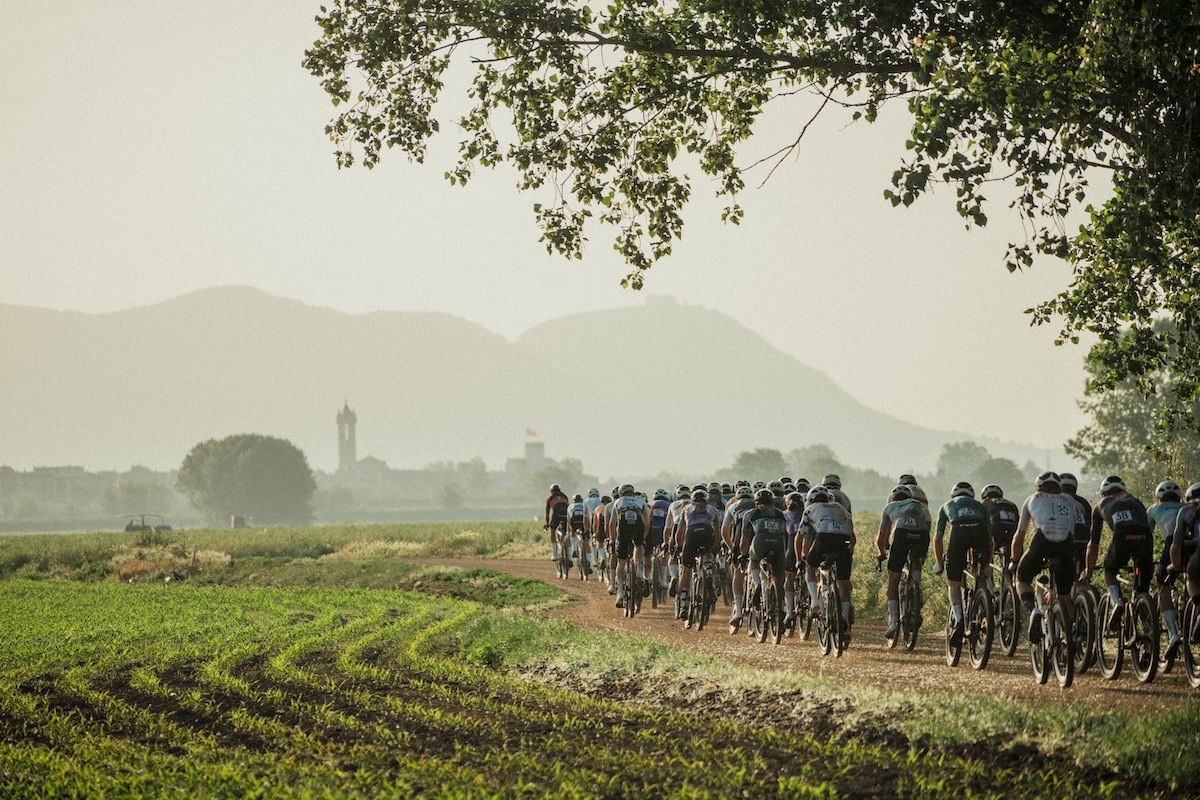
Summary By: eMotoXThe 2026 edition of The Traka gravel race has sparked intense debate over safety, rules, and fairness within the rapidly evolving gravel cycling scene. As one of the sport’s premier events, now rivalled only by Unbound Gravel in stature, The Traka attracted a record 4,500 participants, highlighting the discipline’s growing professionalism and popularity. However, this expansion has brought to light significant organisational and regulatory challenges, with riders and commentators voicing concerns about race management, course navigation difficulties, and rider conduct.
Several issues emerged during the race, including a problematic start sequence where age-group men were inadvertently released ahead of the women’s professional field, and widespread confusion over the course layout, which led to numerous wrong turns. Riders like Lauren De Crescenzo questioned whether such navigational errors align with the traditional “spirit of gravel,” while others highlighted a lack of clear enforcement regarding drafting rules and course deviations. The overarching concern, however, centred on rider safety amid large fields mixing professionals and amateurs, often on open roads without the strict controls seen in other cycling disciplines.
Prominent voices within the gravel community, such as former road pro Romain Bardet and Traka 200 winner Sofia Gomez Villafañe, called for the establishment of clearer rules tailored to gravel racing’s unique demands. Bardet emphasised the need for safety measures and structured team tactics, reflecting his experience in more regulated road racing environments. Meanwhile, Villafañe took proactive steps during the race to mitigate risks by coordinating with race officials to warn other trail users. Their perspectives underscore a growing consensus that gravel racing must evolve beyond its informal roots to accommodate its increasing competitiveness and professionalism.
The debate also touches on the broader identity of gravel cycling, which has traditionally prized a relaxed, community-driven ethos known as the “spirit of gravel.” As the sport grows, questions arise about whether it requires formal governance akin to the UCI’s Gravel World Series, which mandates road closures and other safety protocols. Oceania champion Nicole Frain highlighted the responsibility of organisers to meet higher standards given the scale and commercial stakes of events like The Traka. She further suggested the potential need for a riders’ union and doping controls to protect athletes as gravel racing becomes a professional career.
Despite the challenges, many within the community, including Lachlan Morton, embrace the sport’s transformation. Morton described the vibrant mix of elite and amateur riders competing across diverse terrain as both chaotic and “very pure,” reflecting gravel’s unique appeal. The Traka’s rapid growth from a modest event in 2019 to a major fixture in 2026 exemplifies the sport’s dynamic evolution, signalling a pivotal moment as gravel cycling balances its grassroots origins with the demands of a professional future.